A BLRF flange is not defined by stainless steel grade alone: its facing, drilling, pressure class, dimensions, manufacturing route and inspection documents must all match the order. By the end, you will know how a Mumbai order moves from heat-certified material to a marked, passivated and protected flange, and which details to put on the purchase specification.
Key takeaways
- Specify blind raised-face flange, pressure class, drilling and material.
- Choose 304L, 316L or 904L against chloride exposure and process chemistry.
- Request heat-treatment records, dimensional inspection and passivation evidence.
- Match the gasket seat and bolt holes to the mating flange standard.
Define the BLRF flange before production starts
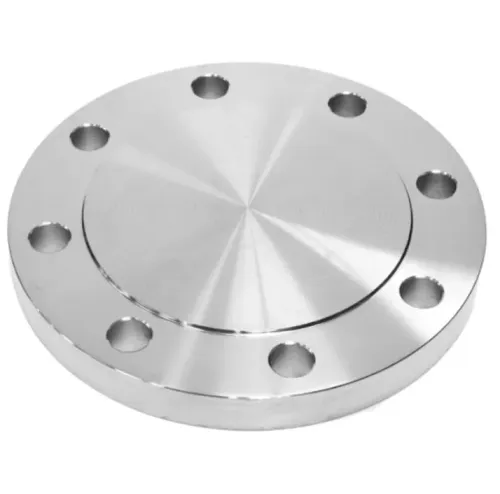
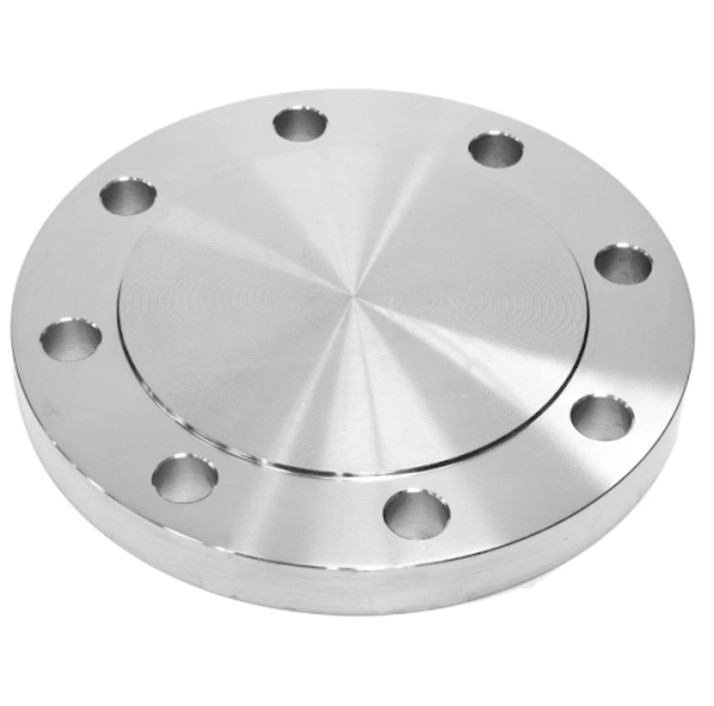
A BLRF is a blind, raised-face flange: its solid disc terminates a pipe, vessel nozzle or test opening, while the raised face compresses a gasket against the mating flange. State “blind raised-face flange” on the purchase order; “blind flange” alone leaves the facing, drilling, pressure class and material open to interpretation.
The answer to how stainless steel BLRF flanges are manufactured for orders in Mumbai begins with a complete production definition:
1. Name the governing standard, such as ASME B16.5 for the applicable size and pressure class. Use ASME B16.47 for large-diameter flanges, EN 1092-1 for the specified PN system, or another standard when the design requires it.
2. State nominal size, pressure class or PN rating, raised-face dimensions, outside diameter, overall thickness, bolt-circle diameter, bolt-hole count, hole diameter and orientation. Do not let the manufacturer infer the pattern from the mating pipe’s outside diameter.
3. Identify the material precisely, such as ASTM A182 F316L or UNS S31603, and require heat-number traceability. A generic stainless-steel plate is not automatically an ASTM A182 forging.
4. Add corrosion allowance, dimensional tolerances and any required PMI, hardness, ultrasonic or liquid-penetrant examination.
5. Define Mumbai delivery requirements: marking, inspection access, mill certificates before dispatch, face protection, clean bolt holes, stainless-only packaging and separation from carbon steel.
How the stainless steel blank is made and heat treated
The identified stainless steel does not go straight to the lathe.
In the stainless steel blrf flange manufacturing process, the supplier first matches the heat number on the billet, ring, disc or plate to the material test certificate, then confirms the grade with positive material identification when 316L or 904L could be confused with another heat.
A forged blank starts as a certified billet, disc or ring heated and compressed in dies or under a press. This working shapes the metal and develops directional grain flow before the blank is solution heat treated when ASTM A182 or the specified material grade requires it.
The blank then receives its heat number again so traceability survives cutting and machining.
Plate preparation follows a different route: a solid disc is cut from certified plate, and its original plate identity remains the basis of certification. Cutting does not create forging grain flow, so do not describe a plate-machined flange as an ASTM A182 forging.
| Route | What happens before machining | Main production implication |
|---|---|---|
| Forged or rolled blank | Billet, disc or ring is worked, then solution heat treated when specified | Grain flow and a forged product route suit many pressure-service requirements |
| Plate-prepared blank | Certified plate is cut into a solid disc and traceability is retained | Faster preparation can be practical, but the product must meet the ordered plate and flange requirements |
Ask the manufacturer to state whether the blank is forged, rolled or plate-cut, and to provide the heat number, material certificate and required heat-treatment records. A generic stainless plate cannot automatically be represented as an ASTM A182 forging.
Machining, drilling and forming the gasket seat
A forged or plate-prepared blank becomes a dimensionally controlled BLRF flange through datum-based turning, bolt-hole control, and precision facing—not by drilling a pipe passage. The solid disc remains intact; its back face, outside diameter, thickness, bolt circle, and raised face are machined to the ordered standard.
The machinist establishes a face and centre datum, rough-machines excess metal, then finishes each critical dimension. The controlled operations are:
- Turn the outside diameter, overall thickness, and back face.
- Drill or bore the bolt holes to the specified quantity, diameter, bolt-circle diameter, and orientation. A blind flange has no central through-bore.
- Turn the raised face and produce the required edge radii and chamfers.
- Apply heat or material identification marks away from the gasket seat.
The raised face is a functional gasket-seating surface, not decoration. For an ASME B16.5 flange, the face commonly receives a serrated concentric or spiral finish; the purchase specification and applicable edition control the groove pattern and roughness.
A flange can pass its outside dimensions yet leak if the seat is too rough, too smooth, uneven, or scratched.
The finished part is checked against the drawing or standard for thickness, diameter, bolt-hole position, face height, flatness, and runout. Keep the sealing face protected during handling, because a late impact can turn an otherwise acceptable flange into a rework item.
Choosing 304L, 316L or 904L for Mumbai service
Choose the grade from chloride exposure, acid chemistry, temperature, welding and pressure duty—not from Mumbai location alone. 304L suits many clean, mildly corrosive services; 316L adds molybdenum resistance for chlorides; 904L is for aggressive chloride, sulfuric-acid or mixed-acid environments where 316L lacks margin.
| Grade | Control point | Production implication |
|---|---|---|
| 304L | Low carbon; confirm the required product standard and service chemistry | Forged or rolled stock is often adequate for general process service |
| 316L | Specify UNS S31603 or equivalent; ASTM A182 lists F316L separately from F316 | Use solution-treated, heat-identified stock and verify low-carbon chemistry |
| 904L | Specify UNS N08904, not only the trade name “904L” | 904L BLRF flange production needs tighter segregation, chemistry review and traceability |
For 316L BLRF flanges in Mumbai, require the selected standard, such as ASTM A182 with ASME B16.5 dimensions and pressure class. The L designation reduces sensitization risk after welding or thermal exposure; it does not replace correct solution treatment or prove corrosion suitability.
Start with a heat-identified forged or rolled ring, disc or billet when pressure service and grain flow matter. A flange cut and machined from generic plate must not be called an ASTM A182 forging, and its plate standard, thickness and traceability must be stated.
Require the heat analysis and mechanical results on the material test certificate, then use positive material identification on receipt and during production. PMI catches mixed-grade handling, but it cannot replace the certificate. Keep 904L, 316L and 304L separated from carbon-steel tools and storage contamination.
Inspection, passivation and shipment documentation
Verify the finished BLRF flange against the purchase order, ASTM A182 material requirements and the stated dimensional standard, such as ASME B16.5. Check flange outside diameter, thickness, raised-face height and finish, bolt-hole diameter and pitch, marking, flatness, and visible machining damage before release.
1. Match the heat number and grade on the flange to the material test certificate. For 904L, confirm UNS N08904 rather than accepting “904L” alone; use PMI when the order requires it. Record the dimensional inspection report and any specified hardness, tensile, impact, hydrostatic, ultrasonic, radiographic or liquid-penetrant results.
These tests are not automatic, so name them in the purchase order.
2. Clean and passivate after machining, not as a substitute for machining inspection. Use ASTM A380/A380M practices and specify the chemical treatment and verification under ASTM A967/A967M. Reject work showing embedded iron, chloride residue, carbon-steel media marks or poor post-pickling rinsing.
3. Protect the raised face with a rigid cover, keep bolt holes free of debris, and wrap the flange in clean, non-contaminating material. Store and transport stainless parts separately from carbon steel; contact contamination can produce tea-staining in humid Mumbai logistics conditions.
4. Require the shipment file before dispatch: material test certificate, dimensional report, marking traceability and agreed examination reports. Chirag Steel can use this document checklist to prevent a conforming flange from arriving without the evidence needed for receipt.
5. Put marking, packing, delivery terms and inspection access in the Mumbai delivery specification, including whether mill certificates require approval before dispatch.
Related products
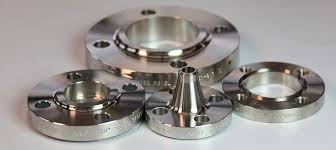 | Stainless Steel Flanges Manufacturer – Chirag Steel Chirag Steel is a trusted and reliable Stainless Steel 316L Flanges Manufacturer, Supplier, and Exporter, offering... View product → |
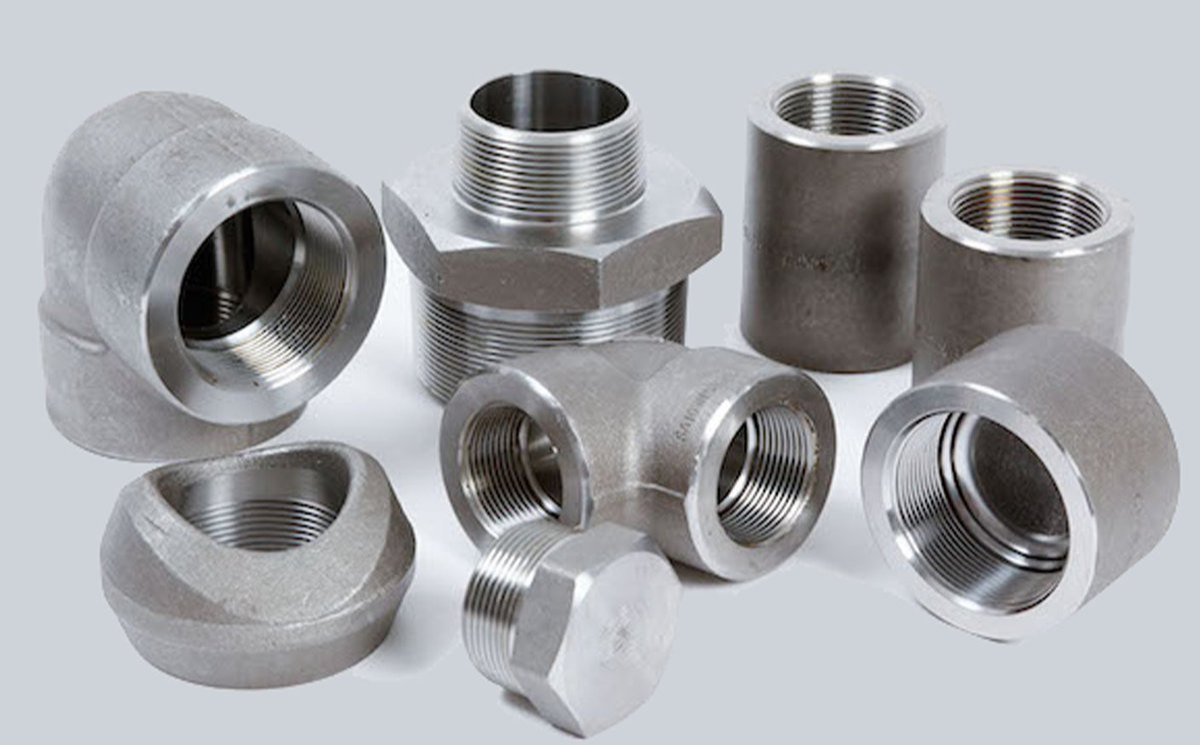 | Stainless Steel Pipe Fittings Stainless Steel Forged Fittings Here is professional content for your business: Stainless Steel Forged Fittings – Chirag Steel Chirag Steel is a trusted supplier and exporter of... View product → |
Frequently asked questions
What does BLRF mean on a stainless steel flange order?
BLRF means blind raised-face flange: a solid disc with a raised gasket-contacting face that closes a pipe, nozzle or test opening.
How is a stainless steel BLRF flange manufactured?
The process includes making and heat treating the stainless steel blank, machining the flange, drilling bolt holes, forming the raised face, inspecting dimensions and passivating the surface.
Should you choose 304L, 316L or 904L for Mumbai service?
Choose based on exposure and process chemistry: 304L suits less aggressive service, 316L provides better chloride resistance, and 904L targets highly corrosive environments when the design permits its use.
What documents should accompany a Mumbai BLRF flange shipment?
Request material test results, heat-treatment records, dimensional and visual inspection reports, passivation evidence, marking details and the packing or shipping documents required by your purchase order.