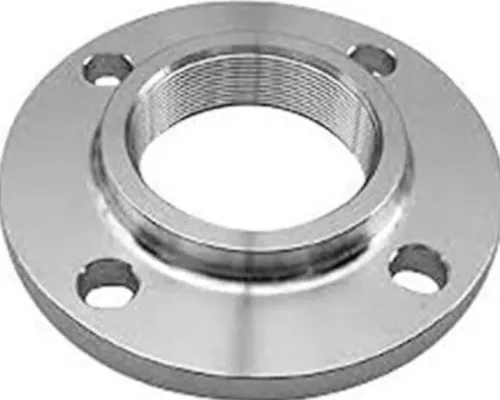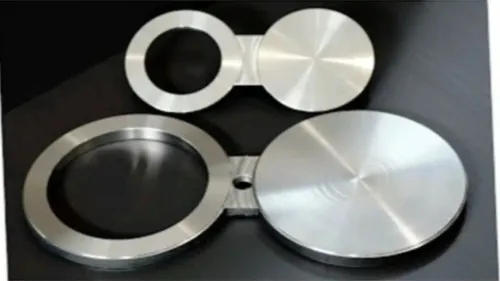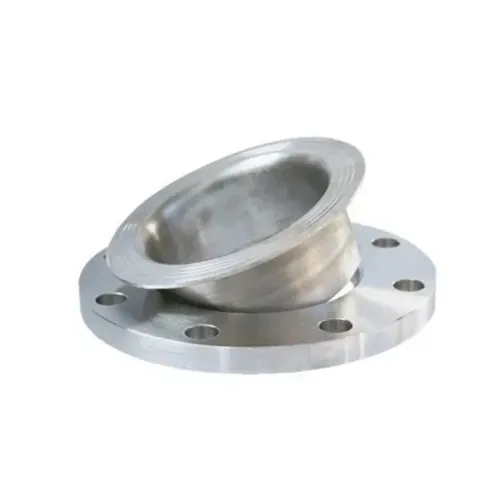

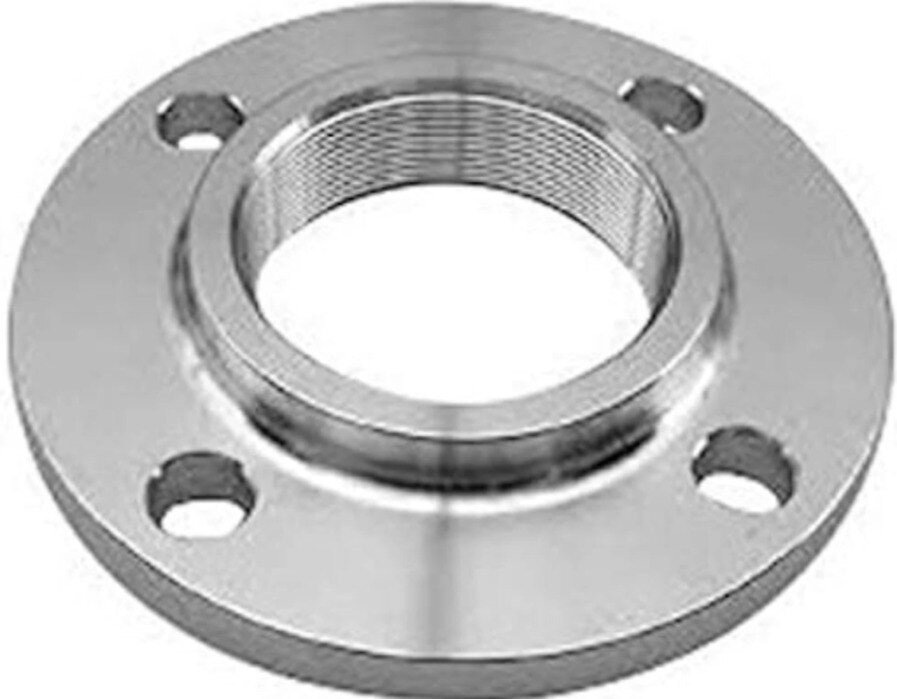
“Threaded” identifies how a flange connects to the pipe, while “316L” identifies the stainless-steel grade, so the two terms are not competing product categories. By separating connection method, material, service limits, thread standards, fit, and documentation, you can specify the right flange and test whether a Mumbai listing represents genuine 316L threaded availability.
Key takeaways
- Threaded describes the connection; 316L identifies the flange material grade.
- Match NPT or BSP threads, nominal size, pitch, bore, and pressure rating.
- Choose threaded flanges for clean, lower-temperature services where welding is impractical.
- Ask Mumbai suppliers for MTCs, dimensions, standards, quantity, and delivery confirmation.
Are a stainless steel threaded flange and a 316L flange different products?
No. “Threaded” describes the connection method; “316L” describes the material grade. A threaded flange has an internal pipe thread and can be manufactured from 304, 304L, 316, 316L, duplex stainless steel, or another specified alloy.
| Feature | Stainless steel threaded flange | 316L flange |
|---|---|---|
| Definition | Internal pipe thread | Material grade |
| Possible form | Threaded only | Threaded, socket-weld, slip-on, weld-neck, blind, or lap-joint |
| Forged specification | Must name the alloy and standard | ASTM A182/A182M Grade F316L |
A 316L threaded flange combines both descriptions. Therefore, the meaningful comparison in stainless steel threaded flanges versus 316l flanges available in Mumbai is a generic stainless threaded flange against a threaded flange manufactured to ASTM A182/A182M Grade F316L, with the required ASME B16.5 class, facing, bore, and thread standard.
Choose 316L over 304L when chloride-related pitting and crevice corrosion resistance matters because molybdenum improves performance. It is not immune to hot, concentrated, stagnant, or crevice-forming chlorides. Price alone proves little: the cheaper generic item may be 304/304L, use a different thread form, or lack heat-level traceability.
Ask for the heat number and material certificate, not merely “stainless steel.”
When does a threaded flange suit the piping service?
Choose a threaded flange when welding is prohibited, restricted, or impractical; the bore is relatively small; fabrication work must stay minimal; and planned disassembly matters. The internal pipe thread creates a potential leakage path, so this choice belongs in services where thread failure has manageable consequences.
| Option | What it means | When it applies |
|---|---|---|
| Threaded flange | Internal pipe thread with no flange-to-pipe weld | Small-bore lines, restricted welding, planned removal |
| Socket-weld flange | Pipe fits into a socket and is welded | Small lines needing better leakage and mechanical-cycle resistance |
| Slip-on flange | Pipe passes through and is welded at the hub and bore | Simpler welded construction with moderate service demands |
| Weld-neck flange | Butt-welded hub transfers stress into the pipe wall | Cyclic loading, vibration, thermal movement, and severe service |
| Lap-joint flange | Loose flange used with a separate stub end | Frequent alignment changes or dismantling |
Prefer a weld-neck flange for cyclic loading, high vibration, severe thermal expansion, thermal transients, high-temperature service, hazardous fluids, or larger pipe sizes. Use a socket-weld flange when the line is small but a welded connection is necessary.
316L does not remove the limitations of a threaded joint. The connection method still governs leakage risk, fatigue resistance, and thermal movement; the alloy grade does not compensate for an unsuitable joint. Involve the piping engineer when pressure, temperature, vibration, or fluid hazard makes thread failure consequential.
How do you verify the flange, bore, and pipe thread will fit?
Prevent a nominal-size mismatch by checking the flange against the actual pipe, not its label alone. Match NPS or DN, pipe outside diameter, ASME B16.5 class, drilling, facing, bore, and internal thread details before approval.
| Check | Confirm | Why it matters |
|---|---|---|
| Nominal size | NPS or DN and actual pipe outside diameter | “2-inch” alone does not define the pipe or bore |
| Class and drilling | ASME B16.5 Class 150, 300, 400, 600, 900, 1500, or 2500; bolt-hole layout | A dimensional match is impossible if drilling differs |
| Facing | Raised face, flat face, or specified alternative | Mating faces and gasket selection must agree |
| Bore | Standard, oversize, or specially machined | Bore size changes thread engagement and remaining wall thickness |
| Thread | Size, pitch, form, and internal-thread standard | The male pipe thread must match the flange |
ASME B16.5 covers NPS 1/2 through NPS 24, but class is not a universal pressure rating. Allowable pressure changes with the material group and design temperature.
Name the thread system explicitly: ASME B1.20.1 NPT or ISO 7-1 tapered pipe thread, including BSPT practice where specified. NPT and BSPT are not interchangeable; their profiles, pitches, and gauge systems differ.
Before approving an unusual configuration, require a drawing or dimensional inspection record showing:
- Face-to-face dimensions and bolt-hole layout
- Bore diameter and whether it is standard, oversize, or specially machined
- Internal thread size, form, pitch, and gauge details
An ASME B16.5 dimensional match does not prove the pipe-thread specification. Verify the pipe’s male thread separately.
Should you choose 316 or 316L for a threaded flange?
Choose 316L when the service needs molybdenum-bearing stainless steel and welding or heat exposure could cause sensitization; do not treat it as an automatic upgrade. ASTM A182/A182M F316L commonly limits carbon to 0.030%, reducing sensitization risk after welding compared with standard 316.
In a purely threaded assembly, that low-carbon limit does not make the thread stronger or prevent leakage. The connection method still controls sealing, engagement, and mechanical performance.
| Grade | Main distinction | Decision |
|---|---|---|
| 316 | Standard-carbon version; no low-carbon welding advantage | Use when welding sensitization is not a concern and the service specification permits it |
| 316L | Carbon maximum commonly 0.030%; better protection against weld sensitization | Use near welds, heat-affected areas, or where later corrosion service makes sensitization consequential |
Check the conditions that determine corrosion performance:
- Chloride concentration and temperature
- Stagnation, crevices, and deposits
- Surface condition, cleaning, and fabrication quality
Hot chloride service can still cause pitting, crevice corrosion, or stress-corrosion cracking in 316L. Ask the piping engineer to verify design temperature and pressure against the material group and ASME B16.5 class.
Require the designation to identify the material standard and product form, such as ASTM A182/A182M F316L for a forged flange. “316 stainless” does not establish 316 versus 316L, prove thread strength, or confirm an ASTM A182 F316L product.
What should you ask a Mumbai supplier before placing a 316L flange order?
Ask a threaded flange supplier near Mumbai whether the exact item is in stock, made to order, machined locally, or available only through a special-order or import route. For genuine 316L threaded flange availability, send a complete 316L flange order, not “2-inch 316L.”
- NPS or DN and actual pipe outside diameter
- ASTM A182/A182M Grade F316L
- ASME B16.5 class, such as 150 or 300
- Raised face or another specified facing
- Standard, oversize, or specially machined bore
- ASME B1.20.1 NPT or ISO 7-1/BSPT thread
- Service medium, design pressure, and design temperature
- Required marking and delivery condition
| Evidence to request | What it must establish | Why it matters |
|---|---|---|
| Heat or lot number and stated grade | Traceability to ASTM A182/A182M F316L | “316L stainless” alone does not prove F316L |
| EN 10204 3.1 certificate, when specified | Chemical and mechanical results | Confirms the supplied material against your specification |
| Dimensional inspection record | Bore, face, drilling, and overall dimensions | Prevents a nominal-size mismatch |
| Pressure-class marking | The ASME B16.5 class | Confirms the ordered pressure designation |
| Thread or gauge inspection evidence | Thread form, size, and fit | Separates NPT from ISO 7-1/BSPT compatibility |
Do not treat a generic mill test certificate as proof of thread compatibility or dimensional fit unless it contains those details or separate verification records accompany it. Confirm the certificate type, heat number, and inspection scope with Chirag Steel rather than assuming them from a catalogue page.
Compare traceability, thread system, class, facing, and delivery condition—not only price per piece.
Related products
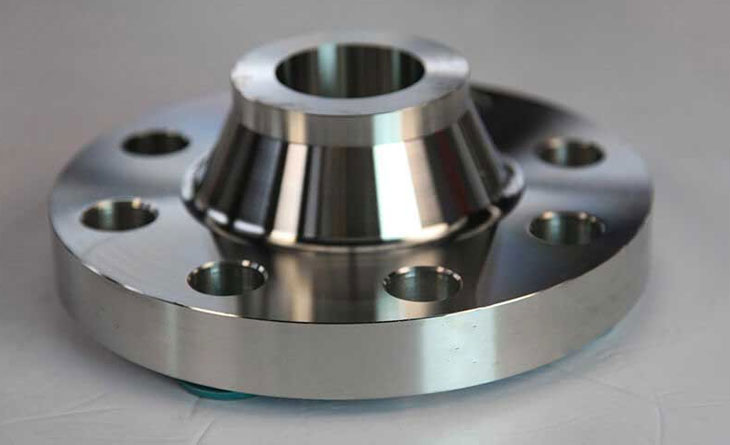 | Stainless Steel Flanges ASTM A182 F316 Blind flange and Weld Neck Flanges Manufacturer in India Stainless Steel 316 Flanges 316 Stainless Steel Flange Dimensions differ from... View product → |
 | Stainless Steel Flanges Manufacturer – Chirag Steel Chirag Steel is a trusted and reliable Stainless Steel 316L Flanges Manufacturer, Supplier, and Exporter, offering... View product → |
Frequently asked questions
Are stainless steel threaded flanges and 316L flanges different products?
Not necessarily. Threaded describes the internal pipe-thread connection, while 316L identifies the stainless steel material grade. A 316L flange can be threaded, weld neck, slip-on, blind, or another type.
When does a threaded flange suit the piping service?
A threaded flange suits clean, lower-temperature services when welding is impractical and the pipe wall can safely accommodate the thread. Avoid it for severe cyclic loading, high-vibration service, or corrosive crevices unless the design standard permits it.
How do you verify that the flange, bore, and pipe thread will fit?
Match the nominal size, thread standard such as NPT or BSPT, thread pitch, gender, flange facing, bore diameter, pressure class, and pipe schedule. Confirm dimensions against ASME B16.5 or the specified standard.
Should you choose 316 or 316L for a threaded flange?
Choose 316L when welding or sensitisation resistance matters because its carbon limit is 0.03% maximum. Choose 316 when the application does not require the lower carbon grade and the project specification permits it.
What should you ask a Mumbai supplier before placing a 316L flange order?
Ask for the standard, size, pressure class, thread type, bore, facing, quantity, delivery date, heat number, material test certificate, inspection documents, and confirmation that the supplied grade is 316L.