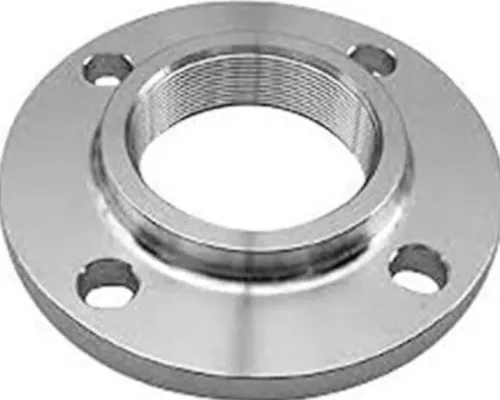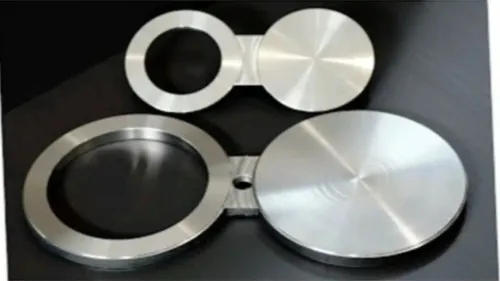
A replacement lap-joint connection is not identified by flange size and pressure class alone. You will be able to match the loose flange, stub end, gasket, facing, material grade and pressure rating before dispatch, reducing the risk of an unusable replacement reaching site.
Key takeaways
- Rotate the loose backing flange; keep the stub end aligned to the pipe.
- Match flange size, rating, facing and bolt pattern before ordering.
- Use 316L for welded corrosion service when low carbon matters.
- Give the stockist spool dimensions, material grade and delivery deadline.
What actually rotates in a lap-joint replacement?
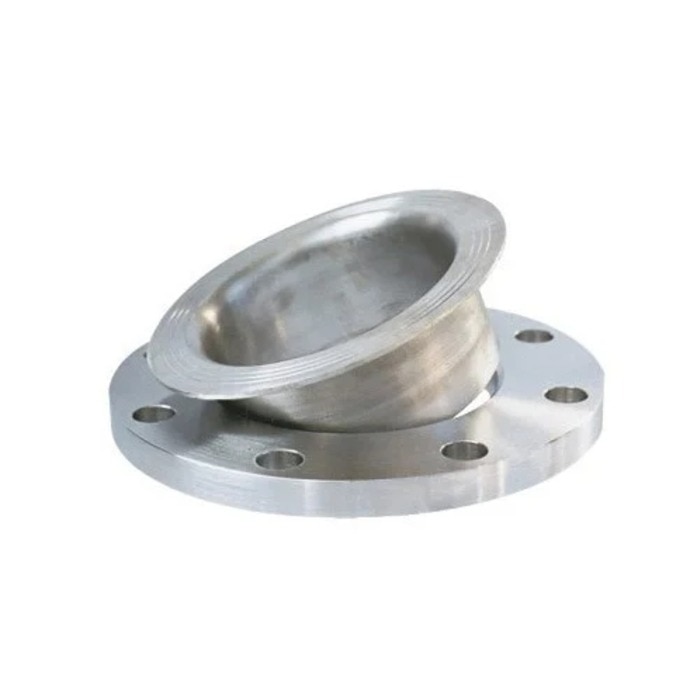
A lap-joint replacement has two separate items: a loose backing flange and a butt-welded lap-joint stub end. The flange slides over the stub end and is not welded to the pipe. The stub end provides the wetted sealing face; the loose flange carries the bolts.
The flange rotates around the stub end, so you can turn its bolt holes into alignment with a fixed pump, valve, heat exchanger or equipment nozzle. That matters in a cramped plant room where the existing spool cannot be rotated without disturbing welded sections.
Use this replacement sequence:
- Confirm that the visible flange and stub end are separate components before ordering stainless steel replacement flanges.
- Measure the stub-end outside diameter, bore, lap dimensions and wall thickness against the pipe schedule.
- Inspect the stub-end sealing face for scoring, distortion, corrosion and weld damage.
- Rotate the loose flange over the stub end and check that the bolt holes align with the fixed mating flange.
- Match the gasket to the facing and bore before tightening the bolts.
A wrong stub-end outside diameter or lap dimension can prevent full seating. A wrong bore or wall thickness can create an internal step that disrupts flow and stresses the gasket.
These are important lap joint flange benefits for stockists: separate loose flanges and stub ends let a supplier build a compatible replacement around the existing pipe and wetted material. The buyer can replace the wetted component without treating every request as a complete, fully alloyed assembly.
How do you verify that a replacement will fit the existing spool?
“4-inch Class 150” is incomplete identification. The same nominal size and class can describe flanges with different standards, bolt patterns, facings and dimensions, so confirm the complete mating arrangement before dispatch.
Record the existing connection in this sequence:
- Note nominal pipe size, actual pipe outside diameter, and wall thickness or schedule.
- Photograph every flange marking, then measure bolt-circle diameter, bolt-hole count, hole diameter, outside diameter, bore and flange thickness.
- Identify the stub-end type and record its outside diameter, bore, lap dimensions and wall thickness.
- Confirm the flange standard: ASME B16.5 covers NPS 24 and smaller; ASME B16.47 applies to larger diameters. Do not treat EN 1092-1 or another national standard as interchangeable.
- Identify raised-face or flat-face construction, then specify the gasket by facing, bore and service.
| Standard | Coverage | Verification point |
|---|---|---|
| ASME B16.5 | NPS ½ through 24 | Check its dimensional and pressure-temperature tables |
| ASME B16.47 | Larger nominal diameters | Confirm series, dimensions and mating flange |
| EN 1092-1 | European standard | Do not assume its bolt circle matches ASME |
During removal, inspect the stub-end seating face for scoring, distortion, corrosion and weld damage. A loose flange cannot repair a damaged wetted face. Match the pressure class to material and operating temperature; Class 150 or Class 300 is not a constant maximum pressure.
Send a dimensional drawing and mating-flange details with the enquiry to prevent wrong stainless steel replacement flanges and costly returns.
When should you choose 304L, 316 or 316L?
Choose from the process medium and welding requirement, not from the grade number alone. 304L can suit less aggressive service when the piping specification permits it, while 316 stainless steel lap joint flanges offer stronger resistance to chloride-induced pitting and crevice corrosion.
| Grade | Service basis | Welding and purchasing focus |
|---|---|---|
| 304L | General stainless service with lower chloride exposure and less aggressive chemistry | Use only when the process specification permits it; confirm temperature and corrosion conditions |
| 316 | Coastal, marine, chloride-bearing or chemical service where improved chloride resistance is required | Molybdenum improves resistance, but 316 is not immune to seawater, stagnant crevices, concentrated chlorides or elevated-temperature chloride attack |
| 316L | Corrosive service with a welded stub end | Its lower carbon limit reduces sensitization risk after welding and supports post-weld corrosion resistance |
The stub end is the wetted component, so its grade controls contact with the process fluid. A lower-cost carbon-steel or alloy backing flange is acceptable only when the piping code, external environment, gasket, bolting and mechanical-strength requirements permit it.
Do not treat 304L, 316 and 316L as interchangeable labels. Check the process medium, temperature range, welding procedure and project specification. If the owner specifies ASTM A182 forgings, require the material certificate to state the actual grade, heat or cast number and applicable standard.
Traceability documents matter; a bright finish cannot prove 316/316L chemistry or forging quality.
How can a Mumbai stockist shorten the replacement decision?
A Mumbai stockist shortens the replacement decision by receiving identification data in one request, not through several clarification cycles. Send the following before dispatch:
- Old flange marking and clear photographs
- Dimensional drawing and mating-flange details
- Nominal pipe size, outside diameter, wall thickness or pipe schedule
- Flange standard, pressure class, facing, bolt-circle diameter, hole count and hole diameter
- Stub-end type, outside diameter, bore, lap dimensions and wall thickness
- Service medium, operating temperature and required delivery date
“4-inch Class 150” is not enough. ASME B16.5, EN 1092-1 and other standards use different dimensions and bolt patterns, so matching the nominal size alone can create a wrong-item return.
A capable flange stockist in Mumbai can hold loose lap flanges separately from stub ends. One flange size and pressure class can then pair with different stub-end materials, wall thicknesses and facing arrangements.
These are practical stainless steel benefits for stockists in Mumbai: the buyer can upgrade only the wetted stub end instead of purchasing a fully stainless assembly.
The quotation should cover the loose flange, compatible stub end, gasket, bolting and traceability records. Chirag Steel can apply this structure to specification-based enquiries after the buyer confirms the standard, dimensions, grade and service conditions.
Require the heat or cast number, grade, standard, pressure class, dimensions and inspection or test documents; a bright finish cannot prove 316/316L chemistry or forging quality. Speed means fewer returns, not skipped engineering checks.
When is a lap joint replacement the right compromise?
A lap joint replacement is the right compromise when repeated access and bolt-hole alignment matter more than the lowest initial component cost. It suits lines connected to pumps, valves, heat exchangers and lined systems, especially where rotating a welded spool or heavy equipment is impractical.
| Option | Operational advantage | Main dependency |
|---|---|---|
| Permanently welded flange | Direct joint with lower initial component cost when rotation is unnecessary | Disturbance or rotation may be needed during replacement |
| Lap joint flange | Rotate the loose flange for alignment; service the gasket without disturbing welded pipe | Butt-welded stub end, gasket seating, bolting and bore must all be correct |
The flange itself does not repair a damaged stub-end face, wrong pipe schedule or mismatched facing. The joint also fails its purpose if the bore contains an internal step or the bolts cannot develop the specified load.
Separate loose flanges and stub ends give stockists flexibility when preparing stainless steel replacement flanges. These lap joint flange benefits for stockists allow the wetted stub end, backing flange, gasket and bolting to be matched instead of replacing a complete assembly unnecessarily.
Before handover, complete this field check:
- Inspect the stub-end face for scoring, distortion, corrosion and weld damage.
- Rotate the flange and verify bolt-hole alignment with the mating flange.
- Confirm gasket material, facing and bolt compatibility.
- Compare the material certificate, including grade and heat number, with the purchase order.
- Check the ASME pressure-temperature rating at the actual operating temperature.
Frequently asked questions
What actually rotates in a lap-joint replacement?
The loose backing flange rotates around the butt-welded lap-joint stub end. The stub end stays welded to the pipe and provides the wetted sealing face.
How do you verify that a replacement will fit the existing spool?
Confirm the nominal pipe size, flange pressure class, facing, bolt-hole pattern, bore, stub-end dimensions and material grade against the existing spool and drawings.
When should you choose 304L, 316 or 316L?
Choose 304L for many general stainless applications, 316 for higher chloride and chemical resistance, and 316L when welded construction requires lower carbon to reduce sensitisation risk.
When is a lap-joint replacement the right compromise?
Choose it when you need bolt-hole alignment during installation, frequent dismantling or replacement of a worn sealing face without rotating the pipe spool. Avoid it when the service demands a permanently welded flange connection.