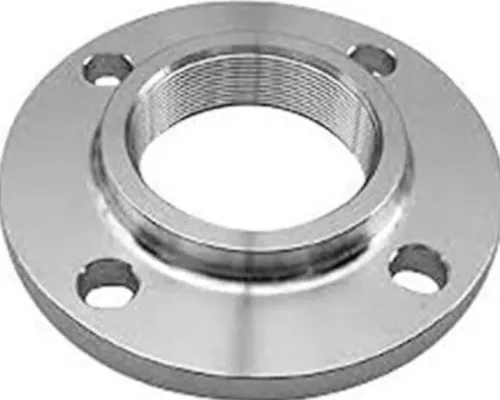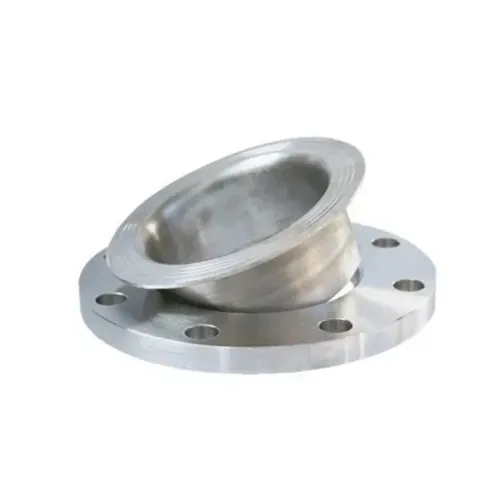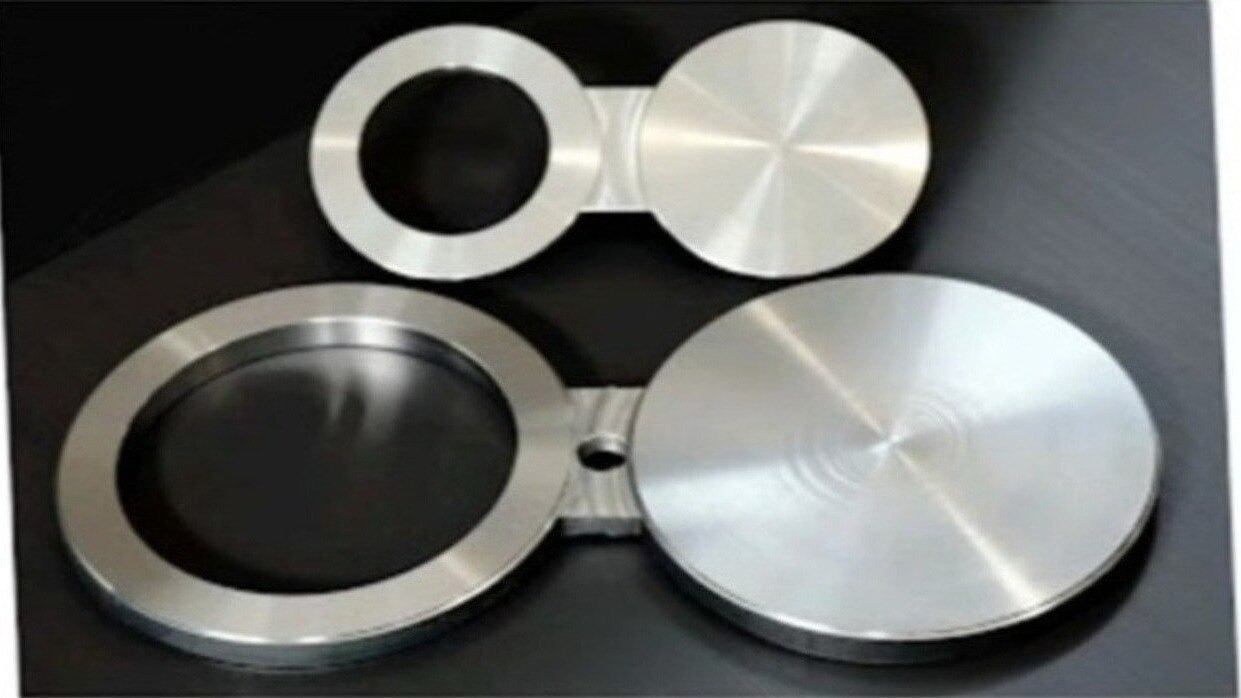
Choose the flange grade from the fluid, chloride exposure, temperature, welding plan, and complete joint—not from pressure class or the words “stainless steel.” By the end, you can compare 304, 304L, 316, 316L, and 904L, then write an export purchase specification that covers the material, dimensions, rating, inspection records, and matching components.
Key takeaways
- Choose 304 for clean water and low-chloride general process service.
- Use 316L when chlorides, seawater exposure, or welded corrosion resistance matter.
- Select 904L for severe acid service after confirming process compatibility.
- Specify the flange, weld procedure, dimensions, certificates, and applicable standard together.
Start with the service: a practical grade comparison
Choosing which stainless steel long weldneck flange material for export piping starts with the fluid, temperature, and chloride level—not the export destination. For clean water, air, food service, and general process lines without significant chlorides, a 304 long weldneck flange is the economical starting point.
Choose 304L when welding could expose the flange to sensitization; its lower carbon content reduces chromium-carbide precipitation at the grain boundaries.
| Grade | Practical starting point | Main limit |
|---|---|---|
| 304 | Air, clean water, general process service | Pitting and crevice corrosion in warm chloride service |
| 304L | Welded assemblies using the 304 chemistry | Still vulnerable to chlorides |
| 316 | More demanding process service | Not a universal seawater solution |
| 316L | Welded service needing molybdenum-bearing stainless steel | Requires service-specific chloride review |
| 904L | Reducing acids, including selected sulfuric-acid duties | Costlier; concentration, temperature, crevices, and sour-service limits still matter |
For export flange material selection, 316 or 316L is the stronger starting point than 304 where chlorides are present because molybdenum improves localized-corrosion resistance. Do not treat either grade as automatically suitable for seawater or brine.
A 904L long weldneck flange adds substantially higher nickel, molybdenum, and copper for many reducing-acid services, but sulfuric-acid concentration and temperature must be checked together. Specify compatible bolting and gasket materials too; a corrosion-resistant flange cannot rescue an unsuitable joint.
304 versus 304L, 316 versus 316L, and the case for 904L
Choose the low-carbon grade when welding could expose the joint to corrosive service. Carbon above about 0.03% can form chromium carbides during heating, depleting chromium beside the weld and increasing intergranular corrosion risk; 304L and 316L limit that risk compared with 304 and 316.
| Grade | Chromium and nickel | Molybdenum, copper, and carbon | Decision |
|---|---|---|---|
| 304 | About 18–20% Cr and 8–10.5% Ni | No Mo; carbon up to 0.08% | Economical choice for clean water, air, food service, and non-chloride process lines. A 304 long weldneck flange is vulnerable to pitting in warm seawater, brine, and chloride deposits. |
| 304L | Similar Cr and Ni | No Mo; carbon up to 0.03% | Prefer it for welded assemblies when post-weld corrosion resistance matters. |
| 316 | About 16–18% Cr and 10–14% Ni | About 2–3% Mo; carbon up to 0.08% | Better than 304 against chlorides and many chemicals, but not a universal seawater grade. |
| 316L | Similar Cr, Ni, and Mo | Carbon up to 0.03% | The usual welded alternative to 316 where sensitization is a concern. |
| 904L | About 19–23% Cr and 23–28% Ni | About 4–5% Mo, 1–2% Cu; carbon up to 0.02% | Consider for reducing acids, including selected sulfuric-acid services. |
904L long weldneck flange selection requires concentration and temperature checks together because sulfuric acid changes corrosivity sharply across its concentration range. Its higher alloy cost and narrower forged availability need a corrosion-based justification. Specify qualified welding controls; ER385-type filler is associated with matching 904L work, not an automatic 304L consumable.
Match the grade to freshwater, chemicals, seawater, and acid
Freshwater and dry atmospheric service usually suit 304L, while chloride-rich water, aggressive chemicals, and acid demand a service-specific upgrade. Use this decision table for the initial export flange material selection:
| Service | Starting material | What can change the decision |
|---|---|---|
| Freshwater, clean air, and general utility lines | 304L | Choose 316L if chlorides, deposits, or chemical cleaning are present; warm brine is not a 304L service. |
| Food processing | 304L or 316L | Select 316L for chloride cleaners, salt exposure, or acidic washdown; confirm the cleaning temperature and chemical concentration. |
| Chemical process piping | 316L for moderate chloride or chemical exposure; 904L for selected reducing-acid duty | Identify the exact chemical, concentration, temperature, aeration, and stagnant conditions before approving the grade. |
| Seawater and brine | Usually duplex, superduplex, or titanium rather than 304L or 316L | A 904L long weldneck flange can outperform 304L against pitting, but crevices, deposits, heat, and chloride stress-corrosion cracking still require service data. |
| Sulfuric acid | 904L for qualifying concentration and temperature combinations | Sulfuric acid corrosion changes sharply with concentration, so do not approve 904L from the acid name alone. |
Do not treat 904L as a universal chemical or seawater solution. Its higher nickel, molybdenum, and copper content brings higher alloy cost and narrower forged availability, so specify it when the corrosion mechanism justifies the procurement penalty.
Match the bolting and gasket to the same environment. Carbon-steel bolts or an incompatible gasket can fail before a corrosion-resistant flange does.
Specify the complete welded joint, not only the flange grade
The answer to which stainless steel long weldneck flange material for export piping fits your design depends on the complete welded joint, not the flange alone. Treat export flange material selection as a system check: the pipe, weld, bolts, gasket, dimensions, and pressure rating must work together at the design temperature.
1. Match the flange to the pipe grade, outside diameter, wall thickness, and schedule. A nominal NPS match is not enough; the wrong bore creates an internal step, excessive weld mismatch, or a thin hub.
2. Specify the weld procedure and filler metal for the actual stainless-steel combination. Control heat input, interpass temperature, purge gas, and post-weld cleaning where corrosion resistance depends on a clean, properly formed weld.
3. Match bolting to the process, temperature, required preload, and flange alloy. Carbon-steel bolts against a corrosion-resistant flange can create galvanic attack and lose the joint before the pipe fails.
4. Select a gasket that tolerates the fluid, concentration, temperature, flange facing, and bolt load. A gasket that swells, decomposes, or relaxes will leak even when the 904L or 316L flange is suitable.
5. Put the full designation on the order: ASTM A182 F304L / UNS S30403 or ASTM A182 F904L / UNS N08904, dimensional standard, pressure class, facing, bore, hub dimensions, tolerances, heat treatment, and EN 10204 Type 3.1 certification.
6. Check the pressure-temperature rating for the exact material group, gasket, bolting, facing, external loads, and project derating. A 904L flange does not automatically carry a higher allowable pressure than a 304L flange in the same class.
Verify dimensions, standards, certificates, and supplier capability
A technically suitable flange can still fail export inspection if its order description says only “stainless steel” or “ASME.” Your export flange material selection must record which stainless steel long weldneck flange material for export piping you approved, such as ASTM A182 F304L / UNS S30403 or ASTM A182 F904L / UNS N08904.
- State the dimensional standard: ASME B16.5 for NPS ½ through NPS 24, or ASME B16.47 for larger diameters, including the edition.
- Specify pressure class, raised-face or ring-type-joint facing, bore or schedule, long-weldneck dimensions, and any heat-treatment requirement.
- Require heat-number marking that matches the flange, packing list, and material certificate.
- Request EN 10204 Type 3.1 documentation identifying the heat, UNS grade, chemical analysis, mechanical results, heat treatment, and ASTM A182 compliance.
- Control the complete joint: bolting grade, gasket material, galvanic compatibility, service temperature, chemical exposure, and required preload.
- Require dimensional and visual inspection for bore, outside diameter, bolt-hole spacing, facing finish, weld-neck alignment, markings, and transit protection.
A generic mill certificate does not replace traceability to the supplied flange. Check that the certificate’s heat number appears on the flange or its controlled identification record before shipment.
For a 904L long weldneck flange, confirm the acid concentration and temperature rather than accepting “chemical service” as a description. Ask Chirag Steel to confirm the requested standard, inspection-document level, traceability method, and export packing before release; those details determine whether the flange arrives identifiable, inspectable, and ready to install.
Related products
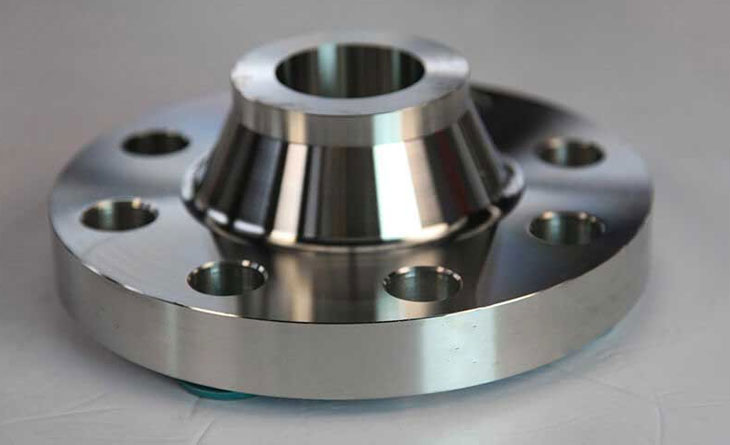 | Stainless Steel Flanges ASTM A182 F316 Blind flange and Weld Neck Flanges Manufacturer in India Stainless Steel 316 Flanges 316 Stainless Steel Flange Dimensions differ from... View product → |
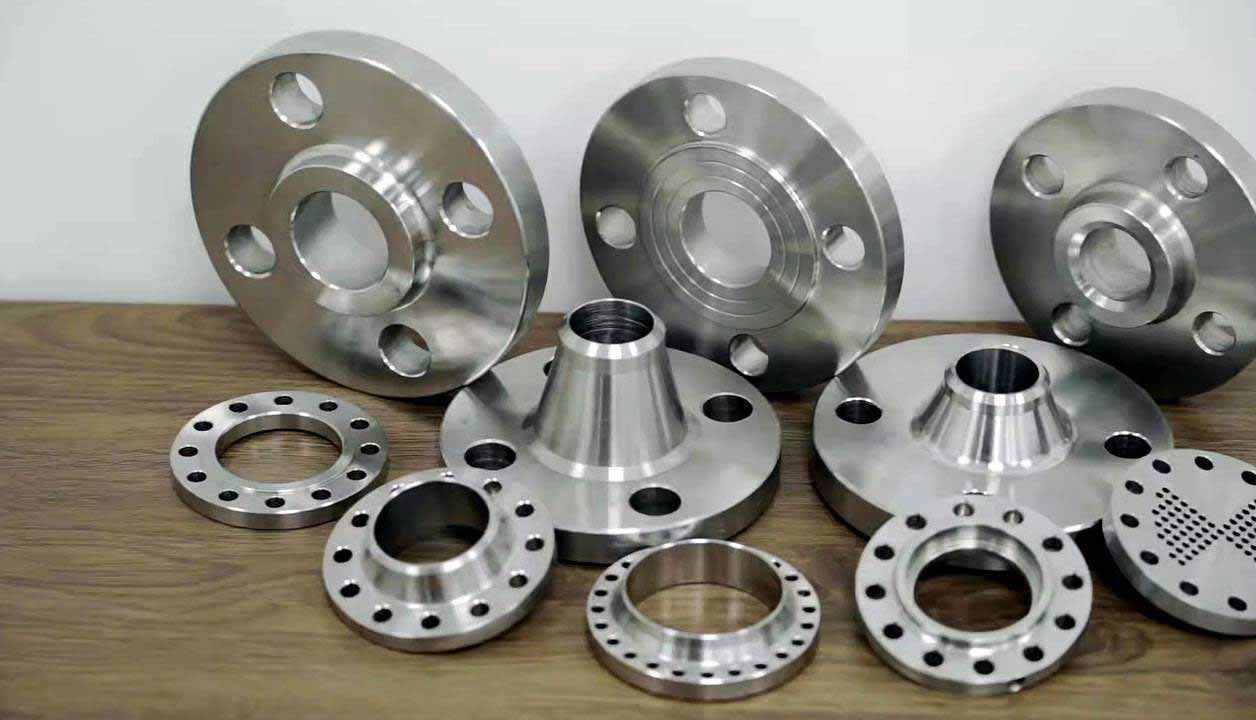 | Stainless Steel Flanges Manufacturer of ASTM A182 F304L Slip on and WNRF Flanges in India Stainless Steel 304L Flanges 304L Stainless Steel Flanges are made up of 304L... View product → |
Frequently asked questions
Which stainless steel long weldneck flange material fits export piping?
Choose the grade from the fluid, temperature, chloride concentration, and chemical exposure. Use 304 for low-chloride service, 316L for chloride-bearing service, and consider 904L for severe acid conditions.
What is the difference between 304 and 304L or 316 and 316L flanges?
The L grades contain less carbon, which improves resistance to sensitisation after welding. Select 304L or 316L when the long weldneck flange and pipe will be welded and corrosion resistance at the weld matters.
When is a 904L long weldneck flange appropriate?
Use 904L when the process contains aggressive acids or high-corrosion conditions that exceed the practical limits of 304L or 316L. Confirm compatibility, temperature, concentration, and welding requirements before specifying it.
What must you verify before ordering an export flange?
Verify ASME B16.5 or the specified dimensional standard, pressure class, NPS, schedule, facing, material designation, heat-treatment requirements, test documents, marking, and the supplier’s ability to provide a complete compliant bill of material.
Related products
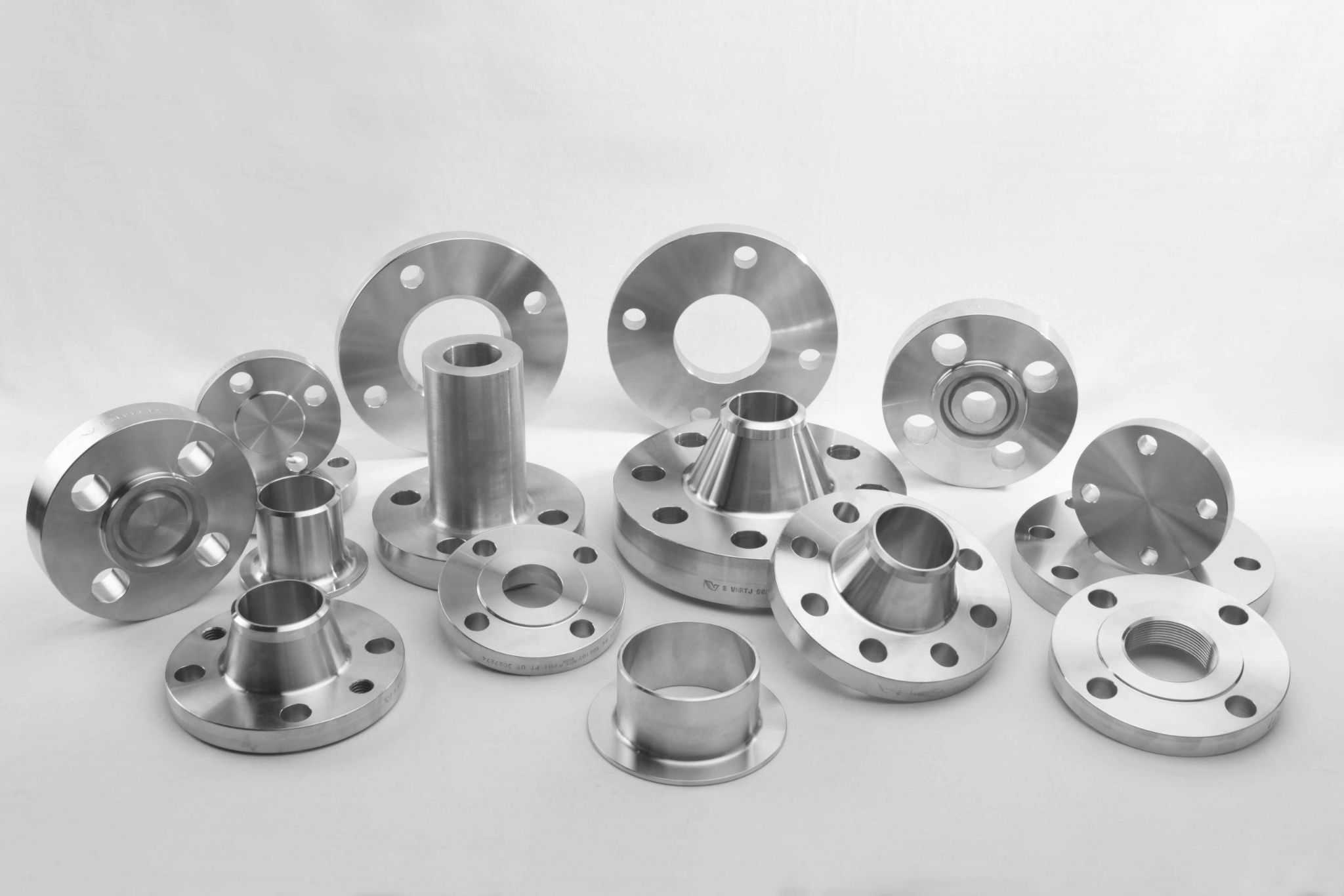 | Stainless Steel Flanges PED Steel Flanges / Weld Neck Flanges / ASTM A 182 Stainless Steel WNRF Flanges,Din Standard Flanges; DIN... View product → |
 | Stainless Steel Flanges Manufacturer – Chirag Steel Chirag Steel is a trusted and reliable Stainless Steel 316L Flanges Manufacturer, Supplier, and Exporter, offering... View product → |
 | Stainless Steel Flanges ASTM A182 F304 Blind Flange Dimension and A182 Grade F304 Slip on Flange pressure classs Great Steel & Metals is a supplier of all types of 304... View product → |