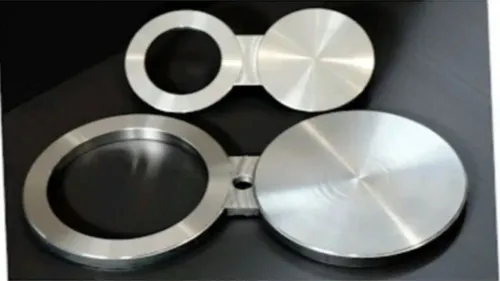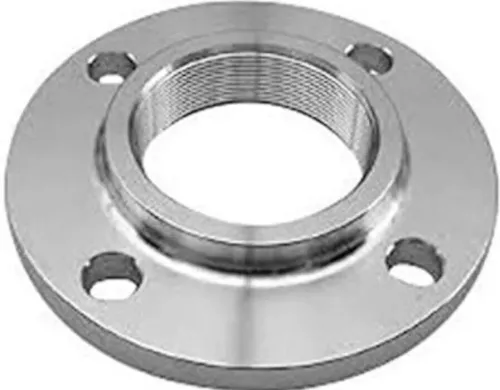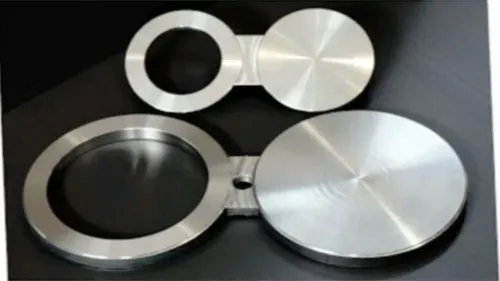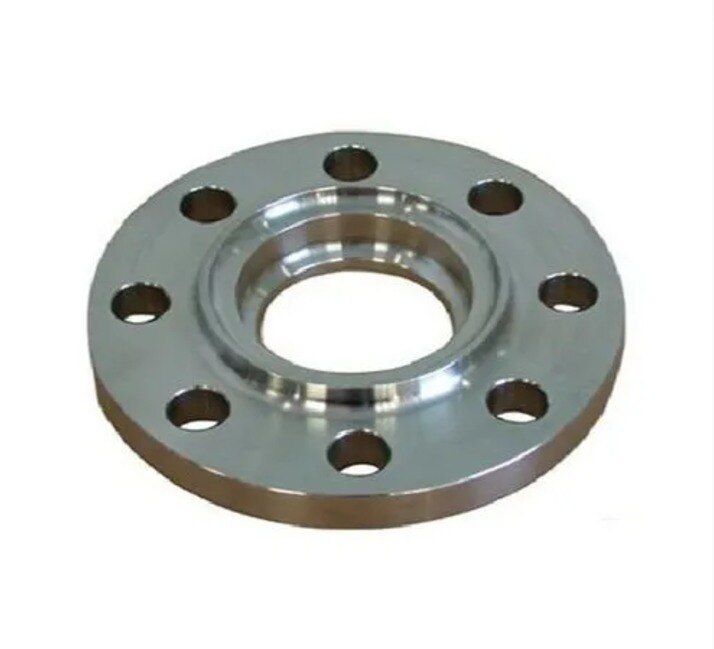
“SWRF” identifies a flange form, not a complete purchasing specification. Before you approve an order, you need to match the flange standard, bore, drilling, pressure designation, material certificate, gasket arrangement and installation requirements to the actual pipe and mating flange.
Key takeaways
- Confirm ASME B16.5 or EN 1092-1 before comparing flange dimensions.
- Match the stainless grade to corrosion, temperature and pressure conditions.
- Check bore, facing, gasket, bolt holes and bolting against the piping specification.
- Request heat numbers, material certificates and inspections before shipment.
What SWRF Means—and Which Dimensions Define the Flange
SWRF normally means slip-on weld raised-face flange, not slip-on weld-neck flange. The pipe passes through the bore, the flange slides over it, and fillet welds attach the pipe at the outside and pipe-to-face side.
The raised face supplies the gasket seating area. It is not the geometry of a weld-neck raised-face flange, whose tapered hub and butt-weld bore carry the pipe connection.
| Feature | Slip-on weld raised-face | Weld-neck raised-face |
|---|---|---|
| Pipe connection | Pipe passes through flange bore | Pipe aligns with tapered hub and butt-weld bore |
| Sealing surface | Raised face seats the gasket | Raised face seats the gasket |
| Main fit concern | Bore, projection and fillet-weld access | Bore, hub transition and butt-weld preparation |
For stainless steel SWRF flanges, specifications buyers should confirm include:
- Nominal pipe size and pipe outside diameter
- Dimensional standard, pressure Class or PN rating, and facing designation
- Bore, flange thickness and flange outside diameter
- Bolt-circle diameter, bolt-hole count and bolt-hole diameter
- Raised-face diameter and gasket seating details
“NPS 6 Class 150” alone does not define the bore or mating geometry. Record the stainless steel SWRF flange specifications with the pipe schedule or wall thickness: a standard bore, schedule-specific bore and custom bore create different internal alignment and weld conditions.
Confirm the exact standard, such as ASME B16.5, ASME B16.47, EN 1092-1 or JIS B 2220, because matching size and rating do not guarantee matching drilling or face dimensions.
Choose the Dimensional Standard and Stainless Grade Together
Put the dimensional standard on the purchase order before choosing stainless steel SWRF flange materials. ASME B16.5 covers NPS 1/2 through NPS 24 and Classes 150, 300, 400, 600, 900, 1500 and 2500. ASME B16.47 covers NPS 26 through NPS 60; state Series A or Series B because their dimensions are not interchangeable by default.
EN 1092-1 covers PN flanges, while JIS B 2220 uses its own geometry. Do not treat DIN, ASME and EN dimensions as equivalent.
A pressure class is not a universal bar or psi value. Use the pressure-temperature table for the specified material group; allowable pressure changes with temperature and alloy.
| Grade | Defining difference | Selection consequence |
|---|---|---|
| 304 and 304L | 304L has the lower carbon limit | Choose 304L for welding or thermal exposure when sensitization and intergranular corrosion control matters; do not treat F304 and F304L as identical |
| 316 and 316L | Molybdenum improves chloride resistance; 316L has lower carbon | Choose 316L when welding-related sensitization risk also matters |
| 904L, UNS N08904 or ASTM A182 F904L | Low carbon, high nickel, high molybdenum and copper-bearing | Consider it for selected sulfuric-acid and chloride environments; higher cost does not prevent pitting, crevice corrosion, erosion or stress-corrosion cracking |
For stainless steel 304 SWRF flanges or stainless steel 904l swrf flanges, confirm:
- Standard, series, NPS or DN, class or PN, bore and wall-thickness basis
- Bolt circle, hole count, hole diameter, raised-face dimensions and outside diameter
- Grade, product standard and pressure-temperature table used for design
Verify the Pipe Fit, Facing, Gasket and Bolting Before Ordering
Match the NPS or DN, pipe outside diameter, schedule or wall thickness, flange bore, pressure class or PN, dimensional standard, bolt-circle diameter, bolt-hole count and hole diameter before ordering. Compare the raised-face diameter and gasket seating width on both flanges; identical nominal sizes from different standards can still fail to bolt up or seal.
Record the facing designation and finish with the gasket specification. ASME B16.5 raised faces commonly use serrations of 125–250 microinches Ra (3.2–6.3 micrometres), but gasket makers can require narrower limits.
- Specify the fluid, temperature, pressure and flange finish when selecting gasket material and dimensions. Nominal size alone is not enough.
- State bolt diameter, grip length, nut grade, washer arrangement where required and the tightening procedure. Do not choose bolts solely because their nominal diameter fits the hole.
- Check galling, galvanic and crevice-corrosion risk, thermal expansion, embedment and the joint-load calculation before pairing carbon-steel studs with stainless steel or 904L flanges. Record these controls in the stainless steel swrf flange specifications and stainless steel swrf flange materials schedule.
| Gasket type | Selection check | Finish or service warning |
|---|---|---|
| Spiral-wound | Match winding material, filler, dimensions and pressure-temperature duty | Confirm the maker’s narrower serration limit |
| Kammprofile | Match core, facing layer and seating width | Finish limits can be tighter than ASME’s common range |
| Graphite or PTFE | Match chemical compatibility and temperature rating | Verify compression, creep and required surface finish |
Control Slip-On Welding, Cleaning and Service Selection
Slide the flange over the pipe, confirm concentricity, and measure pipe projection through the flange against the approved drawing. Before tack-welding, inspect the raised face for dents, arc strikes and fit-up damage.
Write your stainless steel swrf flange specifications to confirm access for both specified fillet welds, the root gap, weld sequence and any socket clearance.
| Connection | Selection point | Appropriate use |
|---|---|---|
| Slip-on raised-face | Fillet welds attach the pipe outside and at the pipe-to-face side | General service when the code and design permit |
| Weld-neck raised-face | Tapered hub and butt weld reduce stress concentration | Cyclic service, vibration, severe temperature changes or high-stress piping when analysis and code require it |
| Lap-joint | Loose flange works with a stub end | Frequent dismantling or corrosion-resistant stub-end material |
| Threaded | No welding at the flange | Only where service and governing code permit |
| Socket-weld | Smaller-bore arrangement with socket access | When code, access and fatigue checks support it |
Do not invent weld sizes, heat-input limits or nondestructive examination requirements. Take them from the applicable piping code, approved welding procedure specification and purchase specification; confirm the weld arrangement with the fabricator before final welding.
After welding, remove heat tint and stainless-steel contamination when the service requires it. Specify pickling, passivation, rinsing and drying under ASTM A967/A967M or the project standard, and record whether treatment occurred. Stainless steel alone does not prove passivation.
Demand Traceability and Inspect the Flange at Two Different Stages
A missing heat number or unclear marking can break traceability before a flange reaches the jobsite. For stainless steel SWRF flanges, specifications buyers should confirm include:
- Approved drawing, exact product standard, grade and product form, such as ASTM A182 F304L or F904L
- Heat number, chemical analysis, mechanical-test results, specified heat-treatment condition and EN 10204 3.1 certificate when required
- Bore, thickness, outside diameter, bolt-circle diameter, hole count, hole diameter and raised-face dimensions
- Flange marking and photographs of the face and markings
| Inspection stage | Record and verify | Failure prevented |
|---|---|---|
| Pre-shipment | Dimensional report, marking-to-certificate trace, material grade and standard; use PMI for sorting | Wrong drilling, bore or material dispatched |
| Post-installation | Pipe projection, final weld, clean and undamaged face, gasket identification, bolt or stud grade, tightening method and alignment | Leaks, poor fit-up or an untraceable joint |
Handheld X-ray fluorescence cannot reliably distinguish stainless steel 304 SWRF flanges from 304L by carbon content. Use optical-emission spectroscopy or laboratory analysis when the carbon-sensitive grade matters; the same discipline applies to stainless steel 904L SWRF flanges.
For an urgent replacement, send the existing flange’s measurements, clear photographs and legible marking. Matching only NPS and pressure class wastes time when the standard, bore or drilling differs. Chirag Steel can help source small quantities or hard-to-find 304L, 316L and 904L components, but retain control of the drawing, inspection plan and traceability.
Before dispatch, require raised-face protection, specified caps or covers and a complete marking-to-certificate match.
Related products
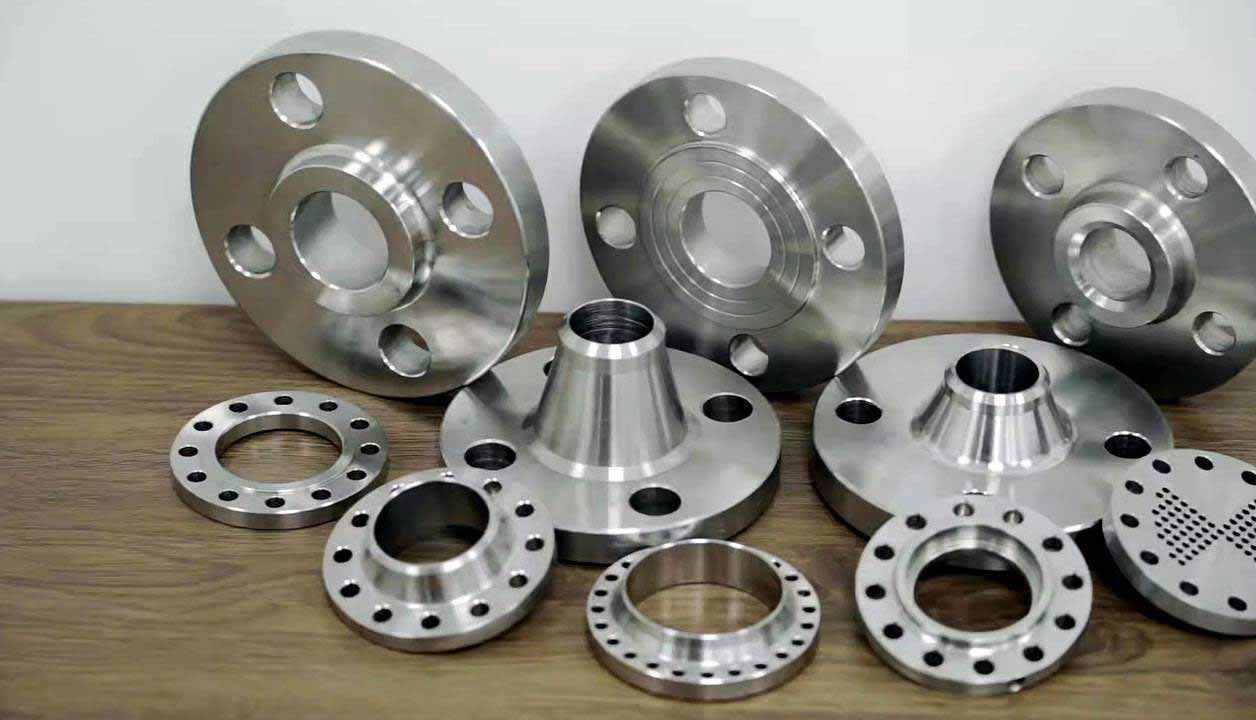 | Stainless Steel Flanges Manufacturer of ASTM A182 F304L Slip on and WNRF Flanges in India Stainless Steel 304L Flanges 304L Stainless Steel Flanges are made up of 304L... View product → |
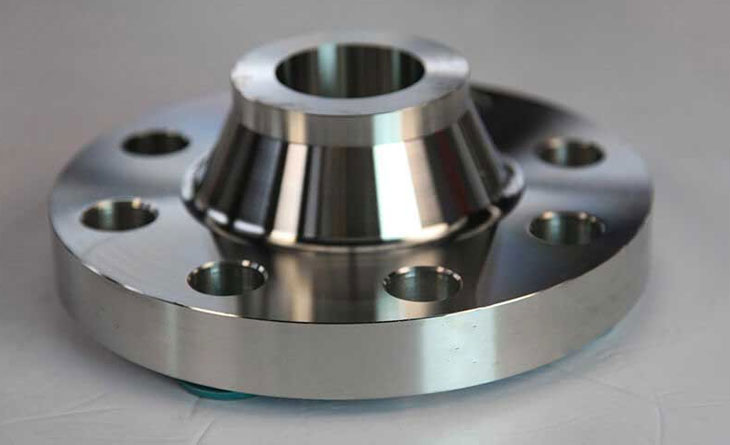 | Stainless Steel Flanges ASTM A182 F316 Blind flange and Weld Neck Flanges Manufacturer in India Stainless Steel 316 Flanges 316 Stainless Steel Flange Dimensions differ from... View product → |
Frequently asked questions
What does SWRF mean on a stainless steel flange?
SWRF means slip-on weld raised-face flange. The pipe passes through the bore, and fillet welds attach it to the flange.
Which dimensions should buyers confirm for an SWRF flange?
Confirm the outside diameter, thickness, bore, raised-face diameter and height, bolt-circle diameter, bolt-hole count, hole diameter and flange class or pressure rating.
Should the dimensional standard and stainless grade be specified together?
Yes. State the dimensional standard, such as ASME B16.5 or EN 1092-1, alongside the grade, such as stainless steel 304 or 904L.
What should you verify before ordering a stainless steel SWRF flange?
Verify pipe outside diameter and schedule, facing, gasket type, bolt dimensions and material, weld details, service conditions and required documents.
What traceability documents should accompany the flange?
Request the heat number, material test certificate, applicable chemical and mechanical results, dimensional inspection records and any specified nondestructive examination reports.
Related products
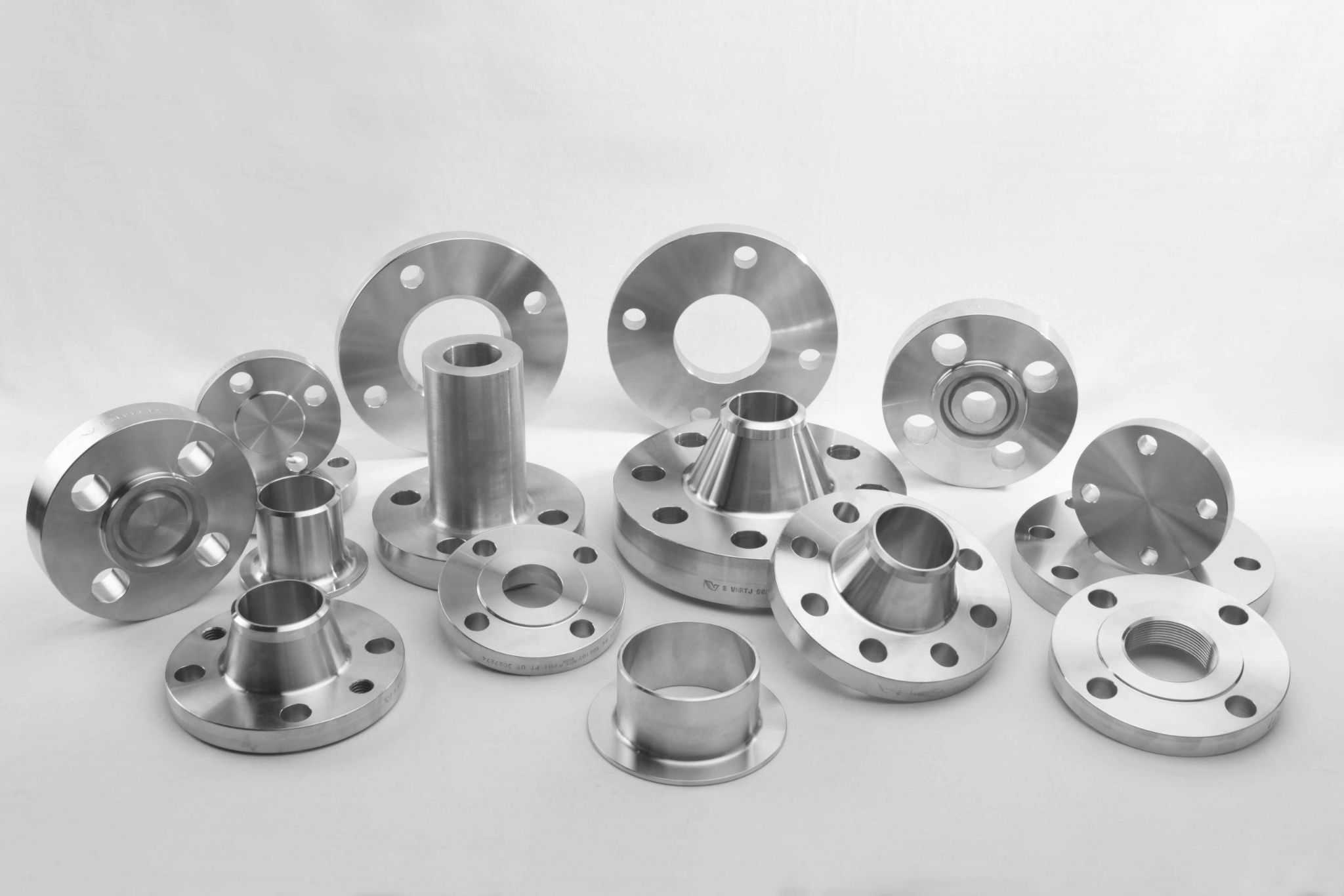 | Stainless Steel Flanges PED Steel Flanges / Weld Neck Flanges / ASTM A 182 Stainless Steel WNRF Flanges,Din Standard Flanges; DIN... View product → |
 | Stainless Steel Flanges Manufacturer – Chirag Steel Chirag Steel is a trusted and reliable Stainless Steel 316L Flanges Manufacturer, Supplier, and Exporter, offering... View product → |
 | Stainless Steel Flanges ASTM A182 F304 Blind Flange Dimension and A182 Grade F304 Slip on Flange pressure classs Great Steel & Metals is a supplier of all types of 304... View product → |
 | Stainless Steel Flanges Manufacturer – Chirag Steel Chirag Steel is a leading Stainless Steel 904L Flanges Manufacturer, Supplier, and Exporter, offering premium-quality... View product → |