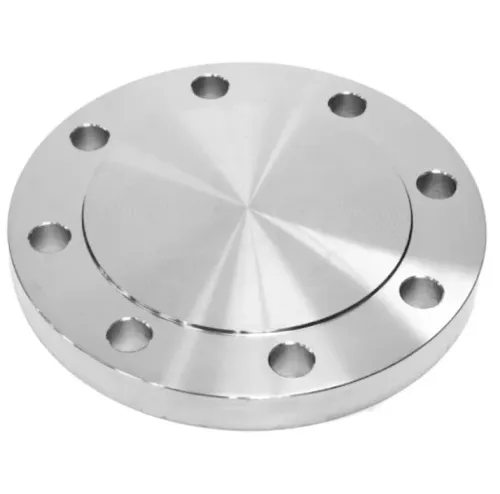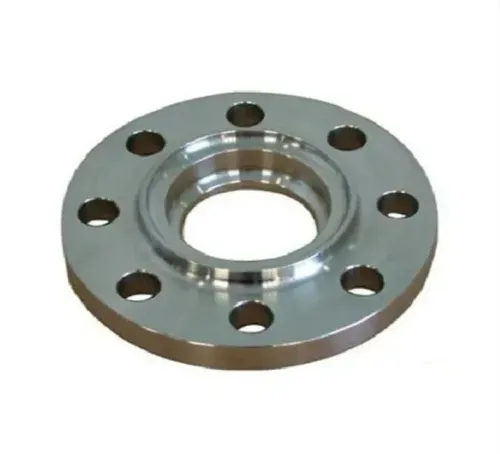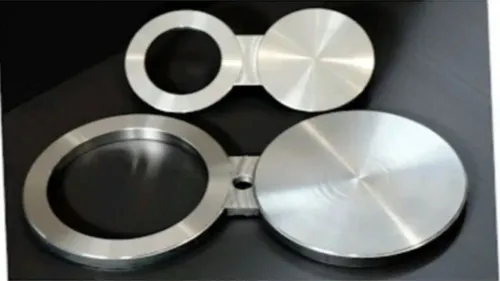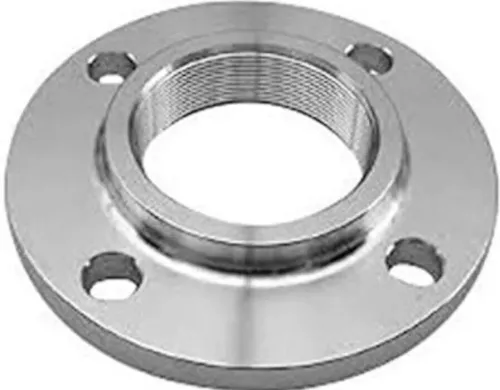

A long weldneck flange is not interchangeable with a standard weldneck flange simply because both carry the same NPS and pressure class. By checking the hub, bore, drilling, material records, rating basis, and supplier scope, you can determine when its added weight and cost solve a real design problem rather than create an expensive mismatch.
Key takeaways
- Specify ASME B16.5 or B16.47, pressure class, NPS, bore, face, and bolt pattern.
- Choose the longer hub when stress control, alignment, or thermal cycling justifies added material.
- Request heat number, material test report, heat treatment records, and dimensional inspection results.
- Compare Hyderabad suppliers on traceability, documentation, delivery control, and quote completeness.
What a long weldneck flange changes at the connection
A long weldneck flange buys controlled stress transfer, not simply a longer-looking flange. It has an extended, tapered hub, a butt-weld end, a machined bore, a flange ring, a raised face or RTJ groove, and a defined bolt-hole pattern.
The longer hub moves the butt weld away from the flange face and creates a gradual transition from the pipe or vessel wall. A bore matched to the pipe inside diameter or vessel connection removes an internal step that can increase turbulence, local erosion, or weld mismatch.
The tapered hub also distributes bending and pressure loads more gradually than the short connection on a slip-on flange and can improve alignment during butt welding.
| Connection | What changes | When the added geometry earns consideration |
|---|---|---|
| Long weldneck | Longer load path, matched bore, butt weld | High-temperature, high-pressure, cyclic, or vessel-nozzle service |
| Standard weld neck | Shorter tapered transition | Ordinary butt-welded pipe connections |
| Slip-on | Fillet-welded, less gradual load path | Lower-demand service where fit and cost dominate |
These weldneck flange advantages matter when thermal expansion, fatigue, nozzle loads, or bore continuity require engineering review. Extra forged material and weight are not benefits by themselves.
For long weldneck flange procurement, verify the material group, pressure class, operating temperature, permissible stress, nozzle-load limits, and piping-flexibility analysis. “Long” does not establish suitability or interchangeability; the value lies in specified geometry and controlled load transfer.
When the longer hub justifies its extra material and cost
Pay for the longer hub when the drawing requires extra transition length, vessel-nozzle reinforcement, thermal separation, fatigue resistance, or a custom bore. A standard weld neck has a shorter tapered hub and suits ordinary butt-welded pipe connections; the long version adds forged material, weight, machining, and cost only when its geometry solves a design problem.
| Alternative | Connection and advantage | Why it is not always a substitute |
|---|---|---|
| Standard weld neck | Shorter tapered hub with a butt-weld end | Lacks the specified transition length or custom bore |
| Slip-on | Easier fitting and often lower cost; fillet-welded | Its less gradual load path is weaker for cyclic stress or precise bore continuity |
| Socket-weld | Socket and fillet weld for smaller-bore service | Cannot replace a specified butt-welded long hub |
| Threaded | Avoids welding | Threads become unsuitable with leakage, vibration, temperature, or inadequate wall thickness |
| Lap-joint | Stub end allows alignment and flange removal | Requires a stub end and is not a direct LWN assembly replacement |
Matching NPS or DN and Class 600 does not prove interchangeability. During stainless steel flange sourcing, compare the approved drawing, bore, face, drilling, hub length, weld-end geometry, material, and pressure-temperature table.
For long weldneck flange procurement, reject a substitution unless the supplier confirms every dimension and rating basis. A similar-looking flange with a different bore or neck length can create a weld mismatch, internal step, or unapproved nozzle load path.
The extra cost is justified by specified engineering performance, not by the label “long” or a heavier appearance.
What to put on the purchase order before requesting quotes
Do not request quotes from “LWN, 8 inch, Class 600.” That description omits the geometry, material interface, and inspection basis needed for comparable long weldneck flange procurement.
1. State NPS or DN, governing standard, pressure class or PN rating, material grade, facing (RF or RTJ), face finish, flange thickness, outside diameter, bolt-circle diameter, bolt-hole count and diameter, hub dimensions, neck length, overall length, weld-end diameter, bore, pipe schedule or wall thickness, and corrosion allowance.
2. Define the bore interface: it must match the pipe inside diameter, vessel-wall thickness, or a named transition piece. Request an approved dimensional drawing and inspection results for the bore and neck.
Confirm RF or RTJ dimensions, bolt pattern, neck length, and allowable bore against ASME B16.5 for NPS 1/2 through NPS 24 and Classes 150 through 2500, ASME B16.47 for larger flanges where applicable, EN 1092-1 for PN flanges, or the project’s vessel/nozzle standard.
3. Add gasket type, bolting grade, marking, protective packing, delivery basis, certificates, and inspection requirements. Joint assembly also depends on gasket selection, lubrication, alignment, and bolt-load control under ASME PCC-1.
For stainless steel flange sourcing, require the supplier to price every specified dimension and identify deviations rather than silently substituting a standard bore or weld-neck length.
How to verify grade, heat treatment, and traceability
A technically comparable quotation names ASTM A182/A182M with the grade, such as F304L, F316, F316L, or F904L. The grade alone does not establish pressure rating, heat treatment, corrosion limits, or supplementary testing during stainless steel flange sourcing.
1. Request the heat number, mill test certificate, chemical composition, tensile strength, yield strength, elongation, hardness where specified, solution-annealing condition, dimensional results, and supplementary test reports. Trace every flange marking to its certificate; an untraceable item is not equivalent to a documented one.
2. Use positive material identification (PMI) to confirm alloy identity, but do not accept PMI as a replacement for the full certificate or mechanical testing. Check the certificate against the purchase order and the specified standard.
3. Select 316 or 316L for chloride exposure only after the project corrosion assessment. 316L reduces welding-sensitization risk, but still requires a qualified welding procedure, suitable filler, heat-input control, and inspection. Use 304L when its corrosion-service limits are acceptable and welding performance is required.
4. Reserve 904L for specified aggressive corrosion environments after confirming compatibility, fabrication controls, and cost. For reducing or sour service, state ISO 15156/NACE MR0175 requirements, hardness limits, environmental conditions, and supplementary tests at enquiry stage.
5. If duplex is specified, add solution annealing, chemical limits, mechanical tests, ferrite or microstructure examination, and phase-control requirements. A certificate alone cannot prove acceptable phase balance or corrosion performance.
How to compare Hyderabad suppliers beyond the quoted price
A credible bid starts with one comparison basis, not the lowest number. For stainless steel flange sourcing, ask every industrial flange supplier in Hyderabad to price the same standard, grade, pressure-temperature rating basis, face type and finish, bore, neck length, heat-treatment condition, inspection level, certificates, marking, packing, and delivery basis.
| Item | Compare on every bid | Why it matters |
|---|---|---|
| Standard and grade | ASTM A182/A182M F316L, F304L, or the specified grade | Grade alone does not establish rating or corrosion suitability |
| Rating and geometry | Class or PN, pressure-temperature table, RF or RTJ, finish, bore, neck length, drilling | Matching NPS and Class 600 does not prove interchangeability |
| Quality records | Heat number, material certificate, PMI access, dimensional inspection, supplementary tests | A certificate without traceability cannot prove which flange was tested |
| Commercial scope | Machining, corrosion allowance, marking, packing, and delivery basis | A low quote may exclude costly technical work |
The benefits of stainless steel long weldneck flanges for procurement in Hyderabad include regional consolidation without giving up specification control. Ask whether Chirag Steel, or another supplier, can approve the drawing, trace each item to its heat, supply a small quantity, and produce a hard-to-find bore without silently substituting a standard weldneck.
Before approval, compare the drawing and certificate with the requisition. Confirm that the face and machined bore are capped against impact, chlorides, and wet packing, and retain heat and order traceability after packing for monsoon or humid-port movement. Local availability never establishes interchangeability.
Related product
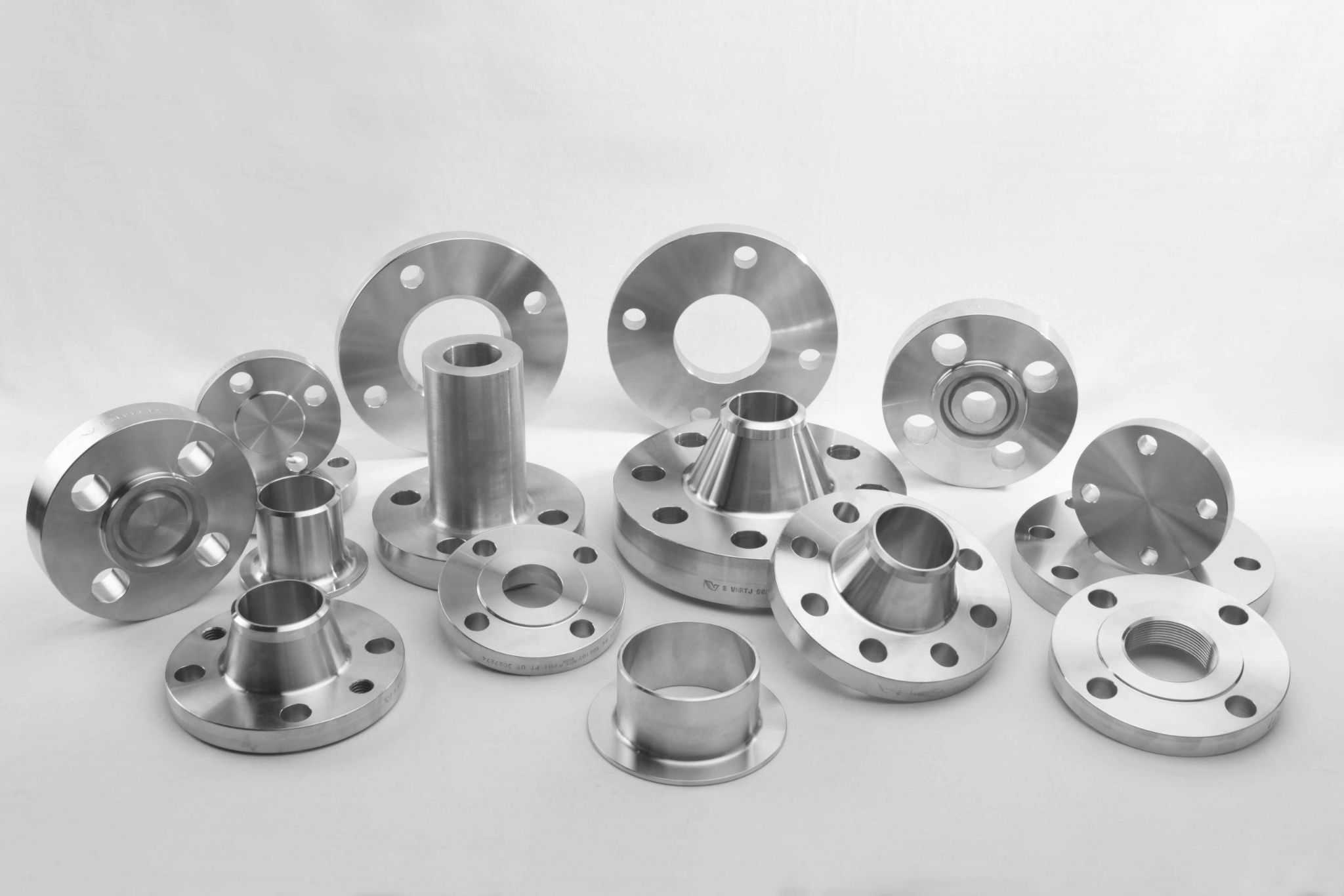 | Stainless Steel Flanges PED Steel Flanges / Weld Neck Flanges / ASTM A 182 Stainless Steel WNRF Flanges,Din Standard Flanges; DIN... View product → |
Frequently asked questions
What changes when a long weldneck flange is used at a connection?
Its extended tapered hub transfers welding and piping stresses more gradually into the flange ring. The butt-weld end and machined bore also support a continuous pipe transition.
When does a long weldneck flange justify its extra cost?
Use it when the connection needs better stress transfer, a longer transition, alignment support, or resistance to demanding thermal and mechanical loading. A standard weldneck flange may be sufficient for less demanding service.
What should a purchase order specify for a long weldneck flange?
State the material grade, ASME B16.5 or ASME B16.47 series, NPS, pressure class, flange face, bore or pipe schedule, bolt-hole pattern, quantity, dimensional requirements, testing, documentation, and delivery terms.
How can you compare stainless steel flange suppliers in Hyderabad?
Compare the quoted specification, heat and lot traceability, material test reports, inspection records, machining control, packing, lead time, replacement terms, and total delivered cost—not only the unit price.