A Mumbai flange quotation is only useful when it identifies the alloy, dimensions, rating, facing, manufacturing route, documentation and delivered cost. By the end, you will be able to compare 304 and 316 offers, send a complete enquiry, verify fitment and assess whether a supplier’s price includes the safeguards your service requires.
Key takeaways
- Send grade, NPS or DN, rating, standard, facing and quantity for a comparable quote.
- Choose 316 for higher chloride exposure; choose 304 when service conditions permit.
- Confirm flange type, bore, schedule and gasket-facing dimensions before ordering.
- Request material test certificates, heat numbers and inspection documents with the supply.
What determines stainless steel flange price in Mumbai
Stainless steel flanges price in Mumbai cannot be compared from a per-kilogram or per-piece figure alone. Grade, NPS or DN, flange type, Class or PN rating, standard, schedule or bore, facing, quantity and machining all change the base price. A 316 weld-neck flange is not a fair comparison with a 304 slip-on flange.
| Manufacturing route | Material specification | Commercial effect |
|---|---|---|
| Forged flange | ASTM A182/A182M, such as F304L or F316L | Forging, machining and traceable documentation affect cost |
| Fabricated or plate flange | ASTM A240/A240M material, with the route stated | Cutting, forming, welding and additional inspection affect cost |
Use this procedure before judging an offer:
1. Hold grade, NPS/DN, Class or PN, flange type, standard, schedule or bore, facing, quantity and certificates constant. ASME B16.5, EN 1092-1 and JIS dimensions are not interchangeable simply because the nominal size matches.
2. Separate the flange price from GST, packing, freight, insurance, third-party inspection, testing, machining and urgent-delivery charges. Ask whether the quote includes a material test certificate with heat-number traceability.
3. Treat “ex-stock Mumbai” as local availability, not delivered service. Delivery to a Mumbai site adds transport, insurance and delivery-risk terms. A quote for stainless steel flanges in Mumbai is competitive only after the delivery point and every extra charge match.
The information to send for a comparable quotation
Send a dimensioned specification, not a product label. “Stainless flange, 4 inch” leaves the stainless steel flange supplier unable to determine the bore, bolt circle, pressure class, facing or manufacturing standard.
- State the material as ASTM A182 F304, F304L, F316 or F316L, then give NPS or DN, pipe schedule or required bore, and quantity.
- Name the governing standard: ASME B16.5, ASME B16.47, EN 1092-1 or JIS. Include the pressure class or PN rating, flange type, facing, and face finish.
- Provide bolt-hole details, including bolt-hole count, hole diameter and bolt-circle diameter. These prevent a nominal-size match with the wrong drilling.
- Give the delivery location and required date. Specify whether freight is to Mumbai stock, a Mumbai project site or another consignee address.
- Define the inspection package: material test certificate showing grade, chemistry, mechanical properties, applicable standard and heat number; heat-number traceability to flange marking or packaging; and any PMI, hydrostatic or dimensional inspection.
State whether GST must be added separately, and request separate lines for packing, freight, testing and expedited delivery. Buyers comparing stainless steel flanges in Mumbai can then compare equivalent offers instead of headline prices that hide different scopes.
A generic “304” or “316” quote is incomplete when the purchase order requires the exact grade and certificate.
304 versus 316: choosing the alloy and the L grade
For clean, non-corrosive service, the 304 stainless steel flange price is usually the better buy. A 316 stainless steel flange price is justified when chloride concentration, temperature, crevices, deposits or cleaning conditions create a credible pitting or crevice-corrosion risk.
| Grade | Cost and resistance | Welding implication |
|---|---|---|
| 304 | Lower cost; suitable for many clean water, indoor and general industrial services | Use 304 when welding does not create a sensitization concern |
| 304L | Slight premium over 304; same basic corrosion family | Lower carbon reduces sensitization risk in the heat-affected zone |
| 316 | Higher cost; molybdenum improves chloride resistance | Select for brine, marine exposure or selected chemical environments after checking conditions |
| 316L | Highest of these options; combines molybdenum with low carbon | Use for welded chloride service when corrosion consequences justify it |
Do not approve 316 because a seller calls it “marine grade.” Check chloride concentration, operating temperature, stagnant pockets, gasket crevices, deposits and whether cleaning leaves concentrated salts. A 316 flange can still fail in severe chloride service.
Choose 304L or 316L when the flange or adjoining pipe will be welded and the procedure, service temperature and corrosion consequence justify lower carbon. An unwelded flange in clean service does not automatically warrant the L-grade premium.
A quote stating only “304” or “316” does not confirm the carbon grade. State ASTM A182 F304, F304L, F316 or F316L on the purchase order, along with the certificate requirement. Require an MTC showing heat number, chemistry, mechanical properties and standard, with the heat number traceable to the flange marking or package.
Matching flange type, pipe dimensions and international standards
A flange fits only when its dimensions, facing and pressure designation match both the pipe and the mating flange. “4-inch” or DN100 alone is not proof of compatibility; the wrong bore, bolt circle or face can stop assembly or create a leak.
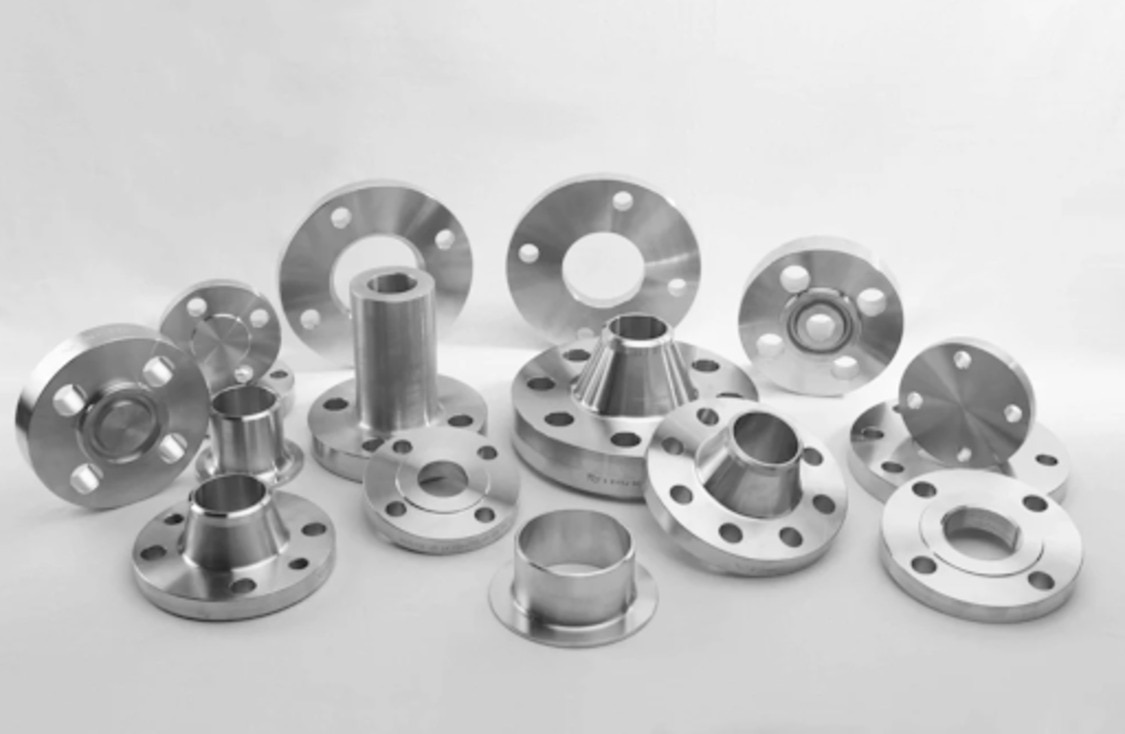
| Design | Installation consequence | Typical use |
|---|---|---|
| Weld neck | Requires full-penetration welding and alignment; smooth bore continuity suits cyclic service | High pressure or temperature |
| Slip-on | Easier alignment and welding access, but welds and internal step reduce bore continuity | General low-to-moderate duty |
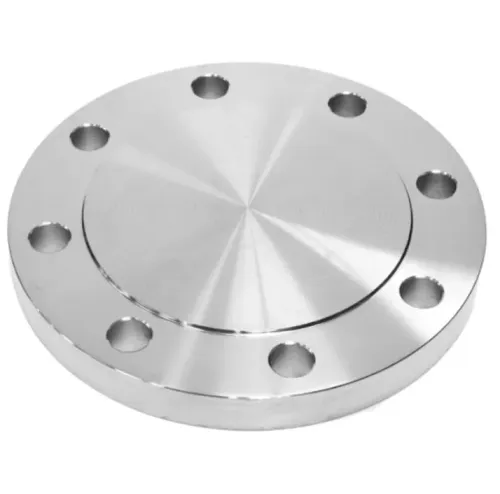
| Blind | No pipe bore; adds weight and closes a line or vessel nozzle | Isolation and pressure testing |
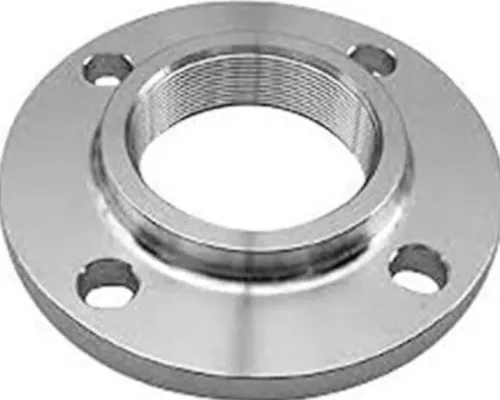
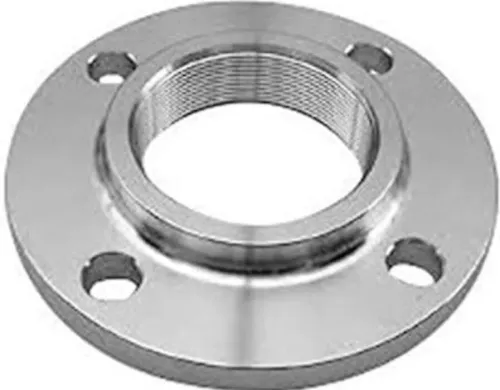
| Threaded | No welding, but thread engagement limits service and fatigue resistance | Smaller lines and field repairs |
| Socket-weld | Compact, with accessible fillet welding; internal gap needs correct installation | Small-bore pressure piping |
| Lap-joint | Stub-end weld stays with the pipe, allowing flange rotation and disassembly | Frequent dismantling or costly alloys |
| Long weld neck | Extended hub improves reinforcement but adds weight and welding demand | Vessels, high stress and cyclic service |
For a quotation from a stainless steel flange supplier, confirm:
- NPS or DN, pipe outside diameter, schedule or required bore
- Flange thickness, bolt-circle diameter, hole count and hole diameter
- Type, pressure class or PN rating, facing and face finish
- Dimensioned drawing, governing standard, quantity and delivery point
ASME B16.5 covers NPS 1/2 through 24; larger sizes use ASME B16.47. EN 1092-1 uses DN and PN; DIN designations identify German dimensional systems, while JIS uses its own flange dimensions and pressure classes. Two flanges with the same DN can still fail to bolt together.
RF, FF and RTJ require matching gaskets, bolt length, mating face and equipment design. This check matters when comparing stainless steel flanges in Mumbai because substituting RF for FF can damage a light equipment flange.
Checking service safety, documents and Mumbai supply reliability
Do not treat ASME Class 150, 300 or 600 as a fixed bar pressure. Check the piping design pressure, material group, service temperature, governing standard and its pressure-temperature tables before approving the rating.
Confirm wall thickness, corrosion allowance, fluid temperature, chloride exposure, gasket material and face finish before selecting RF, FF or RTJ. These faces are not interchangeable; changing one can alter gasket seating, bolt load and equipment stress. Never substitute a face without checking the mating flange and equipment limits.
| Face | Required match | Main risk if wrong |
|---|---|---|
| RF | RF mating face, gasket, bolt length and finish | Excessive stress on an FF equipment flange |
| FF | FF mating face and full-face gasket | Leakage or damaged equipment from incompatible loading |
| RTJ | Matching ring groove, metal ring and bolt load | Failed seal if groove or ring dimensions differ |
Before releasing the purchase order, require:
- MTC listing heat number, chemistry, mechanical properties, grade and standard
- Heat number matching the flange marking or package
- PMI and dimensional inspection where specified
- Pickling or passivation where carbon-steel contamination is possible; “polished” alone does not prove passivation
Ask Chirag Steel or another stainless steel flange supplier to state stock status, traceability, delivery point, GST, freight, packing and inspection scope. A quotation used to compare stainless steel flanges price in Mumbai is reliable only when those items are written beside the base price, not hidden behind a headline figure.
Related products
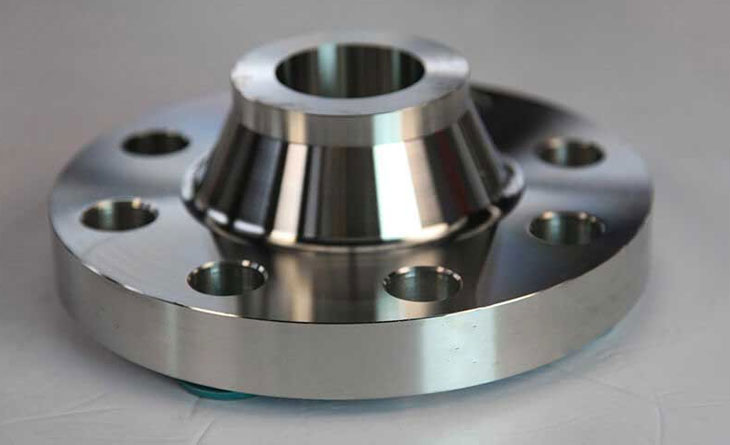 | Stainless Steel Flanges ASTM A182 F316 Blind flange and Weld Neck Flanges Manufacturer in India Stainless Steel 316 Flanges 316 Stainless Steel Flange Dimensions differ from... View product → |
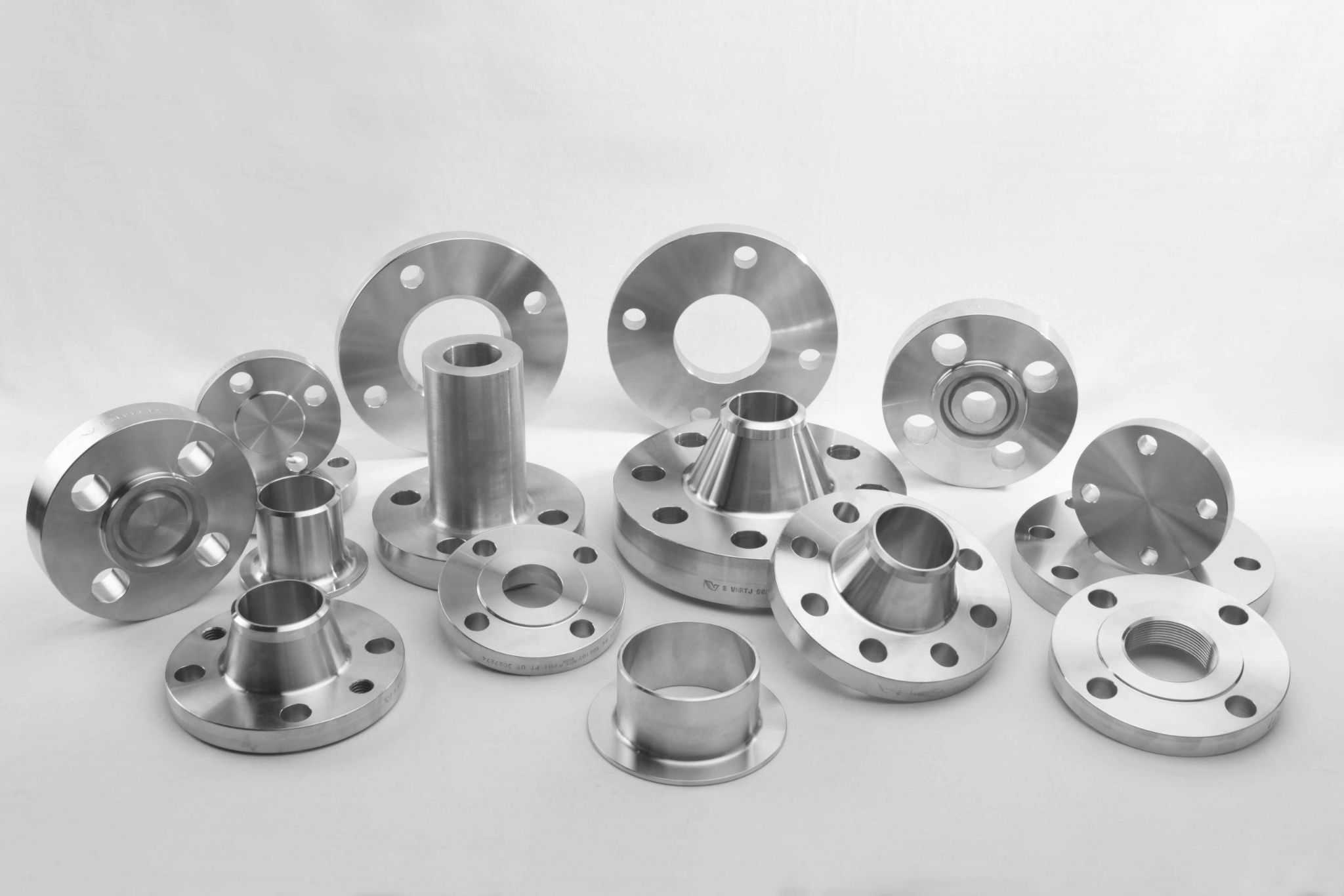 | Stainless Steel Flanges PED Steel Flanges / Weld Neck Flanges / ASTM A 182 Stainless Steel WNRF Flanges,Din Standard Flanges; DIN... View product → |
Frequently asked questions
What determines stainless steel flanges price in Mumbai?
Price depends on alloy grade, NPS or DN, flange type, Class or PN rating, standard, bore or schedule, facing, quantity and machining. Compare quotations only when these details match.
What information should I send for a comparable flange quotation?
Send the material grade and L grade, quantity, NPS or DN, pipe schedule or bore, flange type, pressure rating, facing, standard, finish and any testing or document requirements.
Should I choose a 304 or 316 stainless steel flange?
Choose 304 when the process environment supports its corrosion resistance. Choose 316 when chloride exposure or a more aggressive service environment justifies its higher alloy content. Specify 304L or 316L when welding and low-carbon material requirements apply.
How do I match a flange to pipe dimensions and standards?
Match the flange type, nominal size, bore, pressure class or PN rating, facing and drilling standard to the pipe, valve or mating flange. Check standards such as ASME B16.5, ASME B16.47, EN 1092-1 or the project specification.
Which documents should I request from a stainless steel flange supplier?
Request the material test certificate, heat number traceability, dimensional inspection report and certificate of conformity. Add PMI, pressure testing or third-party inspection records when the service or project specification requires them.
Related products
 | Stainless Steel Flanges Manufacturer – Chirag Steel Chirag Steel is a trusted and reliable Stainless Steel 316L Flanges Manufacturer, Supplier, and Exporter, offering... View product → |
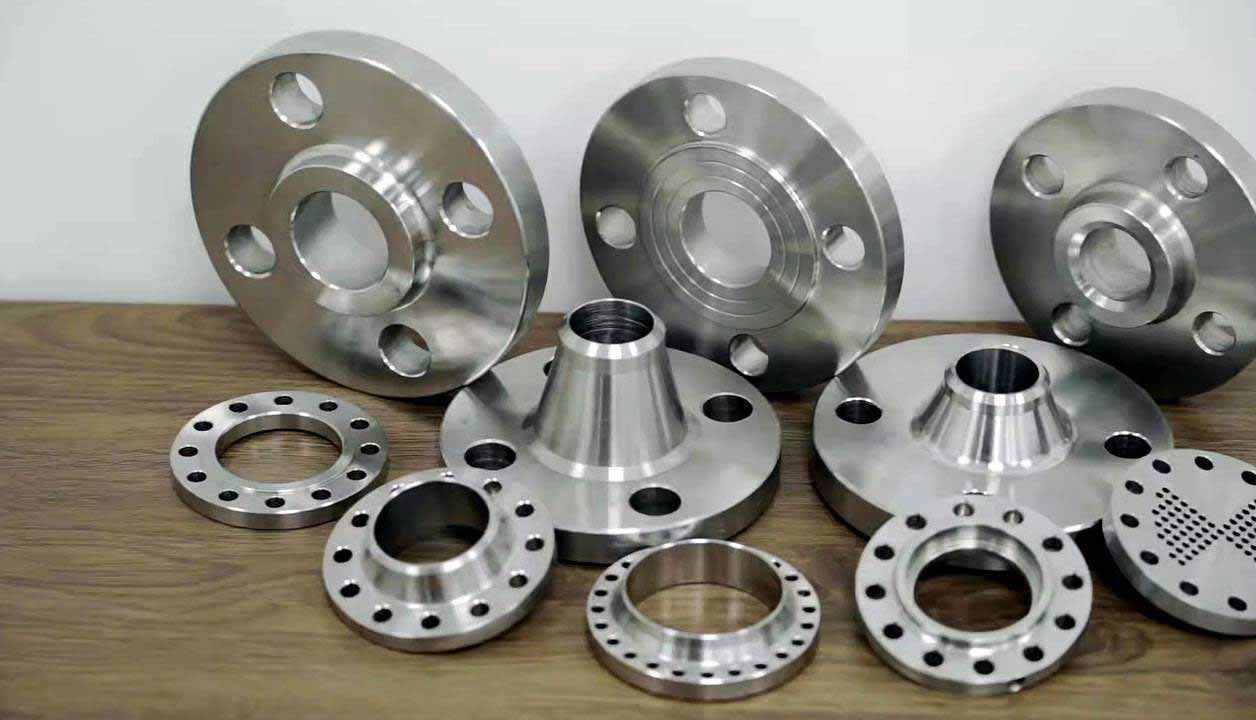 | Stainless Steel Flanges Manufacturer of ASTM A182 F304L Slip on and WNRF Flanges in India Stainless Steel 304L Flanges 304L Stainless Steel Flanges are made up of 304L... View product → |
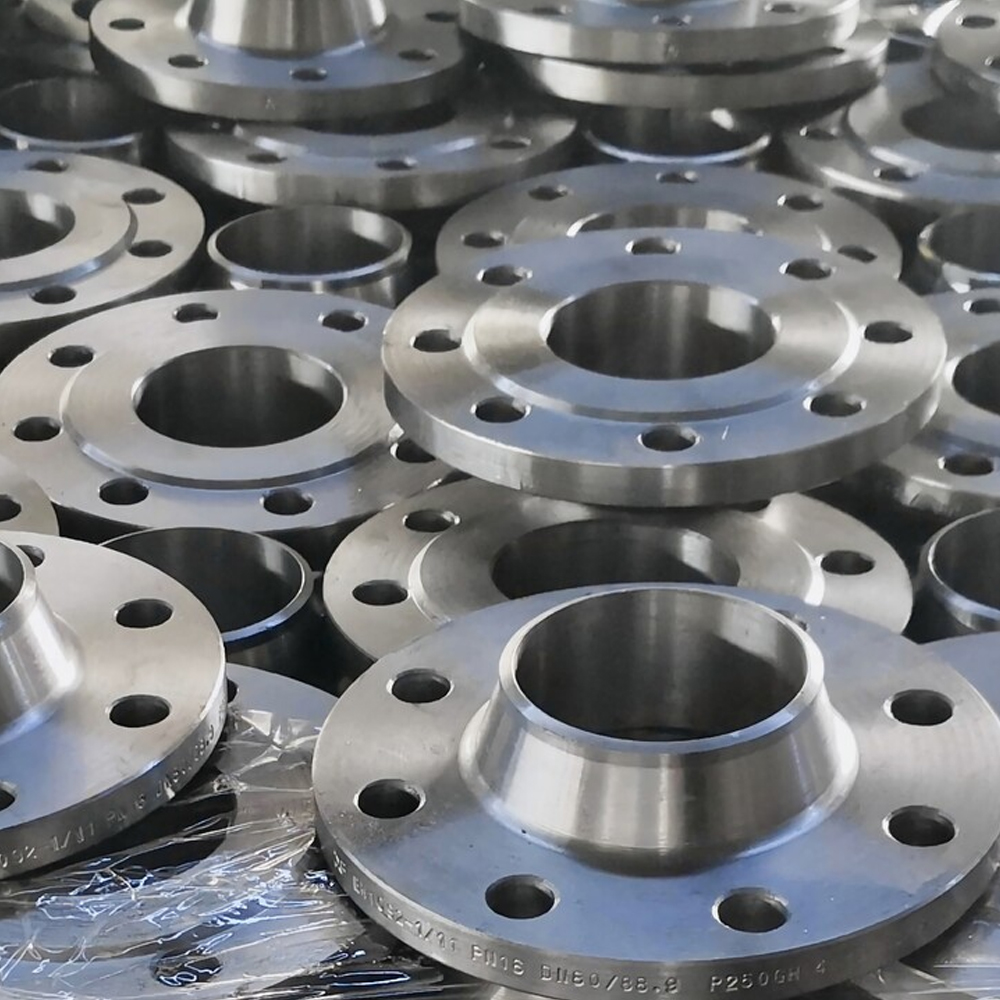 | Stainless Steel Flanges ASTM A182 F304 Blind Flange Dimension and A182 Grade F304 Slip on Flange pressure classs Great Steel & Metals is a supplier of all types of 304... View product → |
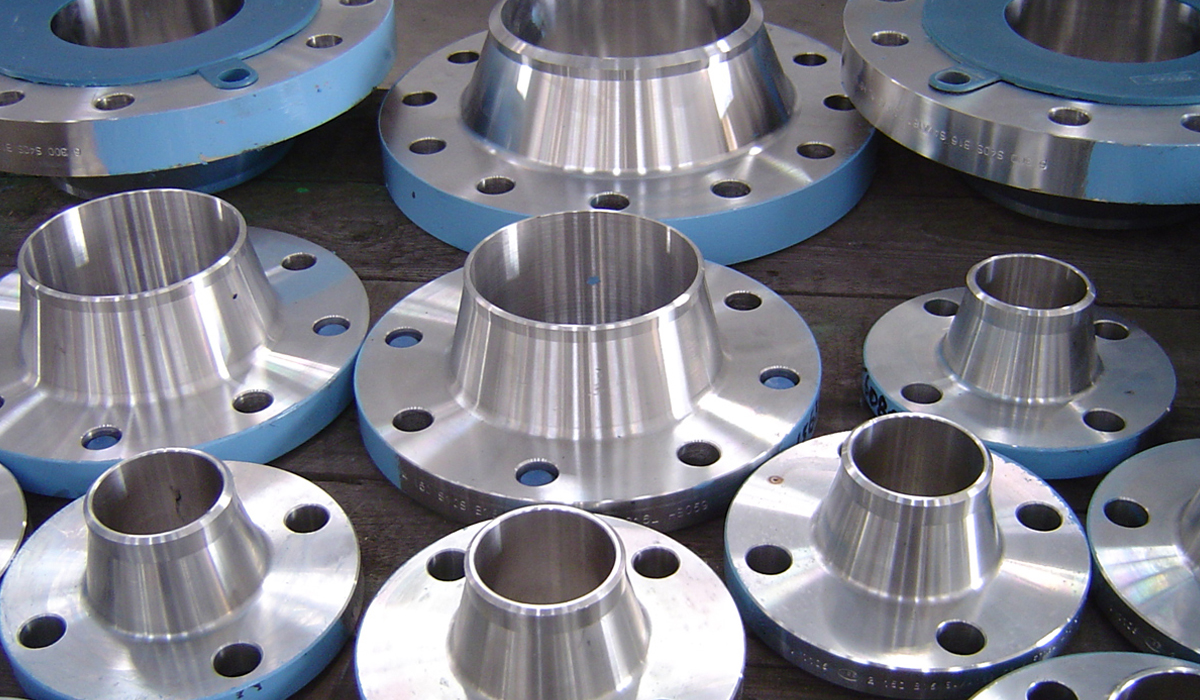 | Stainless Steel Flanges Manufacturer – Chirag Steel Chirag Steel is a leading Stainless Steel 904L Flanges Manufacturer, Supplier, and Exporter, offering premium-quality... View product → |