
Choose a lap-joint assembly when dismantling, bolt-hole orientation, or high-alloy material cost controls the design; choose a fixed flange when weld integrity, cyclic loading, and minimum joint movement matter more. The decision depends on the complete assembly, governing dimensional standard, pipe geometry, material grade, and export documents—not on nominal size alone.
Key takeaways
- Choose lap joints for repeated dismantling and difficult bolt-hole alignment.
- Use fixed flanges when rigidity, alignment, and lower assembly movement matter.
- Match NPS, pressure class, bore, facing, and gasket before ordering.
- Specify grade, weld controls, PMI, hydrotest records, and traceability documents.
When should you choose a lap joint or a fixed flange?
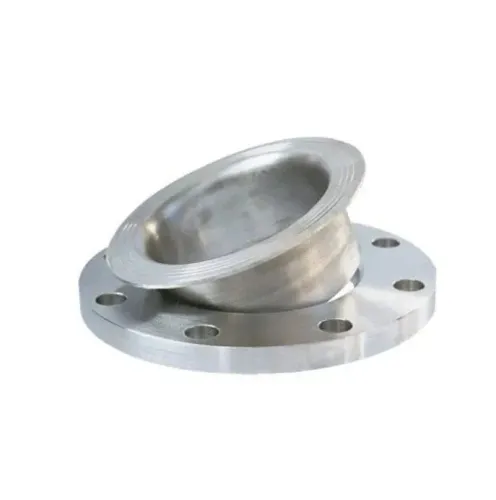
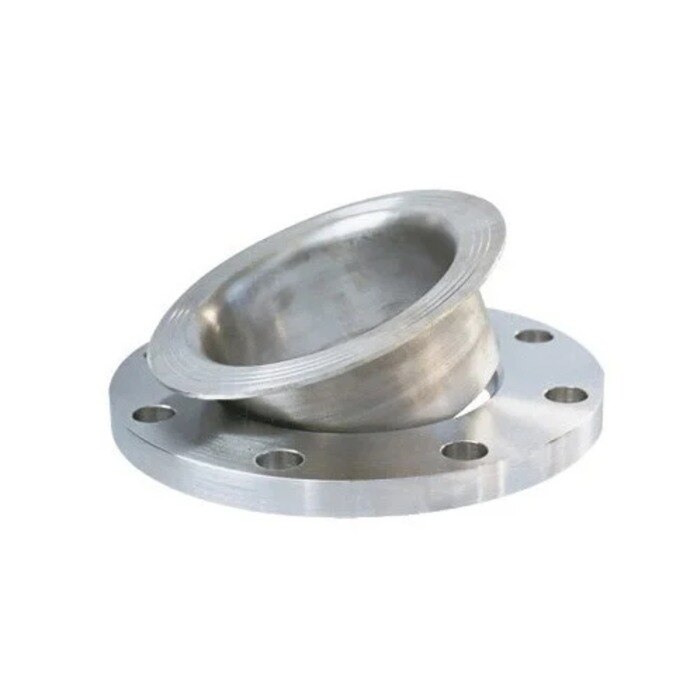
Choose a lap-joint connection when you need repeated dismantling, difficult bolt-hole orientation, frequent maintenance, or corrosion resistance only at the wetted stub end. It uses two components: a stub end welded to the pipe and a loose backing flange that rotates around it.
The stub end supplies the gasket-contacting face and contacts the process fluid; the backing flange cannot create a complete connection by itself.
| Option | Best fit | Main trade-off |
|---|---|---|
| Lap joint | Repeated disassembly, awkward alignment, alloy limited to the stub end | Additional weld, loose component and tighter fit-up controls |
| Fixed flange | Permanent orientation, fewer components, resistance to rotation and external loads | Alignment is less forgiving and high-alloy material may cost more |
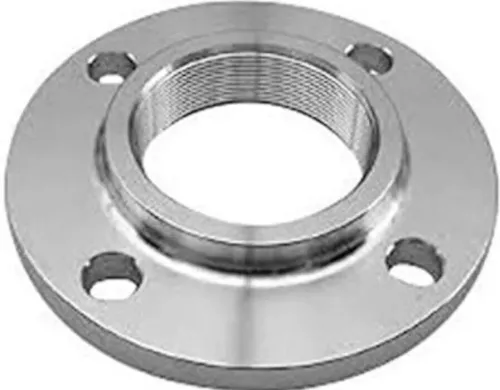
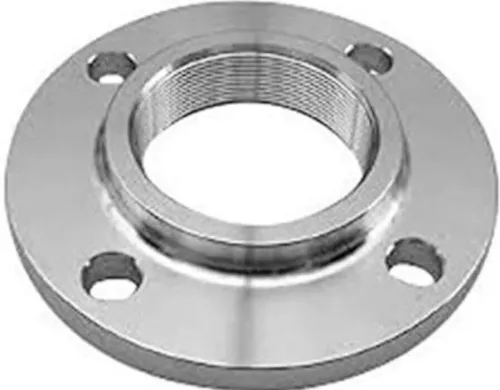
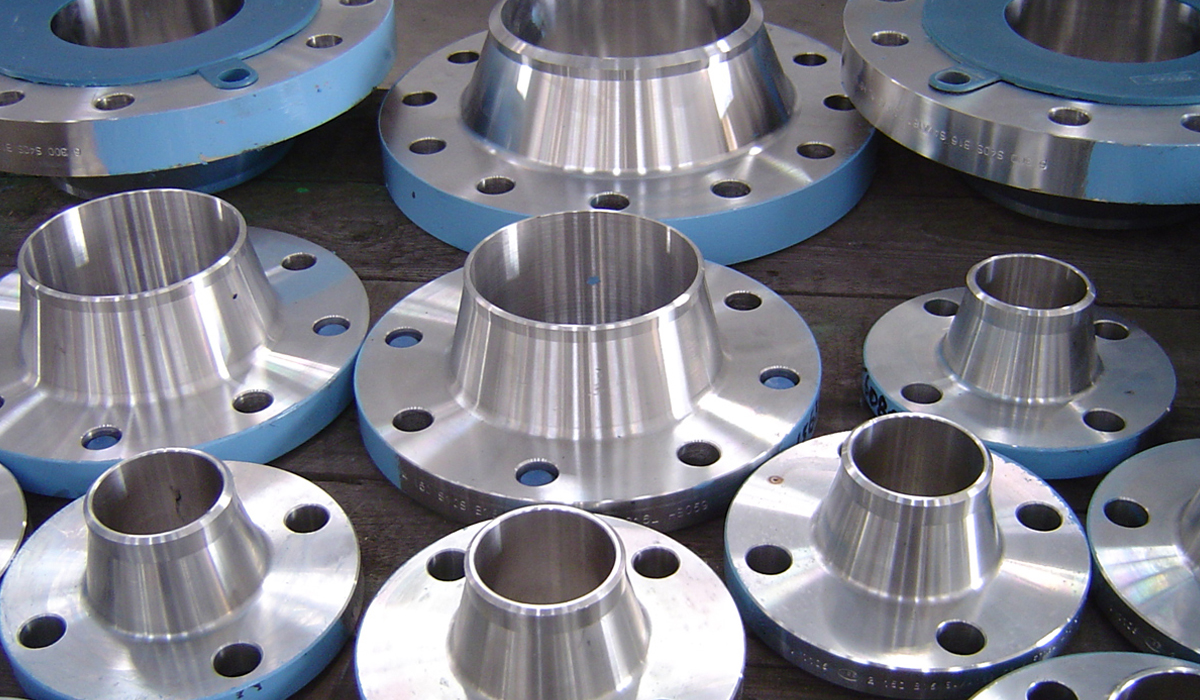
“Fixed flange” is not a precise purchase term. Identify whether you need a weld-neck, slip-on, socket-weld, threaded or blind flange. A weld-neck suits severe cyclic service and high loads because its tapered hub and butt weld reduce stress concentration; slip-on or socket-weld designs require confirmation of the weld and pressure design.
For stainless steel lap joint flanges or fixed flanges for export from Ankleshwar, specify:
- Matching stub-end pattern, facing, bore, lap diameter, lap thickness and material
- Pipe outside diameter, wall thickness, pressure class, standard and service temperature
- Gasket, bolt grade and inspection requirements
Confirm the project piping class and service conditions before choosing either arrangement. A 904L stub end, for example, is justified only when the process requires its corrosion resistance.
How do lap-joint and fixed flanges compare in field use?
Lap-joint flanges make field alignment easier because you can rotate the loose backing ring until the bolt holes line up. A practical lap-joint flange comparison looks like this:
| Option | Field advantage | Field limitation |
|---|---|---|
| Lap-joint flange | Rotate the backing ring for bolt alignment; remove bolts and slide the pipe with its stub end away | Adds a stub-end weld, loose handling component, fit-up controls, gasket-seating checks, and inspection work |
| Fixed flange | Welded or threaded connection fixes bolt orientation and creates a more rigid joint | Alignment is less forgiving, but there is no backing-ring movement |
After disassembly, reuse the backing ring only after inspecting its face, bore, and bolt holes for damage, distortion, and corrosion. The stub end remains the wetted, gasket-contacting component.
Compare complete installed cost, not the flange price. A lap-joint design can limit expensive alloy to the stub end, as with 304 lap-joint flanges, but it adds the stub end, circumferential weld, weld inspection, cleaning, passivation, and assembly controls. For short runs or small sizes, a fixed flange can cost less overall.
Large lines that require frequent dismantling can repay the extra work through faster field maintenance.
Choose a weld-neck fixed flange for severe thermal cycling, vibration, high external loads, or a specification requiring maximum joint rigidity. For either design, confirm gasket type, face finish, bolt grade, lubrication, and controlled tightening; pressure class alone does not guarantee a leak-tight joint.
How do you match size, pressure class, bore, and facing?
Start with the pipe, not the flange: record nominal pipe size, actual outside diameter, wall thickness, service temperature, design pressure, and governing flange standard. ASME B16.5 covers NPS 1/2 through NPS 24 in Classes 150, 300, 400, 600, 900, 1500, and 2500. ASME B16.47 generally covers NPS 26 through NPS 60.
Metric projects require EN 1092-1 and its PN designation, such as PN16 or PN40.
- Confirm the approved drawing against flange outside diameter, bolt-circle diameter, bolt-hole quantity and diameter, flange thickness, facing, and bore. ASME B16.5, ASME B16.47, EN 1092-1, and DIN dimensions are not interchangeable because the nominal size looks similar.
- For a lap-joint assembly, match the loose backing flange to the stub-end series, lap diameter, and lap thickness. Verify the stub-end bore against pipe outside diameter and wall thickness, including the specified weld preparation and fit-up clearance.
- Identify whether the stub end is short-pattern or long-pattern. That choice changes the internal profile and the space inside the backing ring.
- Check for an internal step at the lap or bore that could restrict flow, interfere with pigging, create a dead leg, or reduce gasket support. A proper lap joint flange comparison therefore requires the complete assembly, not just the ring.
This process applies to stainless steel lap joint flanges or fixed flanges for export from Ankleshwar. Never order by NPS or DN alone.
Which stainless grade and inspection controls belong in the assembly?
State the product standard and grade as separate fields. For 304 lap-joint flanges, name ASTM A182/A182M as the product standard, then specify F304 or F304L for the wetted stub end. Identify the backing-flange grade, pipe grade, qualified weld procedure, and filler metal separately.
F304L is the low-carbon grade used to reduce sensitization during welding; it is not an automatic substitute for every F304 requirement.
| Option | Stub-end specification | Backing-flange decision |
|---|---|---|
| 304 lap joint flanges | ASTM A182/A182M F304 or F304L, as approved | Use the specified grade; do not assume the ring matches the stub end |
| 904L lap joint flanges | 904L or UNS N08904 when process corrosion resistance requires it | A different alloy is acceptable only if approved and kept out of damaging process or crevice exposure |
904L’s higher nickel and molybdenum content, plus copper, can improve resistance over 304 in many sulfuric-acid and chloride services. Concentration, temperature, aeration, contamination, crevices, and weld quality still determine suitability; do not replace a required 904L stub end with 316L or 304.
Request heat and lot traceability, chemical and mechanical test results, dimensional inspection, and PMI where specified. PMI is especially valuable for 904L because appearance cannot reliably distinguish it from 304 or 316L. Confirm whether the inspection certificate must be EN 10204 3.1 or 3.2: they are different certification levels, not interchangeable labels.
What must an Ankleshwar export purchase specification contain?
Give the exporter one controlled line item for every flange-and-stub-end combination. “Stainless steel lap joint flanges or fixed flanges for export from Ankleshwar” is a buying decision, not a complete description.
- State the flange type, short- or long-pattern stub end, nominal size, actual pipe outside diameter and wall thickness, standard and edition, pressure class or PN rating, facing, bore, flange outside diameter, bolt-circle diameter, bolt-hole size and quantity, thickness, material grade, heat-treatment requirement, marking, and quantity.
- Attach the approved drawing and identify the dimensional system: ASME B16.5, ASME B16.47, EN 1092-1, or another named standard. Do not convert Class 150 to PN16 by nominal size alone.
- Request the material test certificate, heat or lot traceability, dimensional report, certificate of conformity, and weld records or PMI records where specified. State whether the inspection certificate is EN 10204 3.1 or 3.2; they are not interchangeable.
- Confirm packing, corrosion protection, mixed-grade identification, country-of-origin documents, ISPM 15 wood-packaging or fumigation rules, customs classification, and Incoterm. HS heading 7307 commonly covers iron or steel pipe fittings, but verify the national tariff subdivision with your customs broker.
- For 904L lap joint flanges, require positive material identification through cutting, welding, inspection, and packing. Chirag Steel can help coordinate a bill of material when 304, 316L, and 904L wetted parts must remain traceable.
Treat stainless steel flanges export in Gujarat as a supply route, never as the specification.
Related products
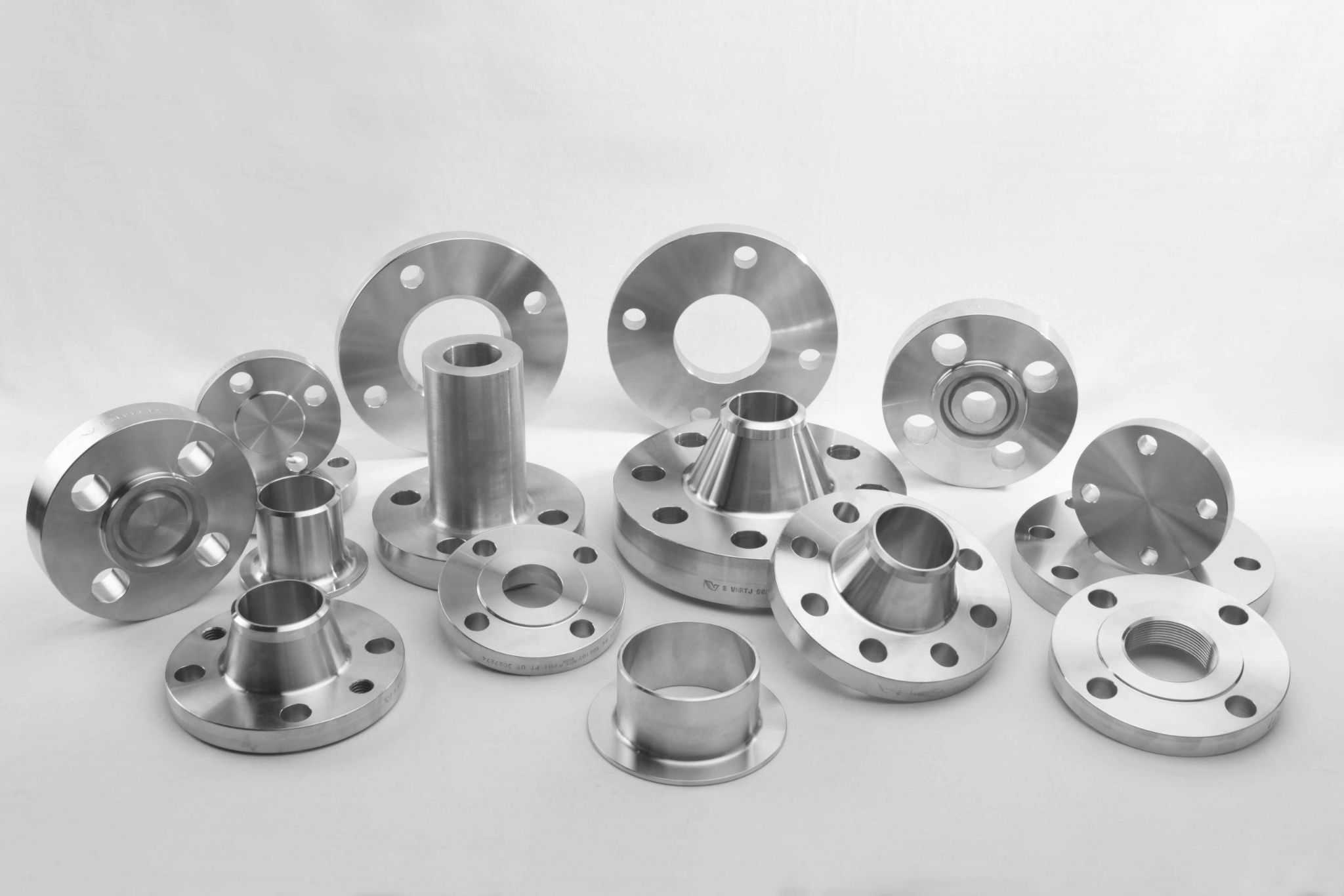 | Stainless Steel Flanges PED Steel Flanges / Weld Neck Flanges / ASTM A 182 Stainless Steel WNRF Flanges,Din Standard Flanges; DIN... View product → |
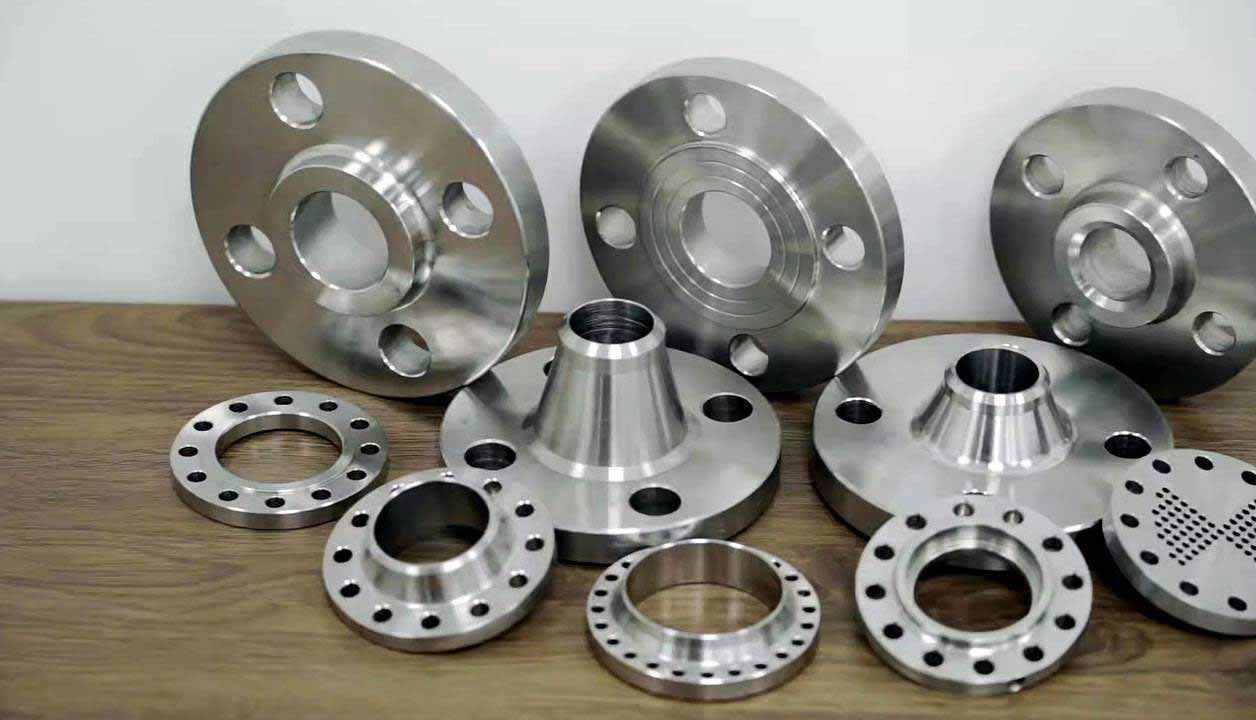 | Stainless Steel Flanges Manufacturer of ASTM A182 F304L Slip on and WNRF Flanges in India Stainless Steel 304L Flanges 304L Stainless Steel Flanges are made up of 304L... View product → |
Frequently asked questions
When should you choose a lap joint rather than a fixed flange?
Choose a lap joint when you need repeated dismantling, easier bolt-hole orientation, frequent maintenance, or a corrosion-resistant stub end with a lower-cost backing flange.
How do lap-joint and fixed flanges compare in field use?
Lap joints rotate for alignment and simplify maintenance, while fixed flanges provide a rigid welded connection with less movement during assembly and service.
How do you match flange size, pressure class, bore, and facing?
Match the nominal pipe size, ASME pressure class, flange bore to the pipe or stub end, and facing type to the mating flange, gasket, temperature, and service.
Which stainless grade and inspection controls belong in the assembly?
Select the grade for chloride, acid, temperature, and weld-service conditions; request material certificates, positive material identification, weld records, dimensional checks, and pressure-test documentation.
What must an Ankleshwar export purchase specification contain?
State the standard, quantity, size, class, facing, bore, grade, stub-end details, weld requirements, marking, packing, inspection plan, certificates, and destination-country documents.
Related products
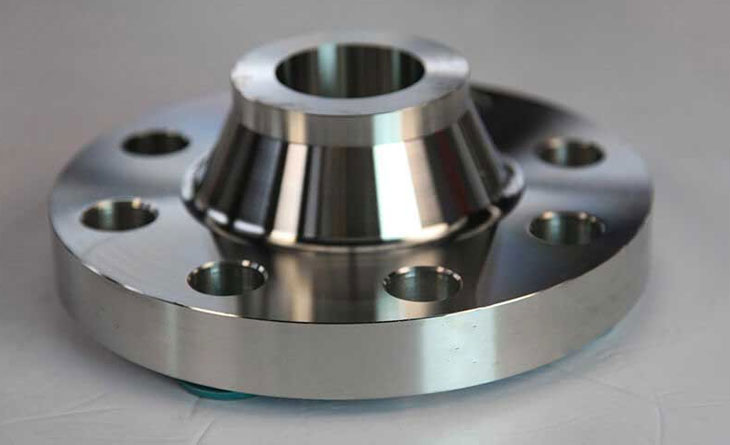 | Stainless Steel Flanges ASTM A182 F316 Blind flange and Weld Neck Flanges Manufacturer in India Stainless Steel 316 Flanges 316 Stainless Steel Flange Dimensions differ from... View product → |
 | Stainless Steel Flanges Manufacturer – Chirag Steel Chirag Steel is a trusted and reliable Stainless Steel 316L Flanges Manufacturer, Supplier, and Exporter, offering... View product → |
 | Stainless Steel Flanges Manufacturer – Chirag Steel Chirag Steel is a leading Stainless Steel 904L Flanges Manufacturer, Supplier, and Exporter, offering premium-quality... View product → |