
Choosing between 316L and 904L depends on fluid chemistry, temperature, chloride exposure, pressure class, joint design, and the service life you need—not on the alloy name alone. By the end, you can select the safer material, specify the correct BLRF geometry and standard, and prevent a dimensionally similar flange from becoming a costly project mismatch.
Key takeaways
- Choose 904L for severe sulfuric acid and chloride exposure after confirming process chemistry.
- Choose 316L when moderate corrosion resistance and easier welding meet the design basis.
- Specify ASME B16.5 or B16.47, pressure class, facing, schedule, and material grade.
- Request heat numbers, EN 10204 3.1 certificates, dimensions, and face-protection details.
What a BLRF Flange Does and What Its Marking Must Include
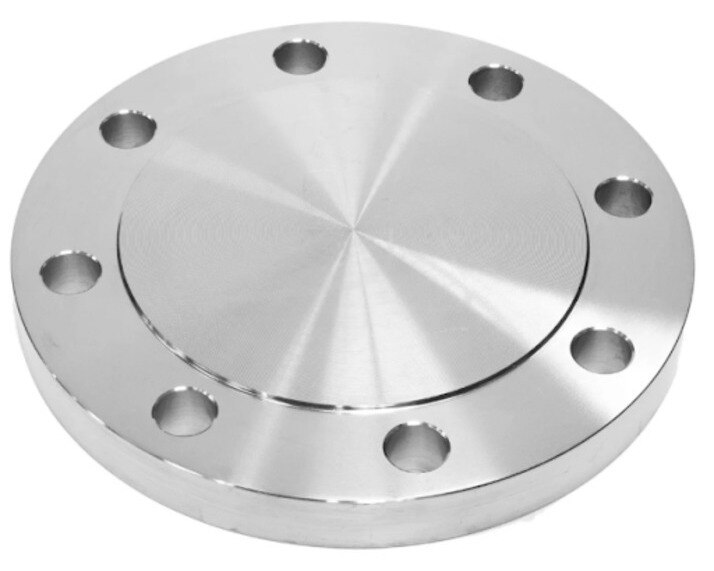
BLRF means blind raised-face flange: a solid, no-bore disc bolted over a pipe, nozzle, valve, or vessel opening to close and isolate the line. Its raised face concentrates gasket load. Protect that surface from gouges, impact, and distortion; a damaged face can lose gasket compression and leak.
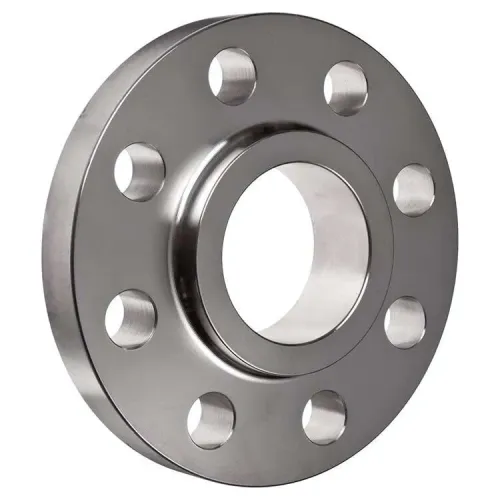
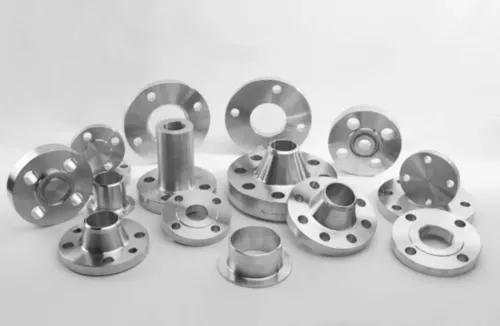
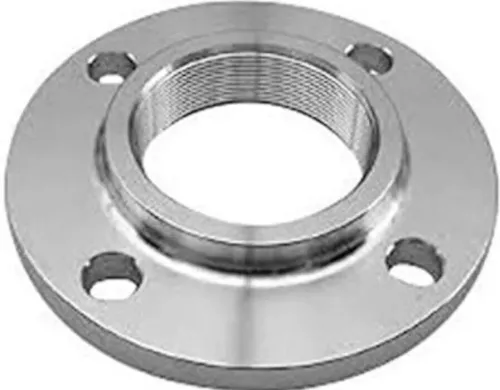
A blind flange closes an opening; it does not connect a pipe end. A weld-neck or slip-on flange fits a pipe end, a threaded flange suits locations where welding is unsuitable, and a lap-joint flange works with a stub end and loose backing flange.
A blind flange is not a line blind. If the design requires a spectacle blind, spacer, or spade, specify ASME B16.48 instead. That distinction matters during isolation, maintenance, and positive separation.
“4-inch 316L” is incomplete for a stainless steel BLRF flange comparison. Put these items on the marking or purchase description:
- NPS or DN and pressure class
- ASME B16.5 for NPS 1/2 through 24, or ASME B16.47 for larger sizes
- RF facing, facing finish, outside diameter, and thickness
- Bolt-circle diameter, bolt-hole count, and bolt-hole diameter
- 316L grade and the required material standard
Pressure capacity comes from the standard, geometry, material group, temperature, and bolting—not alloy designation alone. A 904L flange does not automatically carry a higher rating than an identical 316L flange.
316L Versus 904L: Chemistry, Corrosion, Strength, and Welding
316L, UNS S31603 and ASTM A182 F316L, contains approximately 16–18% chromium, 10–14% nickel, 2–3% molybdenum, and no more than 0.03% carbon. 904L, UNS N08904, contains about 19–23% chromium, 23–28% nickel, 4–5% molybdenum, 1–2% copper, and about 0.02% maximum carbon.
| Property | 316L | 904L |
|---|---|---|
| Corrosion basis | Good general resistance | Stronger resistance to sulfuric and phosphoric acid, pitting, and crevice attack |
| PREN screening | Usually mid-20s | Commonly mid-to-high 30s |
| Practical cost | Lower and easier to source | Higher, with more difficult machining and sourcing |
| Structure | Austenitic | Austenitic |
904L’s extra chromium strengthens the passive film, while its higher molybdenum content raises resistance to chloride-driven pitting and crevice corrosion. Nickel improves stability in reducing acid, and copper particularly supports sulfuric- and phosphoric-acid resistance. PREN = %Cr + 3.3(%Mo) + 16(%N), but it is only a screening comparison—not a pressure rating or service guarantee.
Both alloys require pressure design against the governing standard, geometry, temperature, and bolting; 904L does not automatically permit a higher class. 316L BLRF flanges are usually the economical choice for moderate service, while 904L BLRF flanges justify their premium when corrosion data supports the upgrade.
316L’s low carbon reduces chromium-carbide sensitization during welding. Qualified procedures, controlled heat input, and inspection remain necessary. For stainless steel BLRF flanges 316L or 904L, verify strength, weld procedure, machining, and material traceability before substitution.
Match the Alloy to Chemistry, Chlorides, Temperature, and Service Life
316L is the right starting point when corrosion severity is moderate and the cost of 904L cannot be justified by longer service life. Use 904L when localized attack would create an unacceptable outage, replacement, or contamination risk.
| Service condition | Preferred starting point | Qualification warning |
|---|---|---|
| Chloride-bearing water | 316L BLRF flanges | Check chloride concentration, temperature, oxygen, flow, and crevices; stagnant hot water can pit 316L. |
| Food or pharmaceutical service | 316L BLRF flanges | Confirm cleanability, surface condition, and documented material control; hygiene does not remove corrosion risk. |
| General chemical service | 316L BLRF flanges | Obtain corrosion-rate data for the exact chemical concentration and temperature. |
| Moderate-temperature piping | 316L BLRF flanges | Verify the design code, operating temperature, pressure class, and allowable stresses. |
| Sulfuric acid | 904L BLRF flanges | Check both concentration and temperature; 904L performance changes across the sulfuric-acid range. |
| Phosphoric acid or concentrated chlorides | 904L BLRF flanges | Confirm contaminants, aeration, flow, crevices, and exposure time. |
| Severe pitting or crevice risk | 904L BLRF flanges | Upgrade only when compatibility data shows that 316L would not meet the required life. |
Treat 904L as risk reduction, not universal insurance. Hot, stagnant, highly concentrated chlorides, narrow crevices, contaminants, aeration changes, and long exposure can still cause localized attack.
Before choosing stainless steel BLRF flanges 316L or 904L, record:
- Operating temperature and pressure class
- Shutdown frequency and inspection access
- Expected service life and cost of an unplanned outage
- Exact chemistry, concentration, temperature, and corrosion-rate or compatibility data
PREN helps screen localized-corrosion resistance, but it is not a pressure rating or service guarantee. Use the data for the actual service, not an alloy upgrade as a universal substitute.
Read the Flange Standard Before You Compare Dimensions
Verify fit, sealing, and design load by requiring ASTM A182 or ASME SA182 material in grade F316L or F904L, then identify the governing dimensional standard. Use ASME B16.5 for NPS 1/2 through 24 and ASME B16.47 for larger flanges.
Read the ASME B16.5 table at the selected NPS and Class 150, 300, 400, 600, 900, 1500, or 2500. A useful stainless steel BLRF flange comparison checks every value against the mating flange and piping drawing.
| Check | Read from the standard | Confirm against |
|---|---|---|
| Outside diameter | Flange OD | Mating flange and clearance |
| Bolt pattern | Bolt-circle diameter, hole count, hole diameter | Mating bolts and drawing |
| Thickness | Flange thickness | Design and facing requirements |
| Opening | No bore for BLRF | BLRF or weld-neck specification |
| Pressure basis | NPS and pressure class | Design pressure and temperature |
A BLRF has no pipe bore. A related weld-neck order requires a bore and pipe schedule. Raised-face height is typically 1/16 inch for Class 150 and 1/4 inch for Classes 300–2500, but the table and purchase standard control.
Specify the RF facing finish, gasket type and dimensions, and mating-flange compatibility; “RF” alone is incomplete. Serration, gasket material, bolt load, alignment, and tightening sequence determine compression. A damaged face or uneven tightening can leak before alloy corrosion causes the failure.
Build a Purchase Enquiry That Protects the Project
Send a purchase enquiry that removes interpretation from both the flange and the paperwork. Include:
- NPS or DN; ASME Class or PN rating; and ASME B16.5, ASME B16.47, or EN 1092-1
- BLRF, RF facing, facing finish, and no-bore confirmation
- 316L/F316L or 904L/N08904 grade
- Gasket type and dimensions, bolting grade, design temperature, and design pressure
- Corrosion basis, including fluid, concentration, chloride level, temperature, and required service life
- MTC requirement, PMI requirement, dimensional inspection, and the inspection or test plan
| Record or approval | What it must prove | What it does not prove |
|---|---|---|
| MTC | Product standard, grade, heat number, chemical analysis, mechanical results, and heat treatment | Correct dimensions or surface condition |
| EN 10204 Type 3.1 certificate | Traceability and conformity to the order | PMI or independent testing |
| PMI and dimensional report | Alloy identity and compliance with drawing or standard dimensions | Long-term corrosion suitability |
For critical service, add PMI and independent testing where the inspection plan requires them. A 904L flange is not an automatic 316L replacement: yield strength, thermal expansion, machining, bolting, gasket seating, availability, and delivery can differ. Obtain design-code and corrosion approval before accepting the change.
For buyers comparing a blrf flange supplier in ankleshwar, a useful quotation identifies every dimensional and documentary item, not just size and alloy. Evaluate Chirag Steel against that checklist, as you would any supplier.
Related products
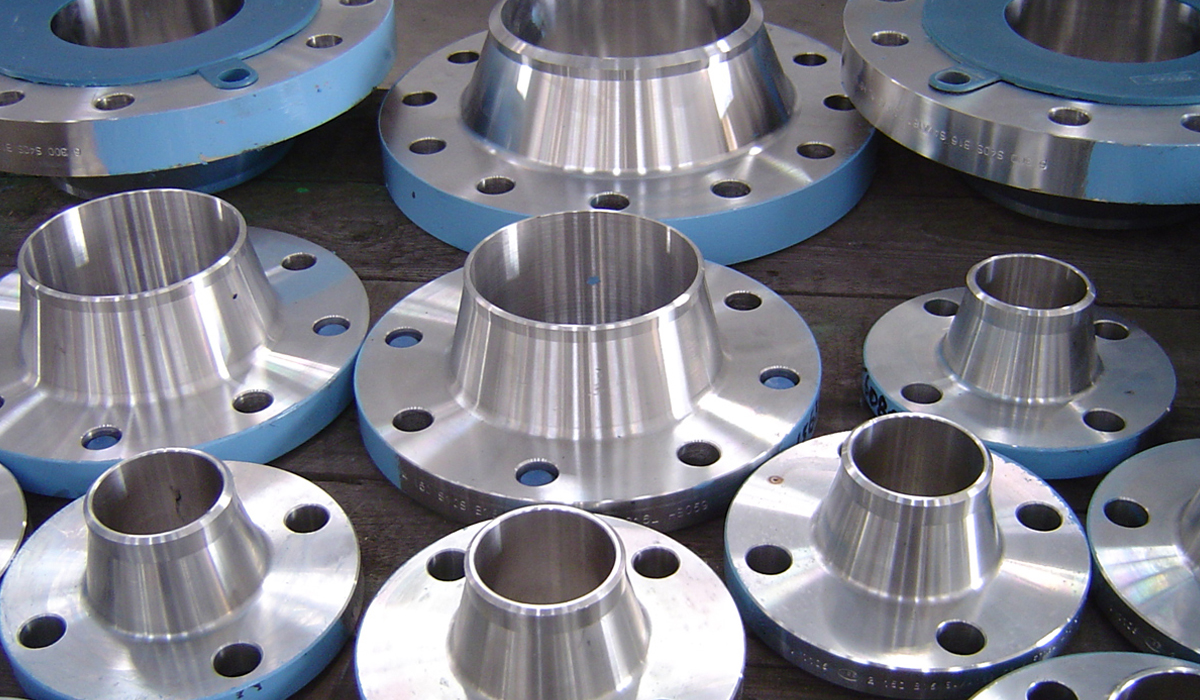 | Stainless Steel Flanges Manufacturer – Chirag Steel Chirag Steel is a leading Stainless Steel 904L Flanges Manufacturer, Supplier, and Exporter, offering premium-quality... View product → |
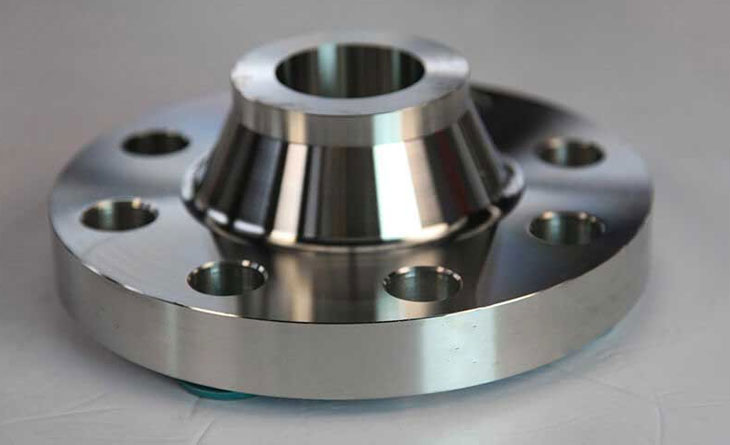 | Stainless Steel Flanges ASTM A182 F316 Blind flange and Weld Neck Flanges Manufacturer in India Stainless Steel 316 Flanges 316 Stainless Steel Flange Dimensions differ from... View product → |
Frequently asked questions
What does BLRF mean on a stainless steel flange?
BLRF means blind raised-face flange. It is a solid disc with no bore that closes a pipe, nozzle, valve, or vessel opening.
What is the main difference between 316L and 904L BLRF flanges?
316L provides strong general corrosion resistance with straightforward welding. 904L contains higher nickel, molybdenum, and copper levels for more demanding acidic and chloride-bearing service.
When should you select 904L instead of 316L?
Select 904L when the process includes aggressive sulfuric acid or chloride conditions that exceed the corrosion resistance of 316L, and confirm the choice against process data.
Which standards control BLRF flange dimensions?
Check the specified standard, such as ASME B16.5 for many NPS 1/2 through 24 flanges or ASME B16.47 for larger sizes, along with the pressure class and facing.
What should a BLRF flange purchase enquiry include?
State the alloy grade, nominal size, pressure class, flange standard, raised-face dimensions, bore or thickness requirements, service chemistry, quantity, testing, marking, and certification requirements.
Related product
 | Stainless Steel Flanges Manufacturer – Chirag Steel Chirag Steel is a trusted and reliable Stainless Steel 316L Flanges Manufacturer, Supplier, and Exporter, offering... View product → |