
Choosing between 316 and 304L depends on chloride exposure, chemical concentration, temperature, welding requirements and the loads imposed on the joint—not on the word “stainless” alone. You will be able to check the flange geometry, material certificate, pressure class, gasket system and lifecycle risk before approving a purchase.
Key takeaways
- Choose 316 for chloride exposure, coastal air or contaminated process water.
- Confirm pipe size, schedule, bore, facing and pressure class before ordering.
- Match the gasket to the fluid, temperature, pressure and flange facing.
- Compare welding, corrosion, replacement and inspection costs—not material price alone.
How to identify a SORF flange and verify the fit
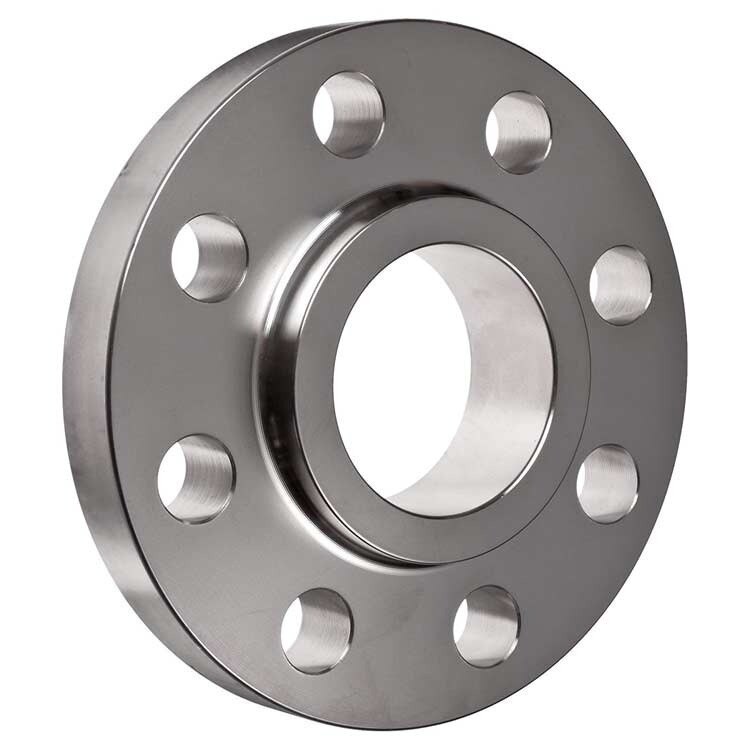
A SORF flange is a slip-on raised-face flange: the pipe enters its bore, is set to the specified internal projection, and is secured by internal and external fillet welds where the piping design requires both. Its raised face compresses the gasket against the mating flange to create the seal.
Confirm these dimensions before installation:
- Nominal pipe size (NPS)
- ASME facing and pressure-class geometry
- Bore or mating pipe schedule
- Pipe outside diameter
- Bolt-circle diameter
- Bolt-hole count and hole diameter
- Flange thickness
- Raised-face height
Do not insert the pipe too far, use undersized fillet welds, or accept a damaged, pitted or gouged face. Misaligned holes indicate a fit problem; never pull the line into alignment by forcing bolts through the connection.
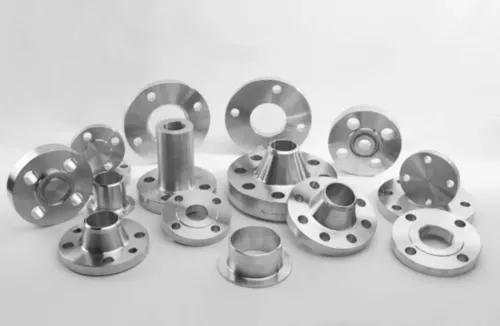
For a stainless steel SORF flange comparison, lower fabrication effort and easier alignment do not provide equal bending or fatigue resistance:
| Flange type | Identifying feature | Main limitation or use |
|---|---|---|
| SORF | Pipe passes through bore; fillet-welded | Lower resistance to bending and cyclic loads |
| Weld-neck | Butt-welded tapered hub | Better for fatigue and external moments |
| Blind | Solid, no pipe bore | Closes a line or nozzle |
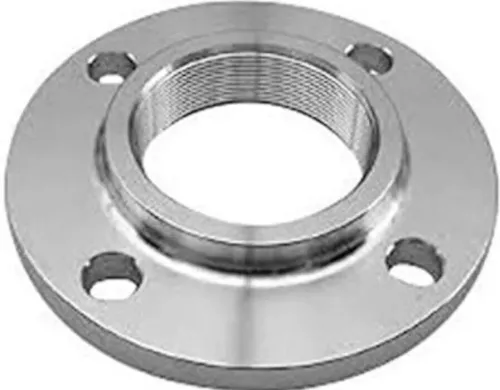
| Threaded | Internal pipe threads | Avoids welding; limited by service and size |
| Socket-weld | Pipe seats in socket | Compact; requires controlled gap |
| Lap-joint | Loose stub-end flange | Useful where frequent dismantling is needed |
Use a weld-neck design for severe vibration, high-cycle service or large piping moments.
When 316 is worth choosing over 304L in Gujarat
304L SORF flanges suit clean, dry, low-chloride service; choose 316 sorf flanges when chloride-driven pitting or crevice corrosion is credible. “Gujarat” alone is not a design basis: Gulf of Khambhat salt air, monsoon wetting, saline cooling water and chloride wash-down create a different risk from an indoor process line.
| Grade | Carbon maximum | Key composition or feature | Practical implication |
|---|---|---|---|
| 304 | 0.080% | Chromium-nickel stainless steel | Lowest-cost option for mild, dry service |
| 304L | 0.030% | ASTM A182 F304L: 18–20% chromium, 8–12% nickel | Preferred over 304 after welding |
| 316 | 0.080% | ASTM A182 F316: 16–18% chromium, 10–14% nickel, 2–3% molybdenum | Better chloride resistance than 304 |
| 316L | 0.030% | Molybdenum-bearing low-carbon grade | Best choice when welding and chlorides coincide |
The 0.030% carbon limit in 304L and 316L reduces sensitisation in the heat-affected zone; non-L 304 and 316 generally permit 0.080%. Molybdenum improves chloride pitting and crevice-corrosion resistance, but 316 does not become immune to stagnant brine, seawater or deposits.
Use 304l sorf flanges for clean, dry lines with low chloride and stable temperatures. Specify 316 when saline cooling water, coastal salt air, evaporative concentration or wet-dry wash-down justifies the added cost.
Hydrochloric acid, sulfuric acid, caustic soda, hypochlorite and high-temperature service require concentration, pH and temperature data because their corrosion behaviour changes sharply with conditions.
Ask for chloride concentration, pH, temperature, oxygenation and stagnation or flow data before selecting stainless steel sorf flanges 316 or 304l. Inspect gasket edges, dead legs, deposits and welds: those crevices can defeat either grade.
How pressure class, gasket and loading determine the specification
Specify the flange from pressure class, service, gasket and loads—not NPS alone. ASME B16.5 covers NPS 1/2 through NPS 24; ASME B16.47 covers NPS 26 through NPS 60.
Select ASME Class 150, 300 or higher from the material-group and design-temperature table. Class is not a universal psi value: allowable pressure changes with material group and temperature.
| Specification point | What to state | Why it matters |
|---|---|---|
| Size and dimensions | NPS, standard, raised face, bore or schedule, bolt pattern | The same NPS can have different holes, thickness and bore |
| Materials | ASTM A182 F304L, F316 or F316L flange; ASTM A312 TP304L or TP316L mating pipe | Pipe grade does not identify the forged flange |
| Gasket | Spiral-wound or graphite for required temperature and chemical compatibility; PTFE where chemical resistance governs | Select dimensions to ASME B16.20 or B16.21 |
| Bolting | Approved ASTM A193 B8/B8M, compatible nuts and washers | Prevent strength, galling and corrosion problems |
A stainless steel SORF flange comparison fails if it checks only nominal size: pressure class, raised-face height, bore, bolt-circle diameter, hole count and pipe schedule must match.
Tighten in a cross pattern using controlled torque or tension. High cyclic loading, severe vibration, repeated bending, large thermal expansion or high external moments require a piping-engineering check; choose a weld-neck flange instead of SORF when the fillet-weld load path cannot withstand them.
What to put on the enquiry and what to inspect on receipt
Put this on the enquiry, not in a later email:
- ASTM A182/A182M F316, F316L or F304L; NPS; ASME B16.5 (NPS ½–24) or B16.47 (NPS 26–60); Class 150, 300 or specified higher class; raised face; bore or pipe schedule; quantity; heat treatment and testing; gasket, washer, nut and bolting requirements; PMI; EN 10204 Type 3.1 MTC; marking; and Gujarat delivery location.
Separate the flange grade from the pipe grade: ASTM A182 F316 or F304L is the flange, while ASTM A312 TP316L or TP304L identifies the pipe. Require the heat number stamped on the flange and repeated on the certificate.
| Certificate check | F304L | F316 | F316L |
|---|---|---|---|
| Chromium | 18–20% | 16–18% | 16–18% |
| Nickel | 8–12% | 10–14% | 10–14% |
| Molybdenum | no intentional addition | 2–3% | 2–3% |
| Carbon | 0.030% maximum | 0.080% maximum | 0.030% maximum |
On receipt, perform PMI and measure NPS, bolt-hole orientation, thickness, bore and raised-face height. Check the serrated face for approximately 125–250 microinch Ra (3.2–6.3 µm), plus pitting, transport corrosion, dents, gouges and gasket contamination. Preserve heat identity after cutting or installation.
Evaluate a sorf flange supplier in gujarat by confirming manufacture or fabrication to specification, uncommon sizes, small quantities, heat-level traceability, PMI and complete documents. Chirag Steel is one supplier option; its quotation still requires these checks.
Related product
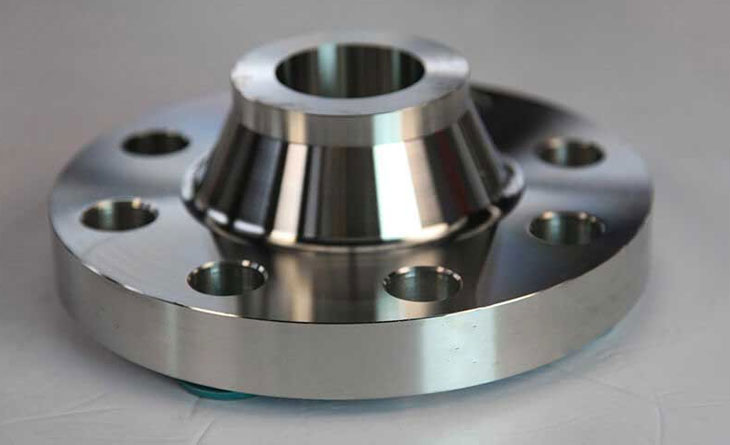 | Stainless Steel Flanges ASTM A182 F316 Blind flange and Weld Neck Flanges Manufacturer in India Stainless Steel 316 Flanges 316 Stainless Steel Flange Dimensions differ from... View product → |
How to make the 316-versus-304L decision on total cost
304L remains economical when the line is indoors, clean and dry, with low chloride concentration, stable temperature and no aggressive cleaning chemical. A stainless steel sorf flange comparison changes when corrosion can create an unplanned shutdown.
| Factor | 304L | 316 or 316L |
|---|---|---|
| Material price | Lower purchase cost | Higher cost from nickel and 2–3% molybdenum |
| Welding | Similar welding time; use 304L filler practice | Similar time; specify 316L when welded |
| PMI and documents | Verify grade and EN 10204 Type 3.1 certificate | Add molybdenum confirmation by PMI |
| Gasket and bolting | Lower replacement exposure in benign service | Specify compatible gasket and corrosion-resistant B8/B8M bolting |
| Inspection | Routine inspection may suffice | Inspect more closely in chloride service |
| Failure cost | Pitting can force replacement and shutdown | Lower risk, not immunity, so maintenance remains necessary |
Select 316 when salt-laden outdoor air, saline cooling water, evaporative concentration, wet-dry cycling or chloride-bearing wash-down makes pitting or crevice attack credible. Specify 316L rather than simply 316 when welding matters; its 0.030% maximum carbon limits heat-affected-zone sensitisation.
316 can still fail at gasket edges, deposits, dead legs and poorly cleaned welds. Provide drainage, remove deposits and inspect stagnant areas.
Use this sequence:
- Define fluid, chloride, pH, temperature, cleaning chemicals and stagnation.
- Confirm weld and fatigue loads; select grade and low-carbon condition.
- Verify ASME dimensions and class.
- Select gasket and bolting.
- Compare purchase cost with outage and corrosion-related replacement risk.
Frequently asked questions
How do you identify a stainless steel SORF flange and verify its fit?
Identify the slip-on raised-face form by its pipe-entry bore and raised sealing face. Verify nominal pipe size, bore or schedule, outside diameter, bolt-hole pattern, flange thickness, facing and required internal pipe projection against the mating flange and piping drawing.
When is a 316 SORF flange worth choosing over 304L in Gujarat?
Choose 316 when the flange faces chlorides, coastal salt air, contaminated cooling water, brine, or process chemicals that threaten 304L. 304L remains suitable for clean, low-chloride services where its corrosion resistance meets the design conditions.
How do pressure class, gasket and loading determine the SORF flange specification?
Specify the ASME B16.5 pressure class, such as Class 150, 300 or 600, with the design pressure and temperature. Select a gasket that matches the raised-face finish, fluid and operating conditions, then check bolt loads, piping loads and thermal expansion.
What should you put on a SORF flange enquiry and inspect on receipt?
List material grade, size, schedule or bore, ASME B16.5 class, raised-face dimensions, facing finish, standard, quantity, certificates and testing requirements. On receipt, check markings, dimensions, bolt holes, bore, face condition, corrosion, packaging and the material test certificate.
How should you compare the total cost of 316 and 304L SORF flanges?
Compare purchase price with fabrication, welding, inspection, corrosion allowance, cleaning, replacement, downtime and failure consequences. Select 316 when its higher cost reduces credible chloride-corrosion risk; select 304L when service conditions do not justify that premium.