
Rain alone does not automatically require a higher-alloy spectacle blind flange in Bengaluru. By separating atmospheric exposure from process corrosion, then checking the alloy, dimensions, documentation and installation conditions, you can choose a grade that fits the actual risk instead of buying a vague “rainy-season” specification.
Key takeaways
- Choose 304 for clean inland exposure with good drainage and non-chloride process fluids.
- Choose 316 for chlorides, coastal air, splash zones or persistent wetting.
- Specify flange class, dimensions, facing, bore and applicable ASME standard before ordering.
- Request material certificates, PMI results and a corrosion-free site inspection.
When is 304 suitable for Bengaluru’s rainy season?
304 is suitable for stainless steel spectacle blind flanges for rainy season in Bengaluru when the installation is sheltered or exposed to clean inland air, drains freely, dries between showers, and carries a process fluid without chlorides or aggressive chemicals. Bengaluru is inland, so ordinary monsoon rain is not equivalent to coastal salt exposure.
Use 304 when all of these conditions apply:
- The flange is sheltered or exposed only to clean urban air, without road dust, industrial pollutants, wastewater aerosols or chemical-storage vapours.
- The spectacle blind sits in a dryable orientation, with no standing water on horizontal ledges or around the hinge or spacer.
- The gasket perimeter and bolt interfaces remain accessible for routine inspection and cleaning.
- Wash water does not contain chlorides, and the line fluid is not brine, hypochlorite, acidic condensate or another aggressive chemical.
- You have recorded how quickly the assembly dries and how often it will be inspected.
Choose another grade or reassess the design when deposits or persistent wetting remain beneath the gasket, around the hinge, at bolt contacts or on ledges. Chlorides concentrate in those crevices and can pit 304 while the broad flange face still looks clean.
A “rainy-season grade” is not a recognised stainless-steel designation; specify exposure, drainage, contaminants and process service instead.
How do 304, 316 and 904L compare outdoors?
The key distinction is chloride, not rain duration. 304 spectacle blind flanges contain no intentional molybdenum, so they offer the least chloride-pitting margin of these three grades.
| Option | Alloy basis | Outdoor decision |
|---|---|---|
| 304 | No intentional molybdenum | Often sufficient for clean, inland, well-drained service |
| 316 or 316L | About 2–3% molybdenum | Usual step up for persistent wetting or chloride exposure |
| 904L | Normally UNS N08904; substantially more nickel and molybdenum than 316, plus copper | Reserve for demanding chemical or acidic process service |
Choose 316 spectacle blind flanges when the assembly receives persistent wetting, chloride deposits, chemical washdown, wastewater aerosols or another credible contaminant. Molybdenum improves resistance to chloride-induced pitting and crevice corrosion, but 316 is not immune.
Stagnant water, concentrated deposits, elevated temperature and tight crevices can still cause local attack around the gasket, hinge, spacer or bolts.
904L spectacle blind flanges suit aggressive process chemistry, not ordinary monsoon exposure by itself. Their higher alloy content can mean higher cost, longer procurement, stricter compatibility checks and additional welding controls. Specify 904L when process chemistry, operating temperature or a documented corrosion assessment demands it.
Use 304 for a clean, draining installation; use 316 for exposed chloride-prone service; treat 904L as a process-driven choice, not a premium answer to rain.
Why does the line fluid matter more than rain?
Rainwater and process-fluid corrosion are separate selection problems: inspect the line contents before treating rain as the deciding exposure. For spectacle blind flanges in Bengaluru’s rainy season, record the fluid, temperature, pressure, chloride concentration, acidity, cleaning chemicals, and draining or flushing frequency.
| Condition | Main corrosion risk | Selection implication |
|---|---|---|
| Benign fluid, clean air, fast drying | Limited atmospheric wetting | 304 can suit a sheltered or well-drained line |
| Brine, chloride deposits, hypochlorite wash or wastewater aerosol | Pitting and crevice corrosion | Consider 316 after reviewing temperature and deposit retention |
| Acidic process, concentrated chemicals or persistent condensate | Rapid local attack or general corrosion | Use a corrosion assessment before selecting 316 or 904L |
A roof does not protect a flange from acidic process fluid, hypochlorite wash, brine, condensate or a contaminated gasket crevice. An exposed flange can remain sound when its service is benign and its surface dries quickly.
- Inspect the gasket perimeter, spectacle-plate hinge or spacer, bolt-to-flange contact, stamped markings and horizontal ledges; these retain water and deposits longer than the open face.
- Orient the assembly for drainage, keep flange faces clean, and exclude carbon-steel grinding dust and iron-contaminated tools. ASTM A967 addresses passivation; ASTM A380 covers cleaning, descaling and passivation. Neither converts 304 into 316 or repairs an unsuitable alloy.
- Treat the spectacle blind as a pressure-containing line blank. Rotate it only after isolation, depressurisation, draining and permit-to-work controls are confirmed. Never change from spacer to blind while pressurised.
Which dimensions and standards must you verify before ordering?
A nominal pipe size does not define a spectacle blind. Your purchase order must identify the complete connection and line-blank specification.
- Nominal pipe size (NPS)
- Pressure class
- Flange facing, such as raised face or ring-type joint
- Flange standard and applicable edition
- Bolt-hole pattern
- Outside diameter, bore and thickness
- Gasket type and seating dimensions
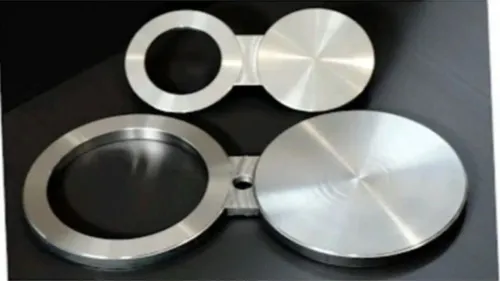
ASME B16.48 governs line blanks, including spectacle blinds. It covers dimensions, pressure-temperature ratings, materials, marking and testing requirements. Check the connected flange system as well: ASME B16.5 covers many NPS 1/2 through NPS 24 flanges, while ASME B16.47 covers larger flanges.
| Standard | Confirm before ordering | Why it matters |
|---|---|---|
| ASME B16.48 | Line-blank class, dimensions, material and edition | Establishes the spectacle blind design and rating |
| ASME B16.5 | Connected flange dimensions for many NPS 1/2–24 assemblies | Prevents bolt-hole and facing mismatch |
| ASME B16.47 | Connected larger-diameter flange dimensions | Uses different dimensional series and patterns |
Name the exact material, such as ASTM A182/A182M F304, F304L, F316, F316L or F904L where applicable. “Stainless steel,” “304” and “marine grade” are incomplete specifications; pressure capability comes from the line-blank design, class, temperature and material together.
Require dimensional inspection against ASME B16.48. Before installation, check the flange face for dents, deep tool marks and handling damage, then confirm the gasket design matches both faces.
What should you request from the supplier and inspect on site?
Request a material test certificate (MTC) tied to the flange heat number, not a generic “304” or “316” statement. It must show chemical analysis, mechanical results, heat-treatment condition and the exact product standard, such as ASTM A182/A182M F304L or F316L, plus the specified ASME B16.48 class and dimensions.
Ask for these details before accepting the quotation:
- Confirm heat-number traceability from the flange marking to the MTC.
- Use positive material identification (PMI) when polished 304 and 316 spectacle blind flanges look identical. Colour, magnet response and “marine grade” claims are not proof.
- For 904L, specify UNS N08904 or the applicable national equivalent; “904L” alone does not define every certification or heat-treatment requirement.
- State fastener material, lubricant, tightening method and required preload separately. Carbon-steel bolts, washers or lifting fixtures in direct wet contact can leave rust staining and contamination. Choosing stainless fasteners indiscriminately does not replace engineered bolting design.
| Check | Evidence on site | Reject or correct when |
|---|---|---|
| Blind and face | No dents, deep tool marks or rust products | Seating face is damaged |
| Markings | Grade, heat number and standard are legible | Markings do not match the MTC |
| Bolt holes | Correct pattern and undamaged edges | Holes are distorted or fouled |
| Spacer or hinge | Moves without impact damage | Bent, cracked or seized |
Store the blind off the ground, separated from carbon steel, under rain protection with ventilation. Impermeable wet packaging traps moisture. Chirag Steel can provide a documented package covering grade, ASME B16.48 dimensions, certificates, PMI and gasket or bolting requirements; include exposure and process details so the quotation compares a defined specification.
Related products
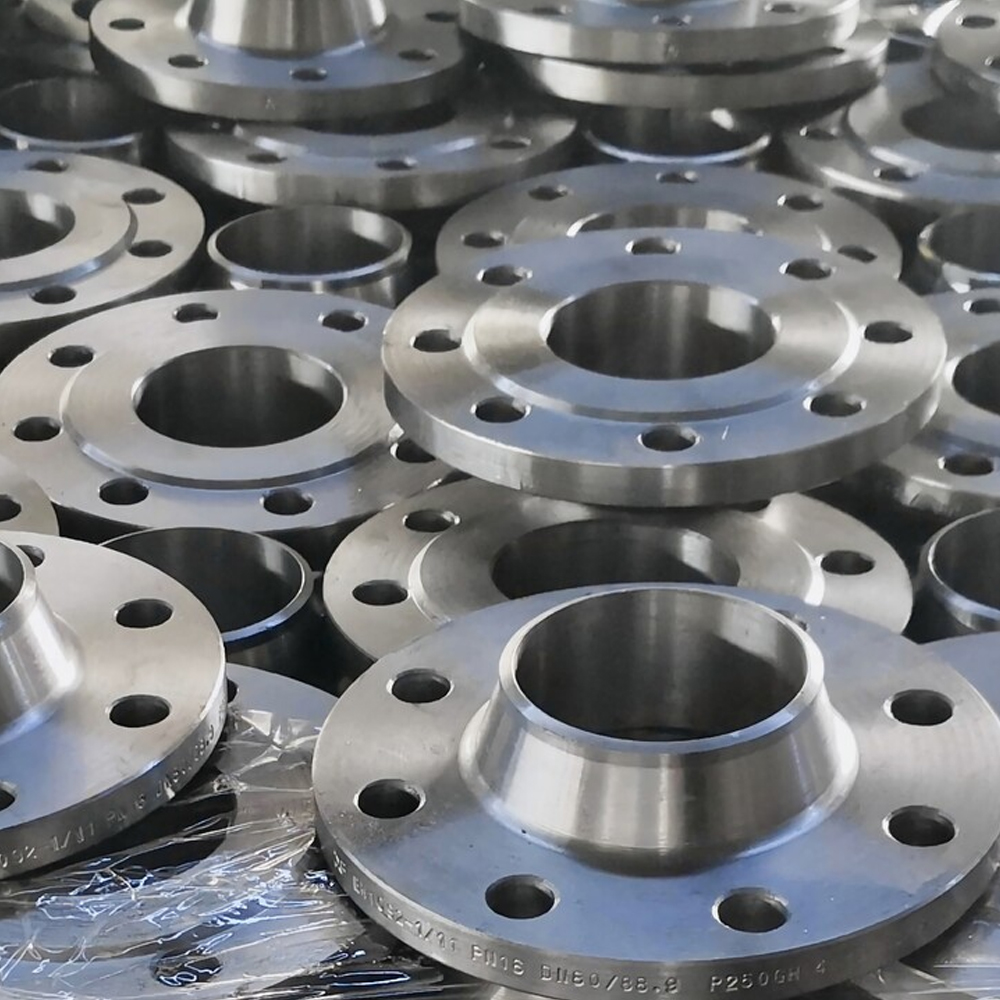 | Stainless Steel Flanges ASTM A182 F304 Blind Flange Dimension and A182 Grade F304 Slip on Flange pressure classs Great Steel & Metals is a supplier of all types of 304... View product → |
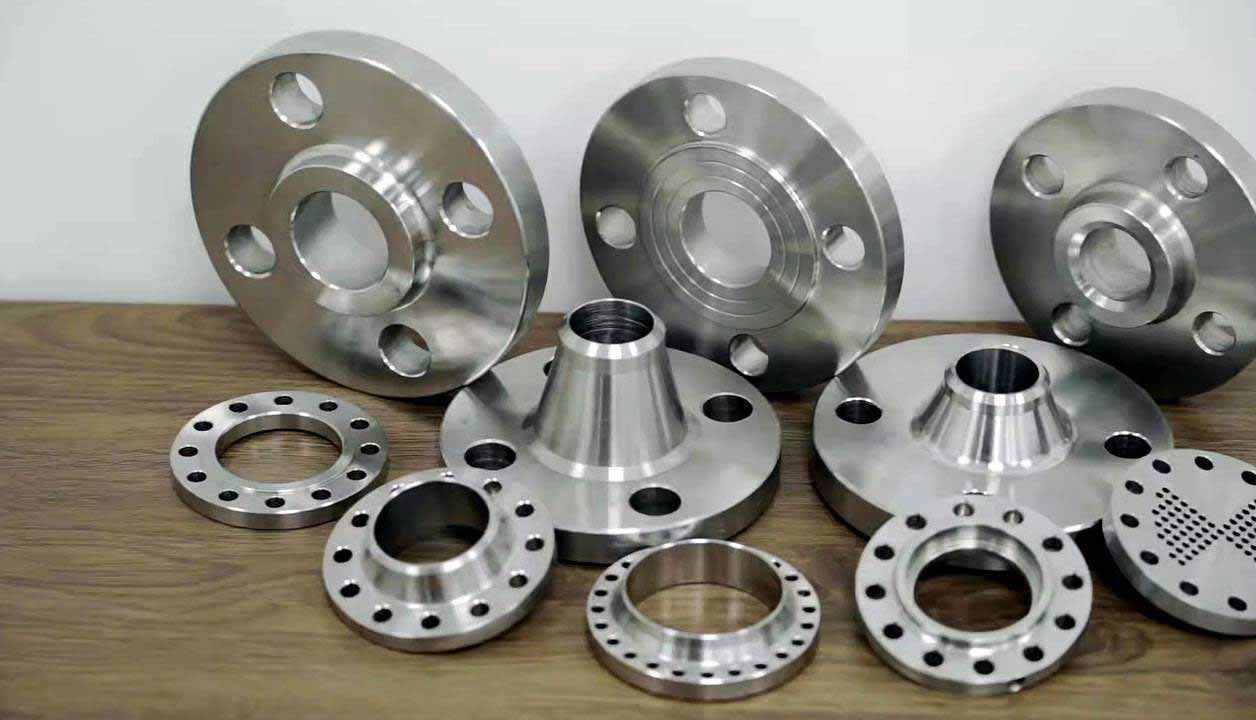 | Stainless Steel Flanges Manufacturer of ASTM A182 F304L Slip on and WNRF Flanges in India Stainless Steel 304L Flanges 304L Stainless Steel Flanges are made up of 304L... View product → |
Frequently asked questions
When is 304 suitable for Bengaluru’s rainy season?
304 suits sheltered or exposed installations with clean inland air, effective drainage, drying between showers and process fluids without chlorides or aggressive chemicals.
How do 304, 316 and 904L compare outdoors?
304 fits ordinary clean inland exposure; 316 provides stronger resistance to chlorides and persistent wetting; 904L is intended for more severe chemical or acidic environments and needs project-specific justification.
Why does the line fluid matter more than rain?
Internal corrosion depends on the process fluid, including chlorides, acids, caustics, temperature and concentration, so rain alone does not determine flange material.
Which dimensions and standards must you verify before ordering?
Verify ASME B16.5 or ASME B16.47 applicability, pressure class, nominal pipe size, flange facing, outside diameter, bolt-hole pattern, thickness, bore, spectacle-plate orientation and ASME B16.48 requirements.
What should you request from the supplier and inspect on site?
Request the material test certificate, heat number, PMI results, dimensional report, pressure-class confirmation and surface-finish details; inspect markings, bolt holes, sealing faces, corrosion, fit and drainage.
Related products
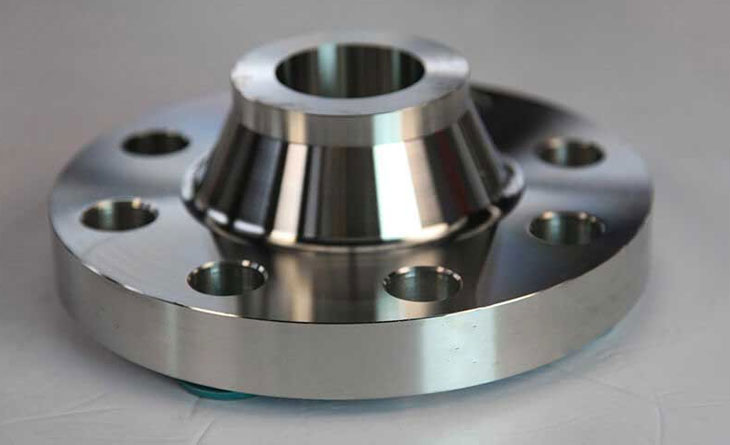 | Stainless Steel Flanges ASTM A182 F316 Blind flange and Weld Neck Flanges Manufacturer in India Stainless Steel 316 Flanges 316 Stainless Steel Flange Dimensions differ from... View product → |
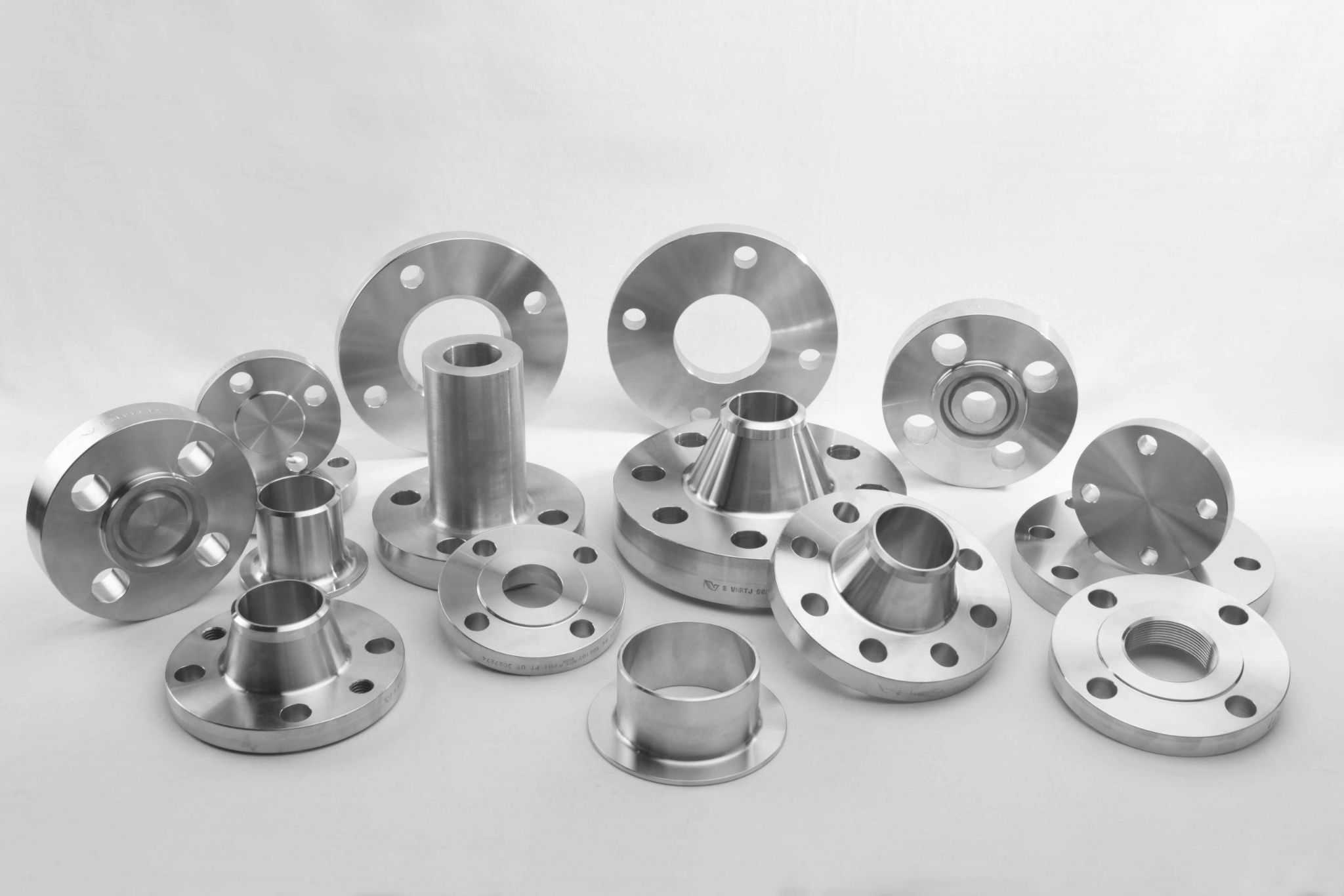 | Stainless Steel Flanges PED Steel Flanges / Weld Neck Flanges / ASTM A 182 Stainless Steel WNRF Flanges,Din Standard Flanges; DIN... View product → |
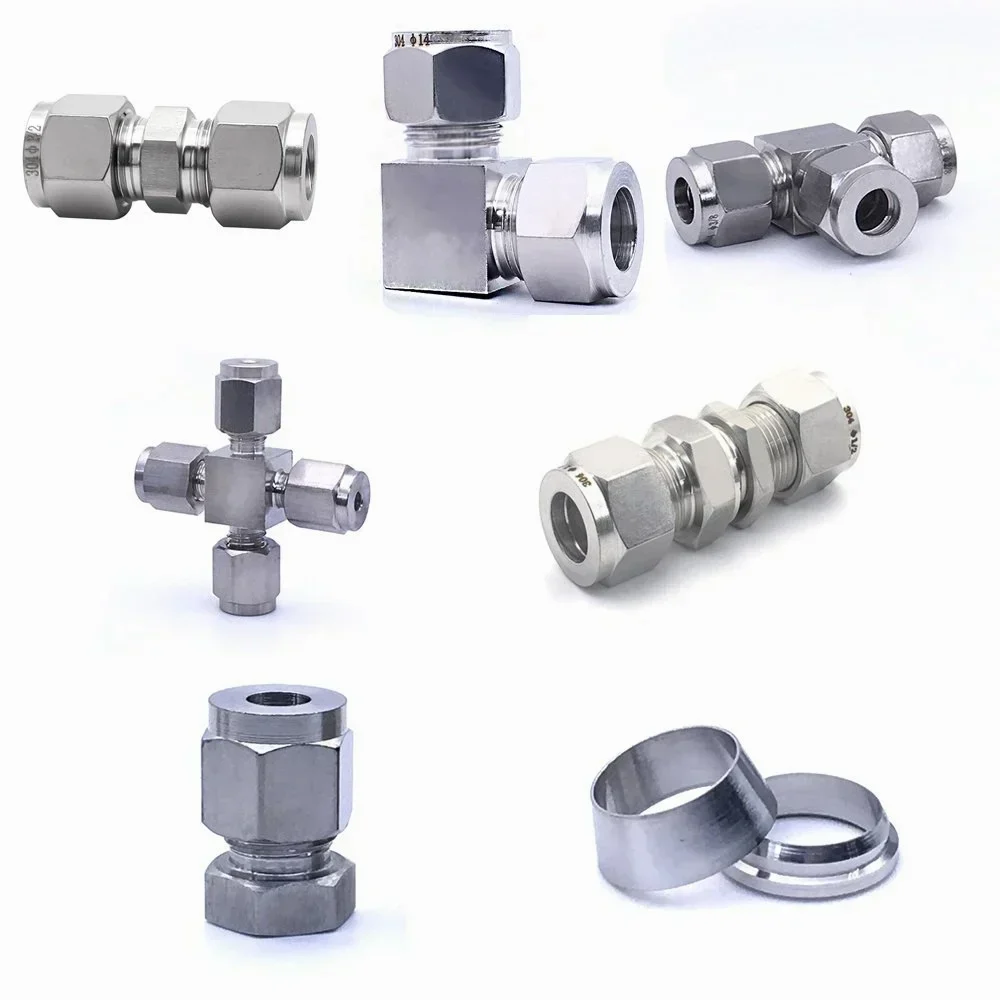 | Stainless Steel Pipe Fittings Stainless Steel Ferrule Fittings Here is professional content you can use for Chirag Steel website, catalogue, or IndiaMART listing: Stainless Steel Ferrule Fittings – Chirag Steel... View product → |
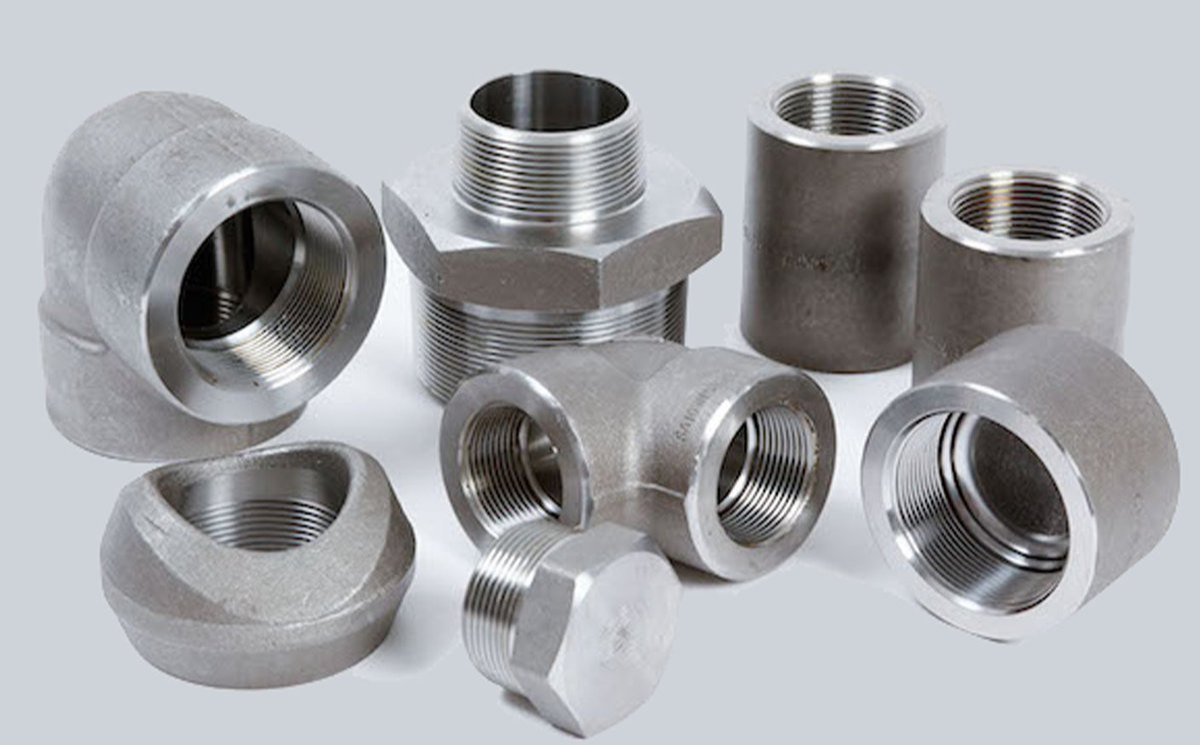 | Stainless Steel Pipe Fittings Stainless Steel Forged Fittings Here is professional content for your business: Stainless Steel Forged Fittings – Chirag Steel Chirag Steel is a trusted supplier and exporter of... View product → |