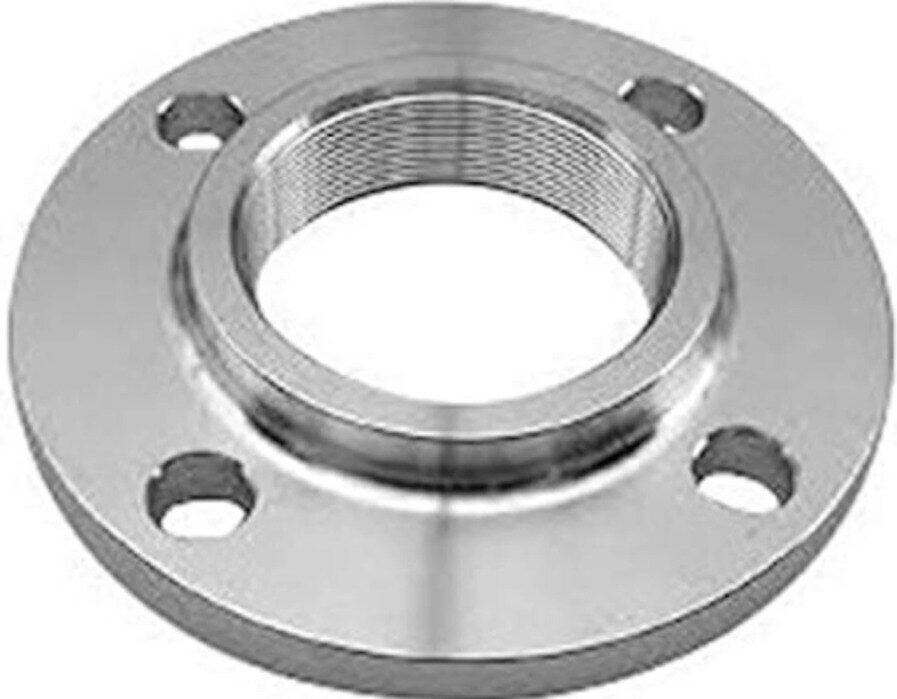
The better flange depends less on nominal pressure class than on how the joint will be installed, loaded and maintained. You will be able to choose between threaded and weld neck designs, reject both when another flange type fits better, and specify stainless grades and inspection requirements with fewer costly assumptions.
Key takeaways
- Choose threaded flanges for accessible, relatively static services without site welding.
- Choose weld neck flanges for pulsation, vibration, thermal cycling and bending loads.
- Select 304L or 316 after checking chlorides, chemicals, temperature and corrosion exposure.
- Verify flange standard, pressure class, bore, facing, material grade and certificates before ordering.
Choose the flange by service severity, not flange name
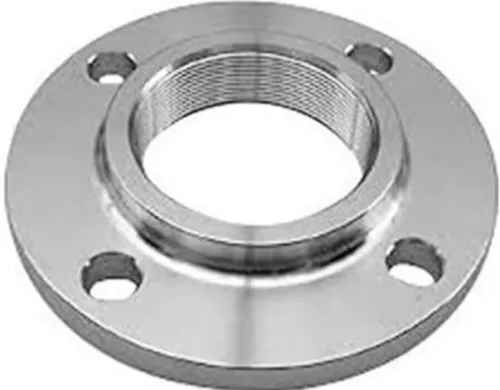
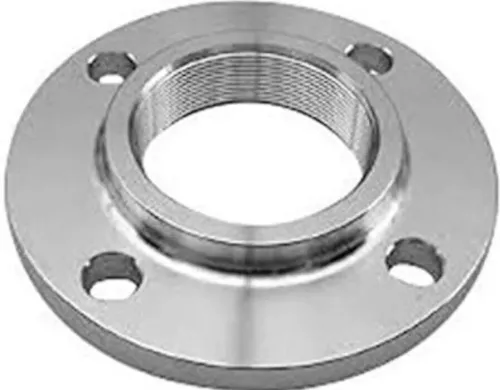
Choose stainless steel threaded flanges for relatively static, accessible services where the pipe wall can accept a full thread and avoiding site welding matters. Choose weld neck flanges when pressure pulsation, pump vibration, frequent thermal cycling, bending loads or exceptional leak integrity make fatigue resistance more important than fabrication speed.
Threaded flange vs weld neck flange is a service decision, not a pressure-class decision. ASME B16.5 covers both types from NPS 1/2 through NPS 24 and Classes 150 through 2500; the flange style alone does not establish the required class.
| Option | Choose it when | Main limitation |
|---|---|---|
| Threaded flange | Static service, low cyclic loading, limited welding access or removable installation | Threads and sealant remain potential leak paths; pipe engagement must not obstruct the bore |
| Weld neck flange | Vibration, pressure cycling, thermal starts and stops, external loads or severe leak consequences | Requires qualified welding, compatible filler, access and specified inspection |
| Either type | The material suits the wetted fluid and temperature | A 316 flange does not make 304L pipe, threads or sealant a 316 system |
A weld neck joint adds heat-affected-zone control, distortion management and post-weld cleaning requirements. A threaded flange avoids those fabrication steps but can gall during assembly, especially in 316 stainless steel; clean threads, controlled tightening and service-compatible lubricant reduce that risk. Choose the weld neck when the line’s life-cycle loading dominates installation cost.
How each flange is installed and sealed
A reliable joint depends on thread engagement or weld quality, flange alignment, gasket seating and controlled bolt tightening—not on the flange name alone. Prepare both flange faces, select a gasket compatible with the fluid and temperature, and tighten the bolts in a star pattern to the specified torque.
| Option | Installation detail | Common failure |
|---|---|---|
| Threaded flange | Match the flange’s internal pipe thread to the pipe’s external thread. Clean both threads, apply a process-compatible sealant, and engage the pipe fully without forcing it past the flange bore. | Cross-threading, insufficient engagement, excess sealant in the bore or over-torquing can cause leakage or distortion. |
| Weld neck flange | Align the tapered hub with the pipe, maintain the specified root gap, and complete the butt weld using a qualified welding procedure and compatible filler metal. | Misalignment, excessive heat input or incomplete penetration can create distortion, cracking or a leak path. |
For a threaded joint, inspect the threads before assembly; damaged, contaminated or mismatched threads cannot be rescued by sealant. Keep sealant out of the flow passage and use only a product rated for the process fluid, temperature and stainless steel.
For a weld-neck joint, provide welding access and stainless-steel purge control where the procedure requires it. After welding, remove heat tint and weld residue; pickle and passivate the joint when the specification calls for corrosion restoration. Complete the required visual, radiographic, ultrasonic or other inspection before bolting the line into service.
Compare pressure, temperature, vibration and fatigue performance
A weld-neck flange is usually the safer choice when pressure cycles, temperature changes, vibration or pipe movement will repeat throughout the line’s life. Its tapered hub spreads stress into the pipe, while the butt weld avoids the abrupt bore discontinuity created by a threaded connection.
| Condition | Threaded flange | Weld-neck flange |
|---|---|---|
| Pressure cycling | ASME B16.5 provides the pressure class, but repeated pulsation concentrates stress at the threads and increases leak risk. | The butt-welded joint and tapered hub handle cyclic stress with less local concentration. |
| Temperature cycling | Rated temperature is not the only issue; expansion and contraction can loosen the threaded joint or disturb sealant. | Better suited to frequent starts, stops and thermal gradients when welding and inspection are controlled. |
| Vibration | Pump vibration can work the threads, sealant and pipe engagement, especially on small-bore lines. | The continuous welded load path gives better resistance to vibration-induced fatigue. |
| Piping loads | Bending, nozzle loads and misalignment transfer directly into the threaded section. | The hub distributes bending and axial loads more gradually into the pipe. |
Do not infer performance from pressure class alone. ASME B16.5 covers both types from NPS 1/2 through NPS 24 and Classes 150 through 2500, but the same class does not make their fatigue behaviour equivalent.
Choose the weld-neck design for pulsating pressure, severe thermal cycling, sustained vibration or significant external loads, even at a low nominal class. A threaded flange avoids welding heat and fabrication inspection, but its correctly formed threads, adequate pipe wall and sealant still cannot match a full-penetration butt weld for demanding cyclic service.
Select 304L or 316 only after checking the service environment
304L threaded flanges suit clean, dry indoor service and many mild-water applications when the wetted fluid, temperature and chloride exposure support 304L. Do not select them only because the pipe is 304L: the flange, pipe threads, sealant and any crevice under the gasket all influence corrosion.
316 threaded flanges provide better resistance to chlorides and many chemical environments, but 316L is not immune to pitting, crevice corrosion or chloride stress-corrosion cracking. Stagnant water, cleaning chemicals, poor drainage and process-water chlorides can attack either grade. A 316 flange on 304L pipe does not make the complete joint a 316 system.
| Option | Corrosion and installation implication | Use when |
|---|---|---|
| 304L threaded flanges | Lower material cost; suitable only after checking fluid, chlorides, temperature and crevice exposure | Dry indoor lines or mild service with controlled drainage |
| 316 threaded flanges | Better chloride resistance; stainless threads demand clean surfaces, controlled torque and compatible lubricant to limit galling | Wet, exposed or chemical service that remains suitable for threaded construction |
| Neither threaded option | Threads add a leak path and stress concentration; they do not suit severe cycling or high piping loads | Choose a weld neck flange for fatigue, vibration, thermal expansion, bending, leak-integrity or inspection demands |
Specify the thread standard, size and orientation; ASME B1.20.1 NPT is not interchangeable with BSPT. Check sealant and anti-seize compatibility with oxygen or process fluid. The “L” suffix reduces weld sensitization risk; it does not remove the need to assess the service environment.
Use the right shortlist and verify the purchase specification
Before you release a purchase order, make the flange identifiable without a follow-up email. For a stainless steel flange comparison in Bengaluru, record whether the line is dry and indoors or exposed to rain, stagnant water, cleaning chemicals, chlorides or wastewater; inland location does not remove localized corrosion risk.
ASME B16.5 covers threaded and weld-neck flanges from NPS 1/2 to 24, Classes 150 to 2500, so type alone does not set pressure class.
| Option | Compare | Record |
|---|---|---|
| Threaded flange | Thread form, engagement, sealant, tightening and galling risk | ASME B1.20.1 NPT, size, orientation and lubricant compatibility |
| Weld-neck flange | Welding access, fatigue performance, heat input and inspection | Qualified WPS, filler metal, NDE and post-weld cleaning requirement |
Use this purchase checklist:
- State NPS, pipe schedule or bore, facing, pressure class, flange standard, gasket type and bolting.
- Name the material precisely, such as ASTM A182 F304L or F316L; do not treat 304L and 316L as interchangeable.
- For NPT, confirm the thread is not BSPT or another form, and specify the required engagement.
- For welding, document inspection, cleaning, pickling or passivation requirements; request the heat number and material test certificate.
- Ask Chirag Steel to quote against the completed schedule, including markings and inspection documents, not a nominal flange name alone.
Related products
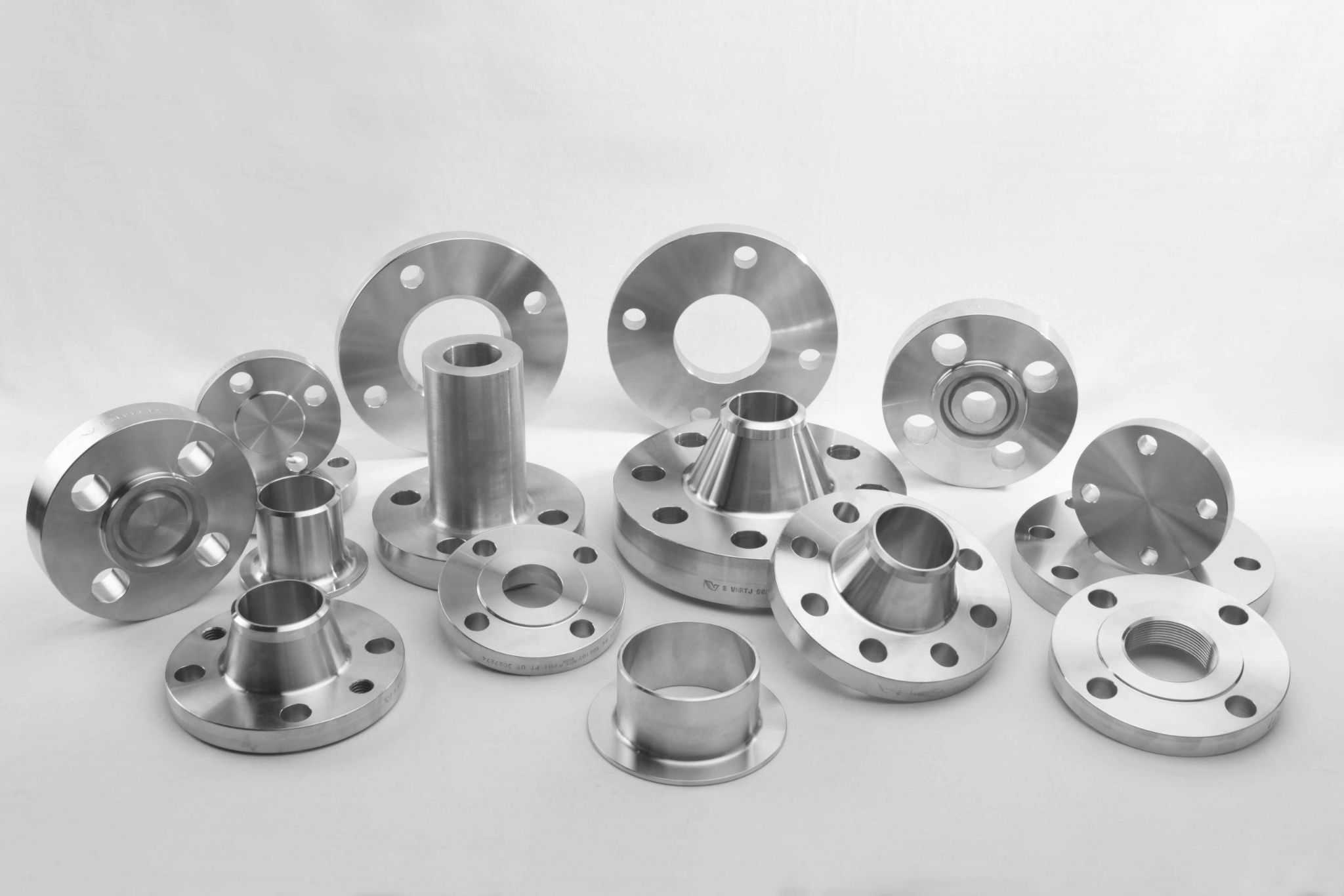 | Stainless Steel Flanges PED Steel Flanges / Weld Neck Flanges / ASTM A 182 Stainless Steel WNRF Flanges,Din Standard Flanges; DIN... View product → |
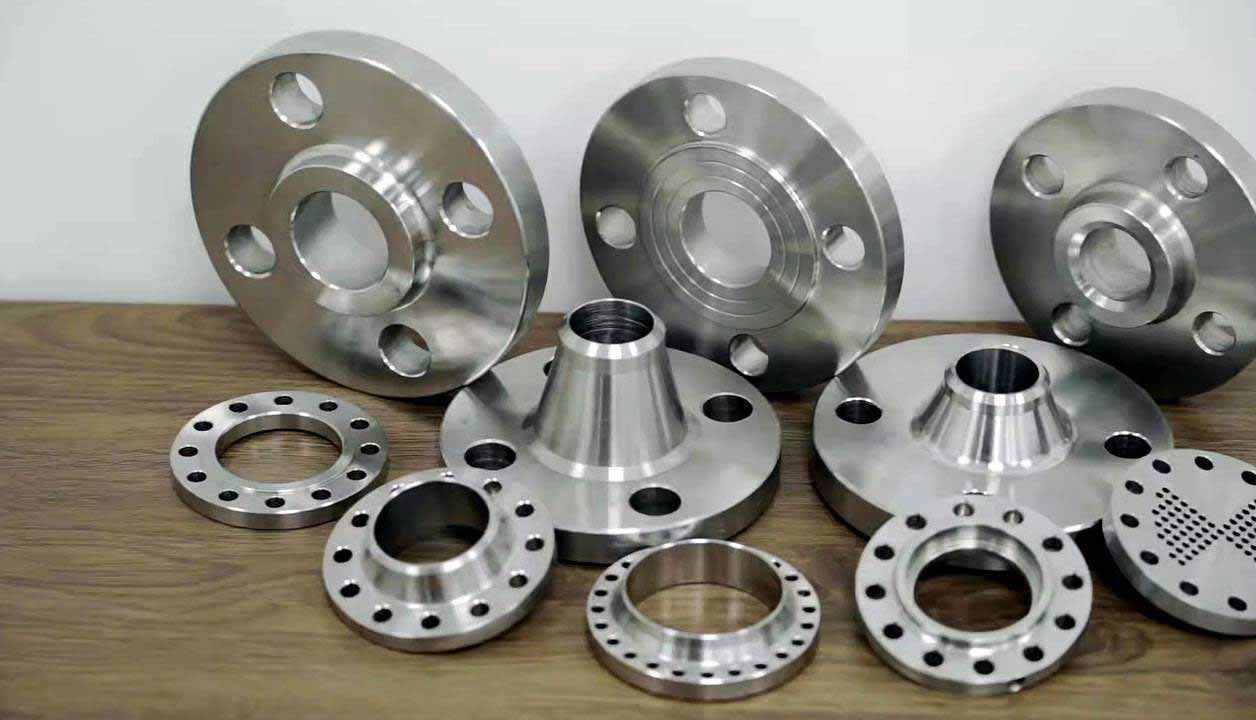 | Stainless Steel Flanges Manufacturer of ASTM A182 F304L Slip on and WNRF Flanges in India Stainless Steel 304L Flanges 304L Stainless Steel Flanges are made up of 304L... View product → |
Frequently asked questions
When should you choose stainless steel threaded flanges instead of weld neck flanges?
Choose threaded flanges for relatively static, accessible services where the pipe wall can accept a full thread and avoiding site welding matters.
Why do weld neck flanges suit vibration and thermal cycling?
Their tapered hub transfers stress more gradually into the pipe, improving resistance to pressure pulsation, vibration, bending and repeated thermal expansion.
Are 304L threaded flanges or 316 threaded flanges better for corrosion?
Select 304L for many general corrosive services and 316 when chlorides, salt exposure or stronger pitting resistance requirements justify its higher molybdenum content.
What should you verify before buying stainless steel flanges?
Confirm the flange standard, pressure class, nominal size, bore, facing, schedule, material grade, thread or weld details, test documents and certificate requirements.
Related products
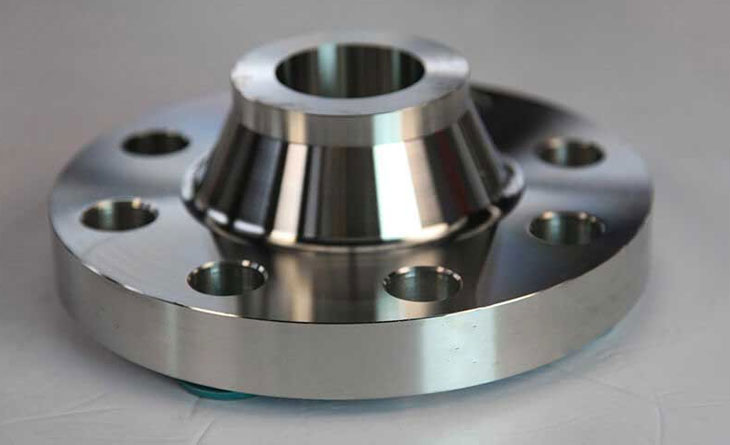 | Stainless Steel Flanges ASTM A182 F316 Blind flange and Weld Neck Flanges Manufacturer in India Stainless Steel 316 Flanges 316 Stainless Steel Flange Dimensions differ from... View product → |
 | Stainless Steel Flanges Manufacturer – Chirag Steel Chirag Steel is a trusted and reliable Stainless Steel 316L Flanges Manufacturer, Supplier, and Exporter, offering... View product → |
 | Stainless Steel Flanges Manufacturer – Chirag Steel Chirag Steel is a leading Stainless Steel 904L Flanges Manufacturer, Supplier, and Exporter, offering premium-quality... View product → |