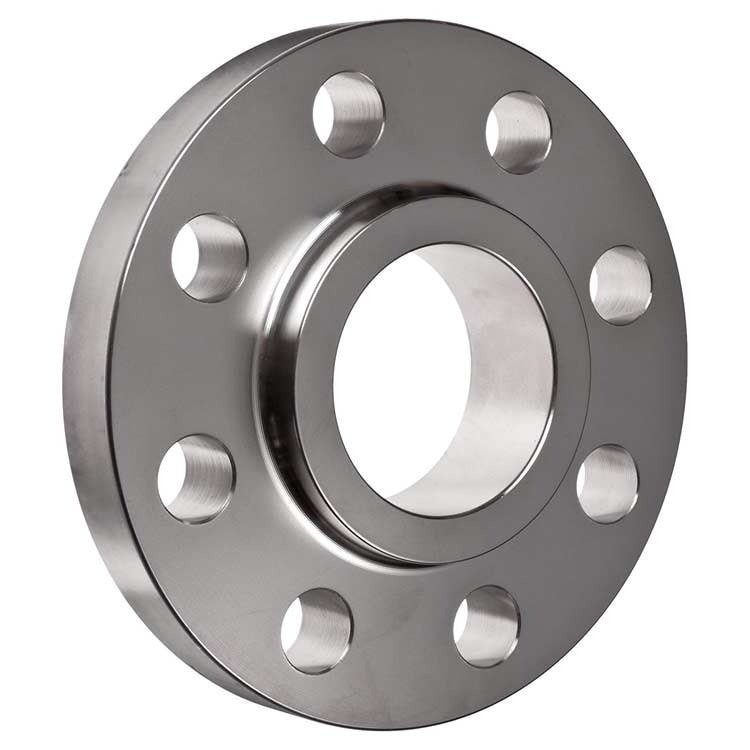
Replacing a damaged flange in an operating plant is rarely a simple matter of matching the pipe’s nominal size. You will learn how a slip-on raised-face flange fits into a restricted work area, how to verify its dimensions and material, and when another flange type is safer for the service.
Key takeaways
- Measure bore, pipe outside diameter, face-to-face space, and bolt-hole orientation before ordering.
- Isolate, depressurise, drain, cut out, align, weld, and tighten the replacement joint in sequence.
- Choose 304L, 316, or 316L based on the fluid, environment, and weld requirements.
- Check the gasket, bolts, raised face, and pipe schedule—not just the stainless-steel grade.
How a SORF flange fits a restricted replacement area
SORF is supplier shorthand for slip-on, raised-face flange; it is not a stainless-steel grade. The pipe enters the flange bore, and the flange slides over a free pipe end so the crew can adjust its position and bolt-hole orientation before welding. Fillet welds secure the joint at both the inside and outside of the hub.
That fit-up reduces axial pipe movement compared with replacing a weld-neck assembly. It helps when long pipe runs, valves, supports, or walls prevent the line from moving far enough to align a fixed weld end.
| Option | Fit-up advantage | Limitation |
|---|---|---|
| SORF | Slides over a free pipe end and adjusts before welding | Cannot pass over an intact pipe end |
| Weld-neck | Provides a smoother stress and flow transition | Needs more accurate alignment and pipe movement |
A SORF flange cannot slide over an intact pipe end. The crew needs an accessible free end, or must cut and reweld the pipe. Insert the pipe to the specified depth, then keep its end slightly back from the raised face so it cannot interfere with gasket seating.
Stainless steel sorf flanges for maintenance offer a practical fit-up solution, not an automatic choice for every pressure, fatigue, hygienic, or corrosion duty. Choose stainless steel SORF flanges only after checking the service and piping design requirements.
The replacement sequence from isolation to final bolt tightening
Treat the replacement as a controlled pressure-boundary job, not a simple unbolting exercise. Use this sequence for stainless steel SORF flanges:
1. Isolate the line and lock out every energy source, including pumps, steam, pressure, electrical drives, and connected equipment.
2. Drain and depressurise the section. Open approved vents and drains, then confirm that trapped fluid, pressure, and hazardous residue are removed before breaking the joint.
3. Unbolt the damaged flange where possible. If the flange cannot be removed intact, cut it out and prepare a free pipe end.
4. Inspect the exposed pipe for wall thinning, ovality, cracks, corrosion, and heat damage. Reject the section if its remaining wall or geometry cannot support the repair.
5. Clean and square the pipe end. Check the SORF bore against the pipe and confirm the required insertion depth.
6. Slide the replacement flange over the free end. Orient its bolt holes to match the mating flange and avoid interference with nearby valves, instruments, supports, or drains.
7. Tack the flange, then complete the internal and external fillet welds using the approved stainless-steel welding procedure.
8. Clean and inspect the weld. Remove heat tint, slag, and residue as the procedure specifies, without using carbon-steel tools that can embed iron.
9. Examine both raised faces. Dents, radial scratches across the gasket seating width, non-parallel faces, or distorted holes can cause leakage.
10. Install the specified gasket without grease or sealant unless the joint procedure requires it.
11. Fit compatible bolts and washers, then tighten in staged passes using a cross-pattern and the specified final torque.
12. Perform pressure testing and leak checks under the site procedure before returning the line to service.
How to prove the replacement will fit before ordering
A replacement flange will mate only when its bore, face and bolt pattern match the installed assembly—not merely its nominal size.
Record the nominal pipe size and measure the pipe’s actual outside diameter. Verify the SORF bore against the pipe schedule and wall thickness; the wrong bore can leave excessive clearance or prevent the flange from sliding over the pipe.
Ask for the existing flange marking or a measured drawing that identifies:
- Flange outside diameter, thickness and bolt-circle diameter
- Number of bolt holes and hole diameter
- Raised-face diameter and height
- Facing finish and pressure class
| Check | What can differ | What to confirm |
|---|---|---|
| ASME B16.5 | Normally covers NPS 1/2 through NPS 24 | Standard, NPS, series, class and facing |
| ASME B16.47 | Covers larger flanges | Series A or B, size, class and bolt pattern |
| EN 1092-1 or project standard | Uses different dimensional systems | The specified standard and its complete drawing |
DN 100 or NPS 4 alone proves nothing. Different standards, series, classes and facing arrangements can change the bolt pattern, thickness, bore and raised face. Compare the full marking, not just nominal size.
Treat Class 150 as a designation, not an automatic 150 psi rating at every temperature. The allowable rating depends on material group and temperature, while the pipe, gasket, bolts, welds or valves can impose lower limits. Confirm those limits before ordering.
When SORF is better than another flange type
Choose a SORF flange for lower-stress utility or process replacement when restricted access and limited pipe movement matter more than maximum fatigue resistance. Compare the alternatives by load, access, disassembly, and flow-path demands.
| Option | Best fit | Limitation |
|---|---|---|
| SORF | Adjustable fit-up on a free pipe end; common for utility and process lines | Internal fillet weld and flow discontinuity reduce suitability for severe cycling |
| Weld-neck | Pressure cycling, vibration, high piping loads, and fatigue-sensitive service | Tapered hub and butt-welded transition need accurate alignment and greater pipe movement |
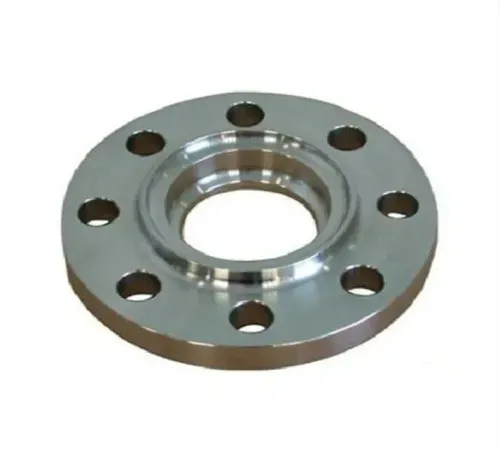
| Socket-weld | Smaller bores where access and clean fit-up matter | Limited choice for larger, highly loaded, or cyclic piping |
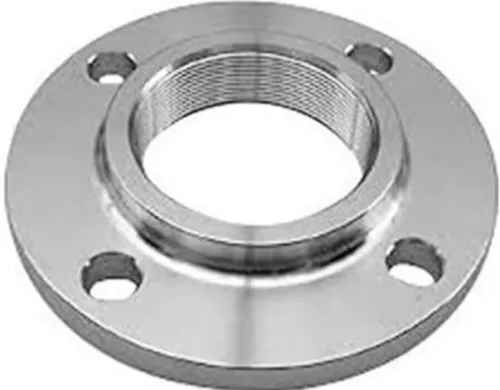
| Threaded | Locations where welding is prohibited | Thread leakage, vibration, and severe thermal cycling make it unsuitable |
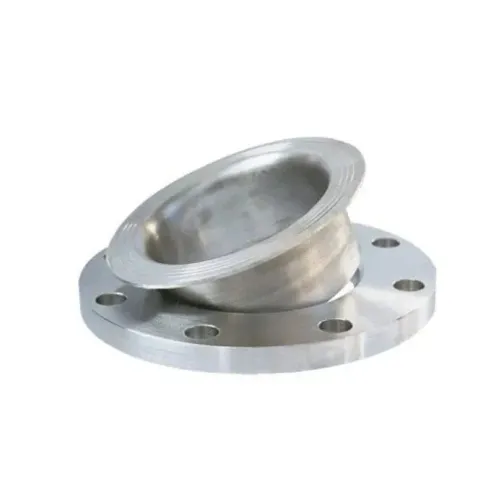
| Lap-joint | Frequent disassembly; rotating stub end helps align bolt holes | Needs the correct stub end and is not a universal pressure replacement |
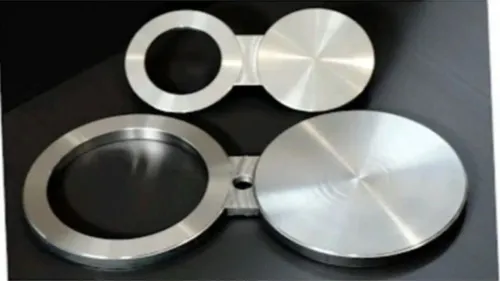
| Blind | Closing a line, vessel nozzle, or branch | Cannot replace a flange that must pass a pipe |
A weld-neck’s tapered hub and butt-welded transition reduce stress and flow discontinuities. A SORF is easier to position, but its inside fillet weld creates a crevice and turbulence point.
Use SORF only after checking the piping design code for pulsating pressure, vibration, thermal cycling, hygienic duty, or aggressive corrosion. Those conditions can make the easier fit-up the wrong trade-off.
Choosing 304L, 316, or 316L without overlooking the joint
Choose by chloride exposure and welding conditions, not by the word stainless alone.
| Grade | Suitable service | Welding implication |
|---|---|---|
| 304L | Water, atmospheric, food, and process service with limited chlorides | Low carbon supports welded replacement work |
| 316 | More chloride-resistant service than 304 or 304L | Confirm the carbon grade before welding |
| 316L | Chloride-prone service where post-weld solution annealing is unavailable | Preferred low-carbon option, not a seawater guarantee |
304L SORF flanges suit ordinary service where chloride exposure is limited. 316 SORF flanges and 316L SORF flanges contain molybdenum, which generally improves resistance to chloride pitting and crevice corrosion, but neither grade is a universal choice for seawater or concentrated chlorides.
The L means low carbon: ASTM A182 F304L and F316L commonly specify a maximum of 0.030% carbon. That limit reduces chromium-carbide precipitation and intergranular corrosion after welding. Do not treat 316 and 316L as interchangeable; request the exact material designation and mill certificate, especially when the flange cannot be solution-annealed after welding.
Protect the joint as carefully as the flange:
- Control heat input and shielding gas during welding.
- Keep carbon-steel tools and embedded iron away.
- Pickle and passivate the weld and heat-tinted surfaces where the procedure requires it.
- Match bolts, washers, anti-seize, isolation, and corrosion control to the connected pipe; unsuitable carbon-steel fasteners can create galvanic corrosion in wet service.
When comparing ASTM A182 grade, ASME B16.5 or B16.47 dimensions, pressure class, certificates, and matching fasteners, Chirag Steel can help you check the purchase specification before ordering.
Related products
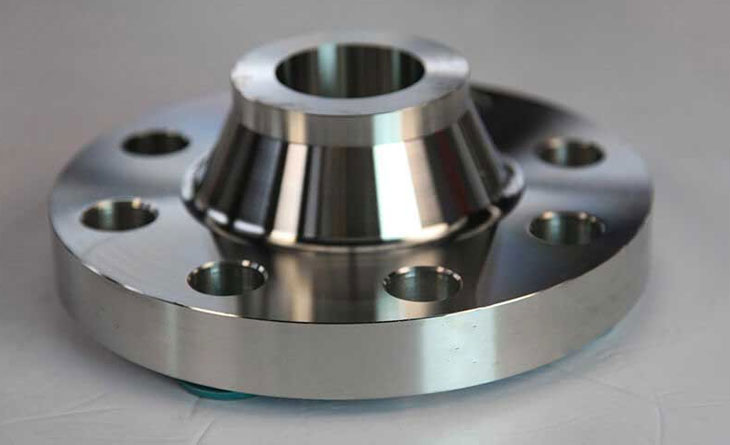 | Stainless Steel Flanges ASTM A182 F316 Blind flange and Weld Neck Flanges Manufacturer in India Stainless Steel 316 Flanges 316 Stainless Steel Flange Dimensions differ from... View product → |
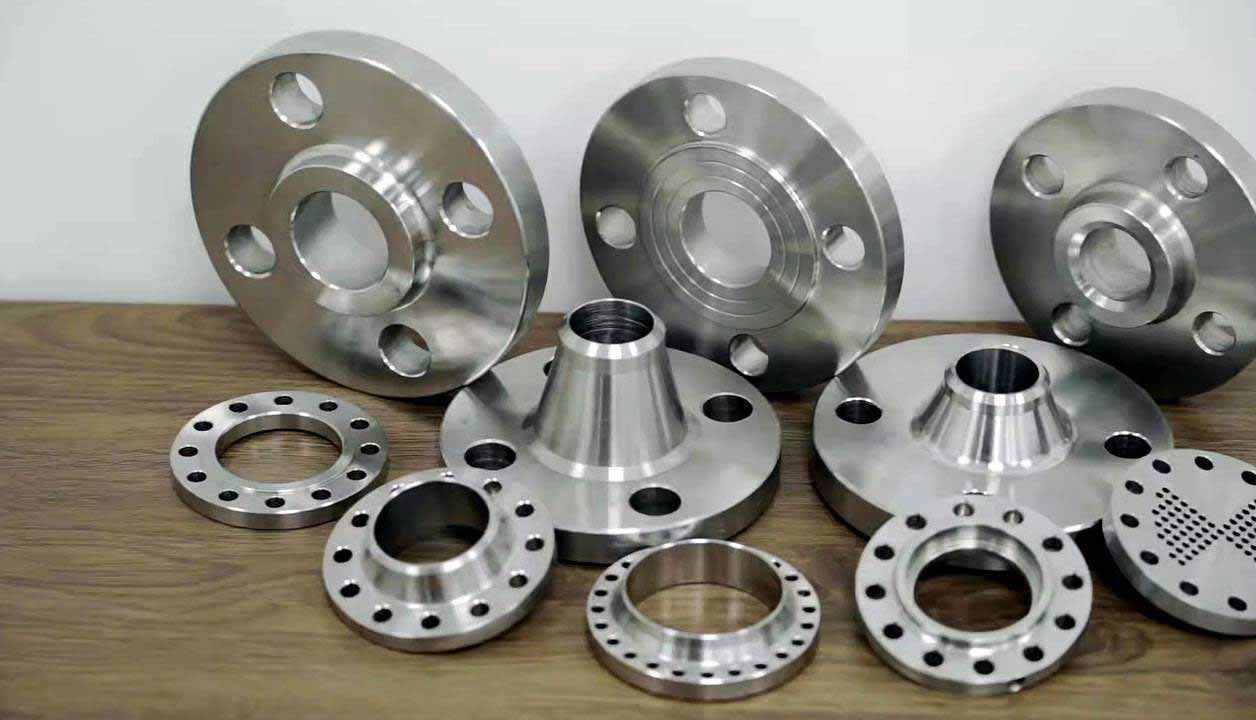 | Stainless Steel Flanges Manufacturer of ASTM A182 F304L Slip on and WNRF Flanges in India Stainless Steel 304L Flanges 304L Stainless Steel Flanges are made up of 304L... View product → |
Frequently asked questions
How does a SORF flange fit a restricted replacement area?
A slip-on raised-face flange slides over a free pipe end, allowing position and bolt-hole orientation adjustment before inside and outside fillet welds secure it.
What is the replacement sequence for a stainless steel SORF flange?
Isolate and depressurise the line, drain and verify it is safe, remove the damaged joint, prepare the pipe end, fit and align the flange, weld it, install the gasket and bolts, then tighten the bolts in a controlled cross-pattern.
How can you prove a SORF flange will fit before ordering?
Compare the pipe outside diameter and wall thickness with the flange bore, then verify the raised-face dimensions, pressure class, bolt-hole count and spacing, gasket size, and available installation space.
When is a SORF flange better than another flange type?
SORF is useful when a free pipe end allows the flange to slide into position and field alignment matters. Choose another type when the line cannot be cut or welded, or when the design requires a different connection.
How do you choose between 304L, 316, and 316L SORF flanges?
Match the grade to the fluid and environment, then check weld requirements and the mating pipe. 316 and 316L provide better resistance to chloride exposure than 304L, while 316L limits weld-related sensitisation.
Related products
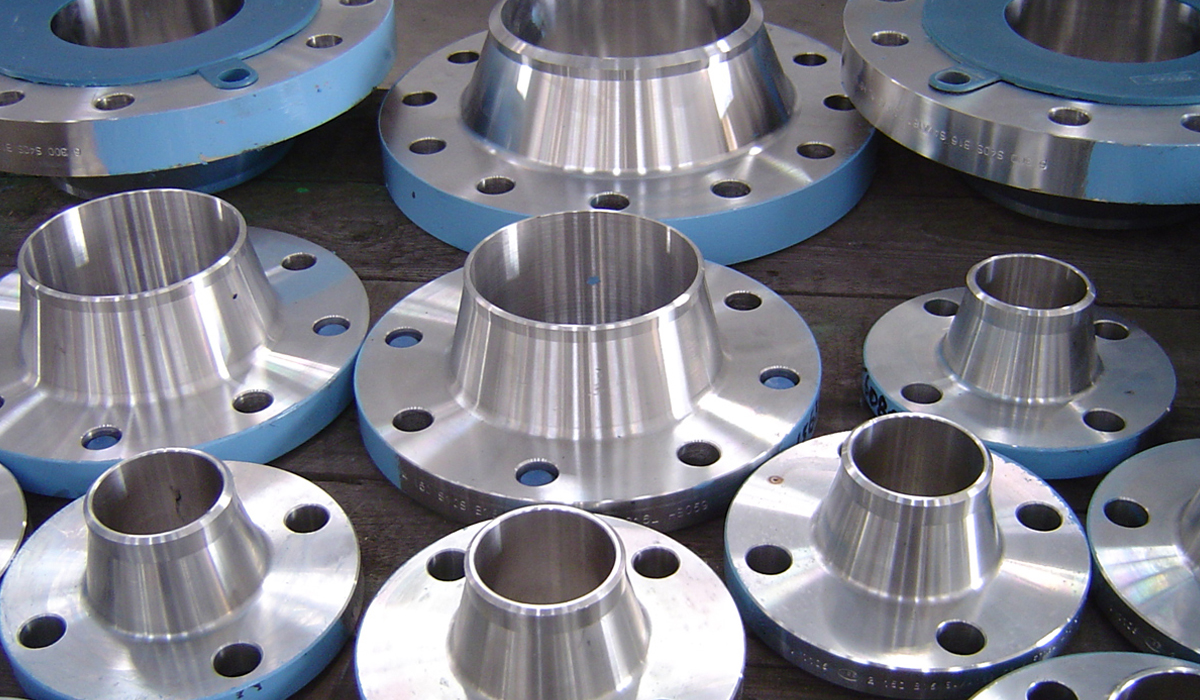 | Stainless Steel Flanges Manufacturer – Chirag Steel Chirag Steel is a leading Stainless Steel 904L Flanges Manufacturer, Supplier, and Exporter, offering premium-quality... View product → |
 | Stainless Steel Flanges Manufacturer – Chirag Steel Chirag Steel is a trusted and reliable Stainless Steel 316L Flanges Manufacturer, Supplier, and Exporter, offering... View product → |
 | Stainless Steel Flanges ASTM A182 F304 Blind Flange Dimension and A182 Grade F304 Slip on Flange pressure classs Great Steel & Metals is a supplier of all types of 304... View product → |
 | Stainless Steel Flanges PED Steel Flanges / Weld Neck Flanges / ASTM A 182 Stainless Steel WNRF Flanges,Din Standard Flanges; DIN... View product → |