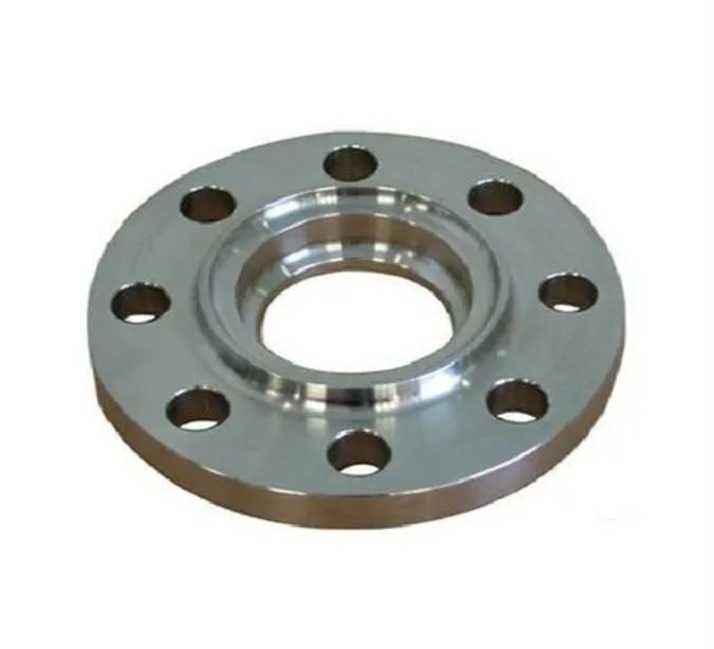
A failed flange cannot be replaced safely by matching only the pipe size and stainless-steel label. You will learn how to identify a socket-weld raised-face flange, specify its dimensions and standard, verify material and documents, and approve an item for dispatch without creating a second site delay.
Key takeaways
- Confirm the socket-weld connection before requesting a replacement.
- Send flange size, standard, drilling and pressure class with your enquiry.
- Match 304L or 316 material to the fluid and service conditions.
- Request material certificates, dimensions and inspection documents before dispatch.
Identify the SWRF flange before you ask for a replacement
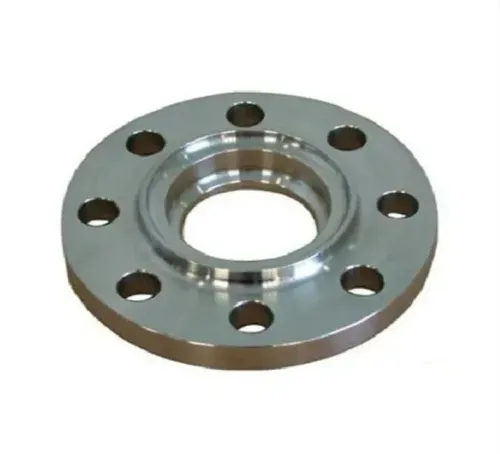
SWRF means socket-weld raised-face flange. The pipe enters a machined socket inside the flange, while the raised face provides the gasket-sealing surface against the mating flange. These are separate features: the socket connection uses a fillet weld around the pipe’s outside diameter, and the raised face does not identify the weld type by itself.
Do not confuse SWRF with a slip-on raised-face flange, where the pipe passes through the flange and is welded on the outside.
- Check the existing flange marking for NPS or DN, pressure class, material grade, and dimensional standard such as ASME B16.5.
- Confirm that the pipe terminates inside a socket and that the socket shoulder controls insertion depth. Do not force the pipe hard against that shoulder; welding requires a small expansion gap.
- Measure or verify the flange outside diameter, bolt-circle diameter, bolt-hole count and diameter, bore, thickness, raised-face diameter, and overall thickness.
- Record the facing and bolt-hole arrangement. A raised face alone does not prove compatibility: an ASME B16.5 Class 150 flange and Class 300 flange can share NPS 2 yet differ in drilling, thickness, and rating.
- Request the flange marking, heat number, and material certificate before approving stainless steel SWRF flanges for urgent replacement in Hyderabad. The certificate must support the specified grade, not merely the attached pipe grade.
That information gives a supplier enough to identify the correct item instead of sending any raised-face flange found under a search for stainless steel SWRF flanges.
Send a complete replacement request before checking local stock
A search for stainless steel swrf flanges near me does not prove that the correct replacement is on the shelf. Send one complete request first, so a seller can verify an actual dispatchable item rather than offer a nominally similar flange.
- State the nominal pipe size as NPS or DN, pressure class, and dimensional standard, such as ASME B16.5.
- Specify the raised-face designation, material grade, bore or pipe schedule, and whether the existing connection uses a particular bolt-hole pattern.
- Provide the flange marking or a clear photograph of it, plus the removed flange’s outside diameter, thickness, bolt-circle diameter, hole count, hole diameter, bore, and raised-face diameter.
- Give the quantity, required gasket type, bolt grade and size, and delivery address in Hyderabad.
- Request the heat number, material test certificate, and EN 10204 Type 3.1 documentation when traceability matters.
Before dispatch, make the seller confirm the flange marking, standard, NPS or DN, pressure class, facing, bore, drilling, material grade, quantity, and document availability in writing. Ask for photographs showing the face, bore, hub, markings, and bolt holes; a catalogue image is not stock evidence.
Confirm the promised dispatch date, carrier handover point, and whether the gasket and bolting are included or must be sourced separately. Do not approve shipment until every identification detail matches your piping record or measured flange.
Match the flange dimensions, drilling and pressure class
Nominal pipe size alone does not prove that a replacement will fit. Compare the removed flange and mating flange with the piping isometric, line-class specification, or equipment-nozzle drawing, then confirm the actual dimensions before dispatch.
A Class 150 flange and a Class 300 flange can both be NPS 2 raised-face flanges and still have different drilling, thickness and ratings.
- Nominal pipe size, stated as NPS or DN
- Pipe outside diameter and the bore matched to the pipe schedule
- Flange outside diameter
- Bolt-circle diameter
- Number of bolt holes
- Bolt-hole diameter
- Flange thickness and overall thickness including the raised face
- Raised-face diameter, height and facing designation
- Bolt-hole orientation where the joint or equipment nozzle requires a fixed position
Check the marking for ASME B16.5, or the dimensional standard named on the drawing, rather than accepting an unmarked substitute. Confirm the pressure class against the flange material group and design temperature; Class 150 is not a universal pressure limit, and matching the removed class marking alone does not prove pressure-temperature suitability.
The raised face must also match the gasket and mating face. Before approving dispatch, ask for the flange marking, dimension sheet or measured inspection record, material grade, bore, class and drilling details. Compare those records with the mating flange, not just the supplier’s description of a stainless steel SWRF flange.
Choose the material, bore and documents for the service
Do not select 304L or 316 from the pipe tag alone. The flange certificate must identify the specified forging grade, such as ASTM A182 F304L or F316L, and the welding procedure must cover the flange, pipe and consumable combination.
316 stainless steel SWRF flanges resist many chloride environments better because molybdenum improves pitting resistance, but chlorides can still cause pitting, crevice corrosion and stress-corrosion cracking.
| Grade | Advantage | Check before choosing |
|---|---|---|
| 304L | Lower alloy content; suitable for many general process services | Confirm chlorides, temperature and exposure do not demand higher pitting resistance |
| 316L | Better resistance to many chloride-bearing services | Confirm chloride concentration, crevices, weld condition and temperature; it is not chloride-proof |
| F304L or F316L | Defined ASTM A182 forging grade | Reject a certificate that says only “stainless steel” or “316” |
Check the socket bore against the pipe’s actual outside diameter and schedule. The pipe must enter the slip-on hub without force, while leaving enough clearance for the specified weld; nominal NPS alone cannot prove the fit. Compare the flange bore, wall thickness, raised-face dimensions and marking with the approved drawing.
For the replacement, request the heat number stamped on the flange and printed on the material test certificate. Ask for an EN 10204 Type 3.1 certificate showing chemistry, mechanical results, specification and grade, then match its heat number to the flange.
Use positive material identification when mixed grades or an undocumented item create a credible mix-up risk.
Use a Hyderabad supplier who can verify the item, not just locate it
Ask a SWRF flange supplier in Hyderabad to prove that the exact item is dispatchable, not merely listed in a warehouse system. A nearby result for “stainless steel SWRF flanges” does not confirm the pressure class, socket bore, raised-face dimensions, or paperwork.
Send the supplier your purchase specification and request written confirmation of these points:
- Quantity physically available, with the flange marking or a clear photograph of the actual stock
- Nominal size, ASME B16.5 or other dimensional standard, pressure class, raised-face designation, bore, and socket dimensions
- Material and grade, such as ASTM A182 F304L or F316L, plus the heat number stamped on the flange
- Material test certificate identifying that heat; request EN 10204 Type 3.1 for safety-critical or regulated work
- Bolt-hole count and diameter, bolt-circle diameter, gasket type and size, and bolting grade required for the mating flange
- Dispatch date, carrier or transport method, quantity packed, and delivery address in Hyderabad
Confirm the flange marking and certificate by email before paying or authorising dispatch. If grade mix-up is credible, ask whether positive material identification is available; a certificate alone does not prove the piece in the box.
Whether you contact Chirag Steel or another supplier, require the quoted item, certificate, and delivery promise to refer to the same heat and quantity. That record gives you something to check when the replacement arrives.
Related products
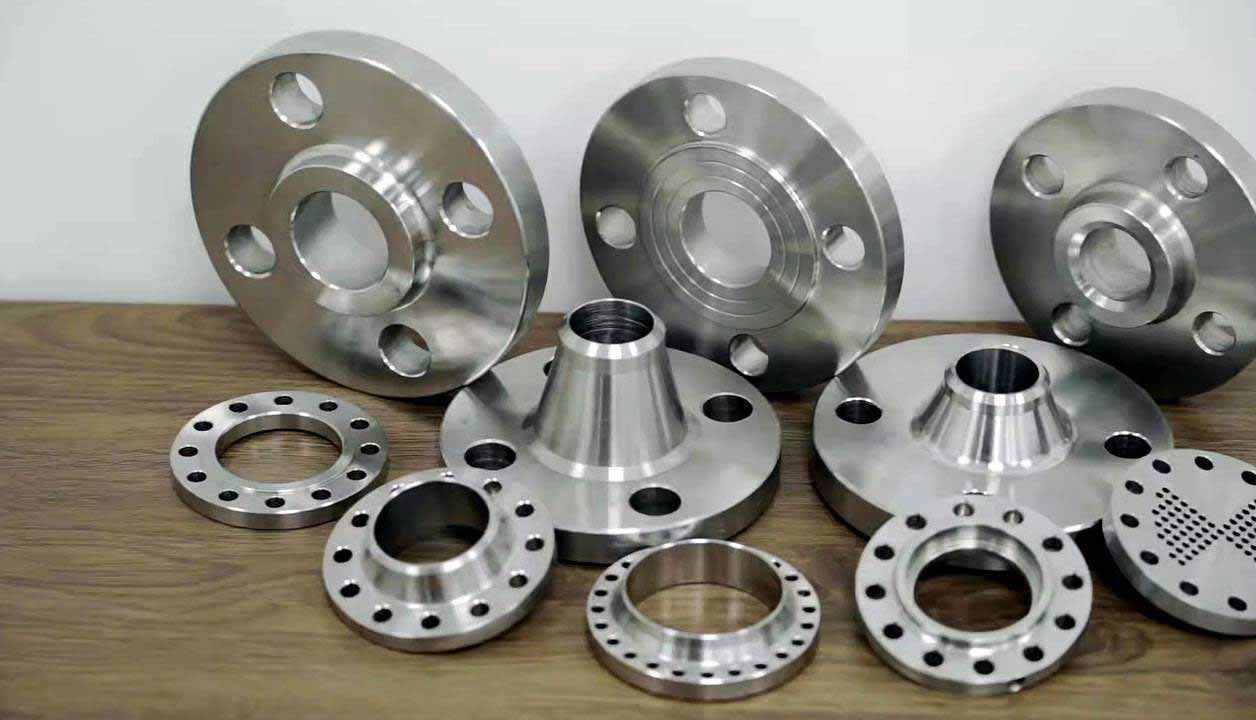 | Stainless Steel Flanges Manufacturer of ASTM A182 F304L Slip on and WNRF Flanges in India Stainless Steel 304L Flanges 304L Stainless Steel Flanges are made up of 304L... View product → |
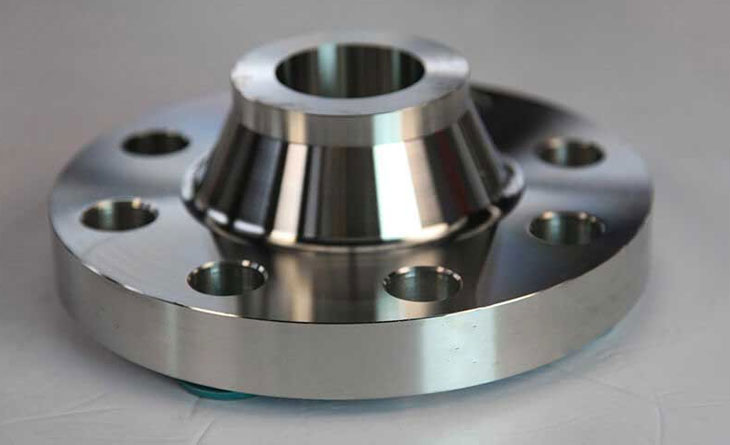 | Stainless Steel Flanges ASTM A182 F316 Blind flange and Weld Neck Flanges Manufacturer in India Stainless Steel 316 Flanges 316 Stainless Steel Flange Dimensions differ from... View product → |
Frequently asked questions
How do you identify an SWRF flange before ordering a replacement?
Check that the pipe enters a machined socket and that the flange has a raised gasket-sealing face. The socket weld is separate from the raised face.
What information should you send when requesting an urgent replacement?
Send the nominal pipe size, flange standard, pressure class, facing, outside diameter, thickness, bolt-hole count and pitch-circle diameter. Include the material, bore and required documents.
Which dimensions must match an SWRF flange?
Match the flange outside diameter, thickness, bore, raised-face diameter, bolt-hole diameter, bolt-hole count and pitch-circle diameter. Confirm the drilling standard and pressure class.
When should you choose 304L or 316 stainless steel for an SWRF flange?
Choose the grade against the fluid, temperature, chloride exposure, corrosion conditions and welding requirements. Request the applicable material certificate before accepting the part.
Related product
 | Stainless Steel Flanges Manufacturer – Chirag Steel Chirag Steel is a trusted and reliable Stainless Steel 316L Flanges Manufacturer, Supplier, and Exporter, offering... View product → |