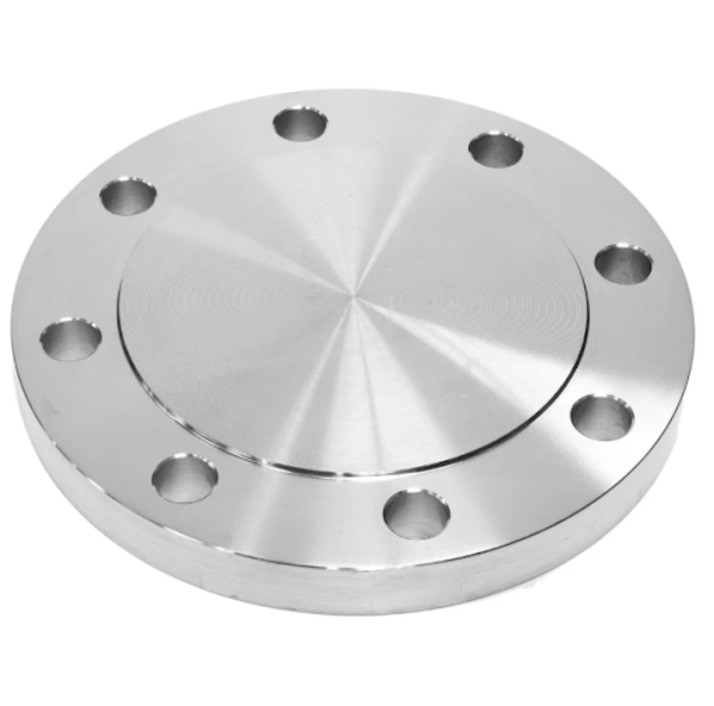
A blind raised-face flange can close a line end or nozzle after a failed section has been removed, but it cannot repair a perforated pipe wall or force misaligned components into service. You will be able to decide whether a flanged spool and BLRF closure are suitable, verify the replacement, and plan a controlled installation without creating another leak.
Key takeaways
- Use a flanged spool when cutting out damaged pipe allows controlled, accessible replacement.
- Match nominal size, ASME pressure class, raised-face dimensions, gasket, bolts, and material.
- Specify 316L or 304 stainless steel against the fluid, temperature, and corrosion conditions.
- Torque bolts in a cross pattern and investigate the original failure before restoring service.
What a BLRF flange does in a damaged line
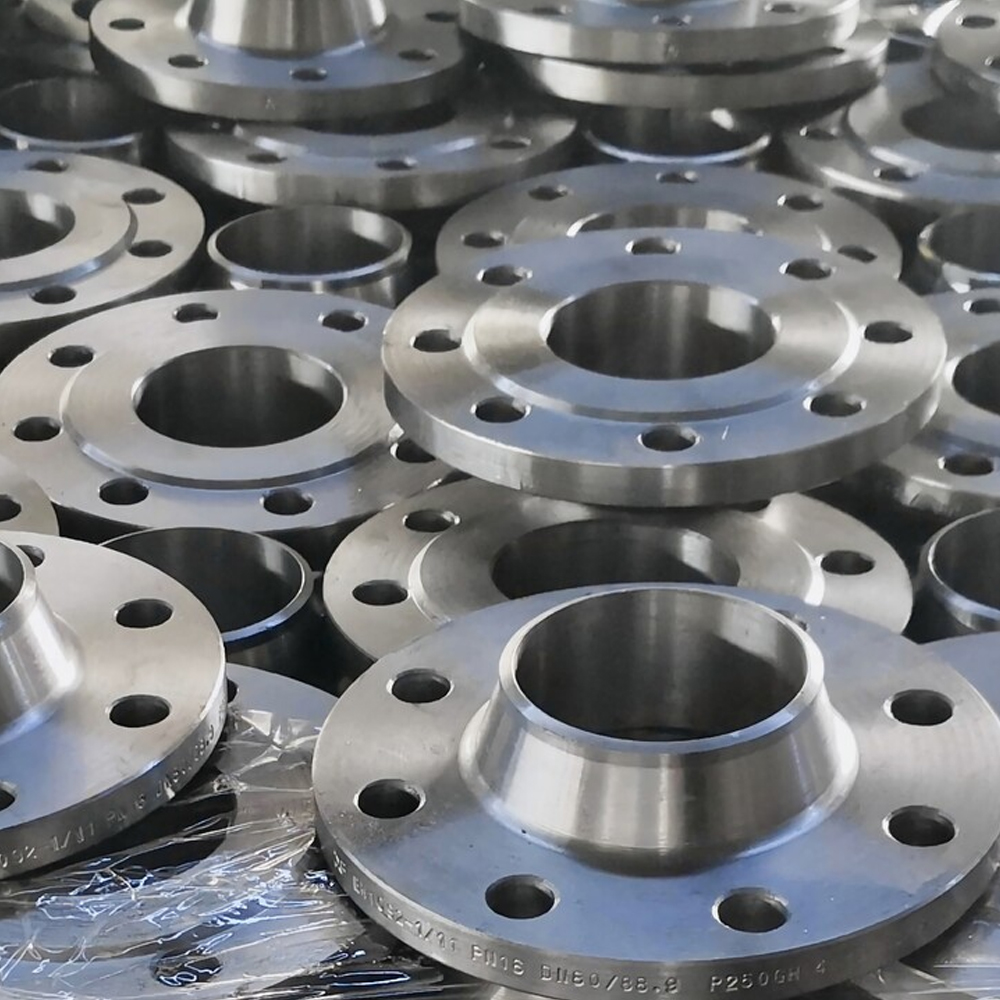
A BLRF flange is a blind, raised-face flange: a solid metal disk with bolt holes around its perimeter and a raised circular sealing surface. Unlike a weld-neck raised-face flange, it has no central bore or tapered hub for welding to pipe.
Bolted against a mating flange with the correct gasket, it closes a line end or nozzle; it cannot carry flow through a damaged pipe section.
That limitation defines its repair role. Remove the failed section, install a compatible flanged spool, and use the BLRF flange to create a sealed, pressure-containing termination. Its solid design provides a rigid closure that distributes bolt load around the gasket instead of leaving an open passage through the flange.
The repair restores a safe boundary, not continuous flow; a flowing line needs a correctly bored spool, valve, or other through-piping connection.
Stainless steel BLRF flanges for damaged piping work only when the remaining line can accept the closure. Match the nominal pipe size, pressure class, raised-face dimensions, bolt-hole pattern, gasket, and material to the mating flange under the applicable ASME B16.5 requirements. Inspect that flange for radial scoring, pitting, distortion, and loss of flatness.
A new blind flange will not correct a cracked pipe, wall loss, misalignment, warped pipe end, or unsupported line. Also review the service: 304 stainless steel can fail early in chloride-rich, stagnant crevices where 316L or a different repair design is required.
When a flanged spool is the right repair
Use a BLRF closure when the failed section ends at a flanged branch, nozzle, or line end, or when you intentionally remove a section and re-terminate the line with a flanged spool. Its solid disk stops flow; it cannot patch a perforated pipe wall or carry flow through a damaged section.
Choose this repair when:
- The damaged pipe can be cut back to sound, round material and a correctly aligned spool can be welded in place.
- The line end needs permanent isolation, or temporary closure during a staged shutdown.
- The existing mating flange has sound raised-face surfaces, acceptable flatness, and no radial scoring, deep pitting, or distortion.
- The pipe supports, valve, nozzle, and connected equipment will not impose bending or unsupported weight on the new joint.
Order a larger replacement when corrosion extends beyond the cut line, wall thickness is unreliable over a long spool, or cracking reaches a weld, elbow, tee, nozzle, or valve. Replace or re-engineer the support system when misalignment caused the failure; a new flange will not correct the load.
Before approving stainless steel BLRF flanges replacement, confirm that the repair preserves the required NPS, pressure class, facing, bolt pattern, gasket fit, and pipe alignment. In chloride service, review 304 against 316L before selecting stainless steel BLRF flanges.
If the mating flange is damaged, replace that component too rather than relying on a new closure to seal a defective surface.
How to verify size, rating, facing, and material
Confirm the replacement against the line’s NPS, pressure class, facing, and material grade—not outside diameter alone. Verify that BLRF means blind raised-face flange, not a weld-neck raised-face flange or lap-joint flange. For NPS 1/2 through 24, use ASME B16.5; larger flanges require the applicable ASME B16.47 series.
| Check | Must match | Reject if |
|---|---|---|
| Size and drilling | NPS, outside diameter, thickness, bolt-circle diameter, bolt-hole count, and hole diameter | The bolt pattern or thickness differs from the mating flange |
| Rating | ASME Class 150, 300, 600, or the specified class at the design pressure and temperature | The class is lower than the line design condition |
| Facing and seal | Raised-face dimensions, face finish, gasket type, and gasket inside and outside diameters | Radial scoring, pitting, distortion, or incompatible gasket contact exists |
| Material | Exact grade, such as ASTM A182 F304L or F316L, with a matching material certificate | The paperwork says only “stainless steel” or names another grade |
Match the flange to the service medium and chloride exposure. 304 stainless steel can suit clean water and mild service, but selecting it for chloride-rich or stagnant service without corrosion review can produce another leak; 316L BLRF flanges are not automatic substitutes for every application.
State the pressure class, NPS, facing, finish, grade, and no-bore requirement on the purchase order. Check the mating flange, pipe alignment, supports, and bolting before ordering; a new flange cannot correct a warped pipe end or overloaded joint.
How to install the closure without repeating the failure
Do not remove the failed flange until the line is positively isolated under the owner’s lockout procedure. Close and lock the required valves, depressurize, drain or vent, and verify zero pressure and no hazardous contents at the work point.
1. Inspect the exposed pipe, flange faces, bolt holes, supports, and nearby welds. Measure wall thickness around the damage and identify the cause: corrosion, vibration, thermal loading, misalignment, a wrong gasket, or uneven tightening. Replace more than the visibly leaking part if the pipe or support system is compromised.
2. Fit the replacement spool without forcing alignment. For a welded stainless spool, use an approved welding procedure, qualified welders, compatible filler metal, and purge-gas control. Remove contamination and complete the specified visual and nondestructive examinations before coating or insulation hides the weld.
3. Clean both raised faces and install the specified gasket without lubricant, adhesive, or reuse. Insert the correct bolting, confirm full thread engagement, and tighten in a controlled cross-pattern using calibrated equipment. Apply the owner’s torque or tensioning procedure based on ASME PCC-1; do not pull misaligned flanges together with the bolts.
4. Complete the governing code’s pressure test after restoring supports and reconnecting instruments. Use the specified test medium, test pressure, isolation boundaries, and hold requirements, then inspect the joint and welds for leakage or pressure loss.
5. Record flange markings, material certificates, heat numbers, weld and examination reports, bolt tension or torque values, gasket identification, and pressure-test results. A dry assembly proves only that the joint was assembled—not that the pressure boundary is accepted.
How to write a purchase specification for the replacement
State the complete mating geometry, service duty, and evidence required; “stainless steel BLRF” is not a specification. A search for 304 stainless steel blrf flanges in mumbai is only a starting point, because location does not change the rating or governing standard.
1. Write “blind raised-face flange,” not BLRF alone, and specify ASME B16.5 for NPS ½–24 or ASME B16.47 for NPS 26–60, nominal pipe size, pressure Class, raised-face finish, outside diameter, bolt circle, hole count, hole diameter, thickness, and no-bore requirement.
2. State the service medium, design pressure, design temperature, chloride exposure, and whether stagnant deposits or gasket crevices are expected. Do not substitute 304 for 316L in chloride service without a corrosion review.
3. Name the material precisely: ASTM A182 F304, F304L, F316, or F316L. Require heat identification and a material test certificate that matches the ordered grade, plus PMI when your quality plan requires it.
4. Identify the gasket type and dimensions, bolting grade and size, and the mating flange’s schedule or bore. Reject a locally stocked flange if its drilling, facing, grade, or documents fail this comparison.
A local supplier such as Chirag Steel can compare your photographs, drawings, and damaged-part measurements against the standard, flag a B16.5/B16.47 mismatch, and confirm whether 304 suits the chemistry before fabrication or dispatch.
Related products
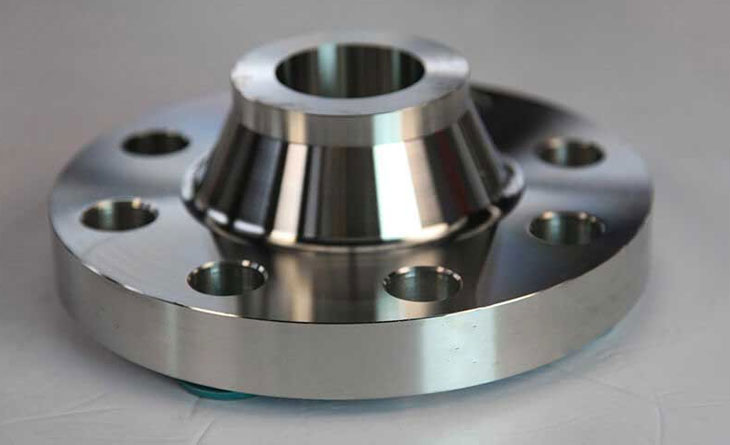 | Stainless Steel Flanges ASTM A182 F316 Blind flange and Weld Neck Flanges Manufacturer in India Stainless Steel 316 Flanges 316 Stainless Steel Flange Dimensions differ from... View product → |
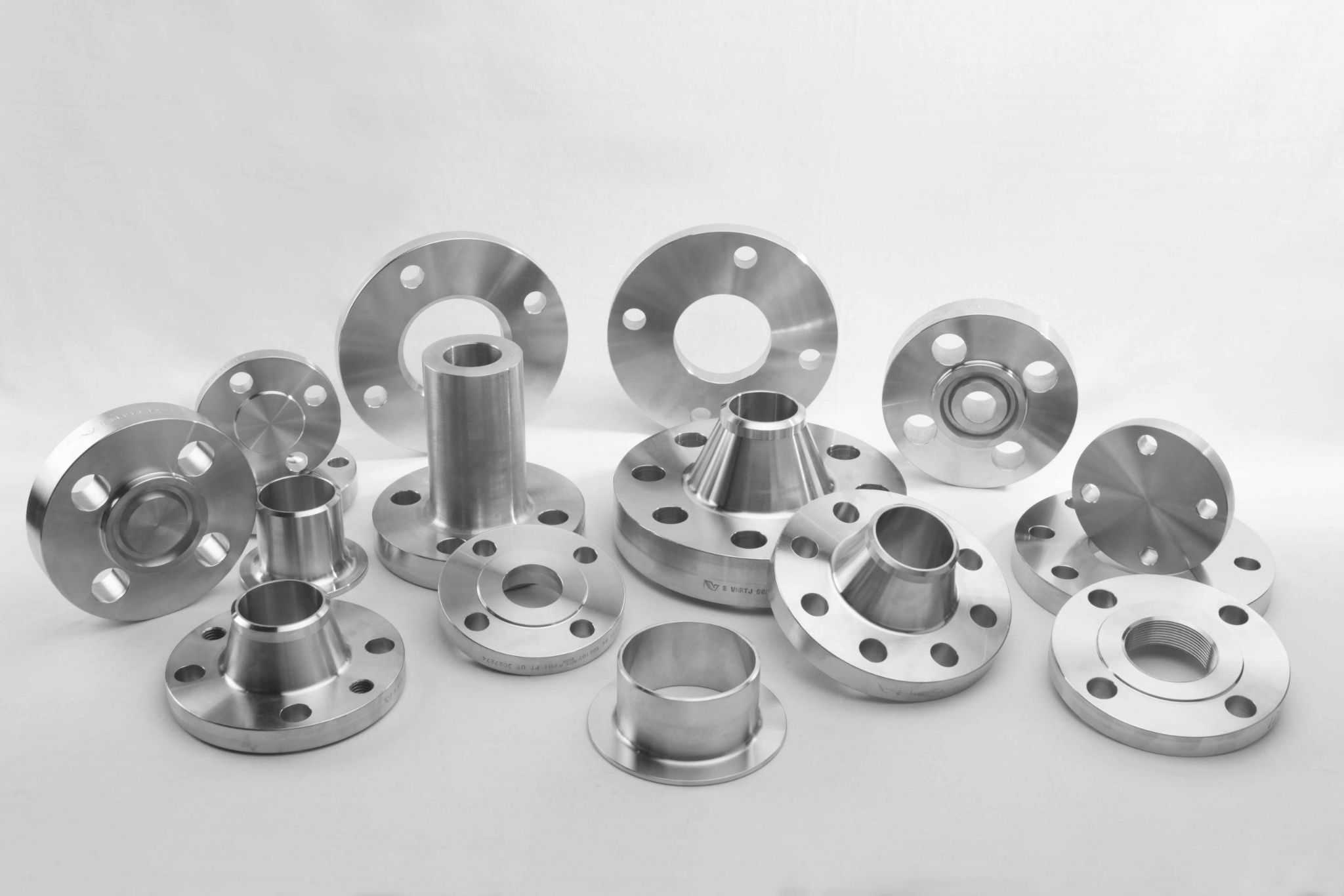 | Stainless Steel Flanges PED Steel Flanges / Weld Neck Flanges / ASTM A 182 Stainless Steel WNRF Flanges,Din Standard Flanges; DIN... View product → |
Frequently asked questions
What does a BLRF flange do in a damaged piping line?
A blind raised-face flange closes a pipe end or spool without a central bore. Its raised face compresses a gasket against the mating flange to create the seal.
When is a flanged spool the right repair for damaged piping?
Use a flanged spool when removing the failed section and installing a prefabricated replacement improves access, reduces field welding, or allows future removal for maintenance.
How do you verify a stainless steel BLRF flange replacement?
Check nominal pipe size, ASME pressure class, facing dimensions, bolt-hole pattern, gasket type, flange standard, material grade, temperature, and corrosion conditions.
How should you install the closure without repeating the failure?
Inspect both faces, fit the specified gasket, align the bolts without forcing the pipe, tighten in a cross pattern to the approved torque, and test before returning the line to service.
Related products
 | Stainless Steel Flanges Manufacturer – Chirag Steel Chirag Steel is a trusted and reliable Stainless Steel 316L Flanges Manufacturer, Supplier, and Exporter, offering... View product → |
 | Stainless Steel Flanges ASTM A182 F304 Blind Flange Dimension and A182 Grade F304 Slip on Flange pressure classs Great Steel & Metals is a supplier of all types of 304... View product → |