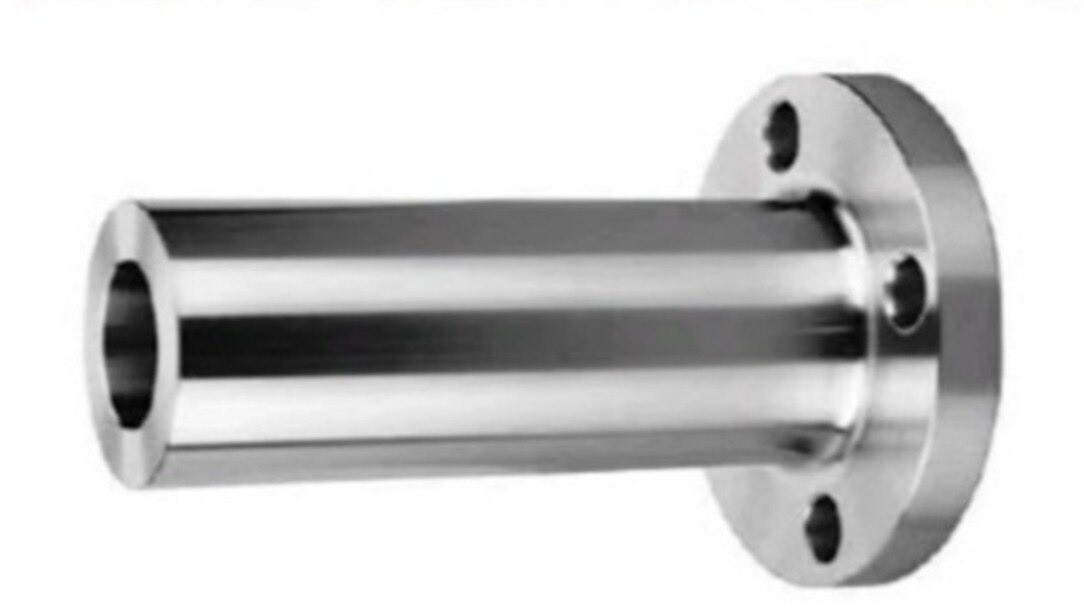
The purchasing question is not simply whether 904L is better than stainless steel: 904L is itself a stainless-steel grade, while “stainless steel” may mean 304L, 316L, duplex, or another alloy. By comparing corrosion conditions, dimensional standards, installation requirements, documentation, and landed cost, you can choose the correct spectacle-blind material for each EPC line class rather than approving a grade from its name alone.
Key takeaways
- Treat the spectacle blind as a line-blank assembly, not only a flange.
- Choose 904L when chlorides, sulfuric acid or severe corrosion justify its cost.
- Match ASME B16.48 size, pressure class, bore and flange drilling before ordering.
- Demand material certificates, PMI results, heat numbers and dimensional inspection records.
What exactly are you comparing: the spectacle-blind assembly or its material?
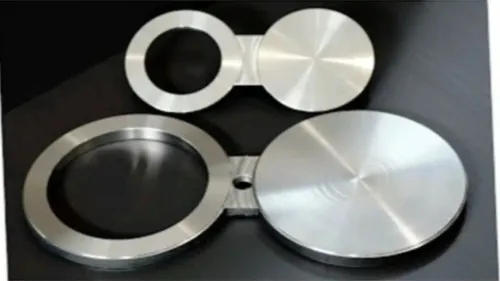
A spectacle blind is a line-blank assembly, not simply a blind flange. It has a solid blind plate and an open spacer joined by a web; rotating the assembly places either section between the mating flanges. ASME B16.48 governs line blanks, while ASME B16.5 governs standard flanges and flanged fittings.
Using the wrong standard can produce an incorrect bolt pattern, thickness, or pressure basis.
For stainless steel spectacle blind flanges versus 904L flanges in Mumbai, define both the assembly and the metal in the purchase order. “Stainless steel” is incomplete: specify 304L, 316L, or 904L, together with the UNS designation and the material required for every pressure-retaining part.
| Grade | What the designation means | What the purchase specification must identify |
|---|---|---|
| 304L | Low-carbon austenitic stainless steel | UNS S30403, product form, heat number, and applicable rating basis |
| 316L | Molybdenum-bearing low-carbon stainless steel | UNS S31603, product form, heat number, and chloride-service requirements |
| 904L | High-alloy austenitic stainless steel | UNS N08904, also EN 1.4539, with chemistry, mechanical properties, and solution-annealing condition |
A spectacle blind flange for EPC buyers must therefore be compared as a complete line blank against another complete line blank: same nominal size, pressure class, facing, and orientation, but with a separately verified material grade.
The pressure rating does not follow from “904L” alone; confirm the governing standard, design temperature, material group, and allowable stress.
When does 904L justify its premium over 304L or 316L?
904L justifies its premium when the process combines sulfuric acid, chlorides, elevated temperature, or tight crevices beyond 316L’s reliable operating envelope. Its chemistry—approximately 19–23% chromium, 23–28% nickel, 4–5% molybdenum, and 1–2% copper with low carbon—provides stronger resistance to pitting, crevice corrosion, and sulfuric acid than 304L or 316L.
| Grade | Chemistry and corrosion performance | Selection consequence |
|---|---|---|
| 304L | Lower nickel and no molybdenum; weakest resistance to chlorides, pitting, and crevices | Use for clean, low-chloride service without aggressive acids |
| 316L | Molybdenum improves chloride resistance; adequate for many process waters and mild chemical duties | Choose when temperature, concentration, and crevice conditions remain controlled |
| 904L | Higher nickel, molybdenum, and copper improve localized-corrosion and sulfuric-acid resistance | Justify the cost for documented acidic, chloride-bearing, or contaminated service |
904L is not a universal acid or seawater solution. Duplex 2205, superaustenitic grades, or nickel alloys can be better for stagnant seawater, severe crevices, high temperature, or heavy chloride contamination; 904L also costs more and demands controlled welding, clean tooling, compatible filler metal, and qualified procedures.
Use this 904L spectacle blind comparison procedure before approving the material:
- Record acid concentration, chloride level, temperature, aeration, velocity, contamination, crevice geometry, and cleaning chemicals.
- Compare those conditions with the project corrosion specification, not the fluid name alone.
- Confirm gasket, bolting alloy, isolation, and tightening controls; carbon-steel bolts or contaminated tools can undermine 904L’s advantage.
- Specify 904L as UNS N08904 or EN 1.4539 and verify the material certificate, product standard, heat treatment, and PMI results.
Which standards and dimensions determine whether the blind will fit?
A line blank fits only when ASME B16.48 matches the mating flange standard, nominal size, pressure class, facing and design temperature.
Do not order a spectacle blind flange for EPC buyers as an ordinary ASME B16.5 blind flange: B16.48 governs the spectacle blind assembly, while ASME B16.5 governs flanges up to NPS 24 and ASME B16.47 governs larger flanges.
| Standard or check | Why it controls fit |
|---|---|
| ASME B16.48 | Line-blank outside diameter, thickness, bolt-hole layout and pressure-temperature basis |
| ASME B16.5 or B16.47 | Mating flange dimensions, series, nominal size, class and facing |
| Pipe schedule and bore | Internal opening; a mismatch creates a step, restriction or unsupported edge |
| Pressure class and temperature | Allowable rating; 904L material alone does not establish pressure capacity |
| Raised-face, flat-face or ring-type joint | Contact geometry, gasket selection and required thickness |
| Bolt diameter, circle and holes | Alignment; a different pattern will not assemble |
| Blind thickness and bolt length | Confirms thread engagement after adding both flange thicknesses and gasket compression |
Your requisition should state NPS, Class 150, 300, 600 or another specified class, facing, pipe schedule or inside diameter, corrosion allowance and applicable material standard. Confirm the bolt length from the complete joint stack, not from the flange class alone; excessive length can bottom out, while insufficient engagement weakens the joint.
Show whether the spacer or solid blind is in the normal operating position. The drawing must also provide clearance to rotate the web during shutdown and identify the required orientation.
What installation, safety and documentation checks prevent a false sense of security?
A reliable 904L spectacle blind flange comparison starts with installation control, not the material certificate. The spacer side keeps the line open; the solid blind side provides positive isolation. Mark the normal operating position and rotate the assembly only during a planned shutdown.
Reserve physical clearance for the web and plate to swing between positions. The EPC drawing should show rotation space, blind/spacer orientation, line-break points, and the isolation boundary. A rated spectacle blind does not replace depressurisation, draining, venting, lockout/tagout, or gas testing.
Use this release checklist before accepting a 904L or 316L item:
- Match the nameplate, purchase order, drawing, and heat number to an EN 10204 3.1 material certificate. Require UNS N08904 or EN 1.4539 for 904L and UNS S31603 for 316L.
- Perform positive material identification on the plate and web, recording the method, locations, and results. Do not accept “stainless steel” as a grade.
- Check thickness, bolt holes, facing, bore, web, and orientation against ASME B16.48; confirm mating flanges against ASME B16.5 or ASME B16.47.
- Verify solution-annealing records, controlled machining, heat-input controls, and approved WPS/PQR and welder qualifications where fabrication includes welds.
- Confirm gasket type, facing compatibility, bolt alloy, coating, tightening method, and required electrical isolation. Carbon-steel bolts, contaminated tools, or an unsuitable gasket can create leakage or local corrosion.
- Inspect faces for scores, dents, oxide, and embedded iron, then preserve traceability through packing and installation.
A certificate proves identity, not serviceability; the completed dossier must connect chemistry, PMI, fabrication, inspection, and installation records to the same heat and item.
How should a Mumbai EPC bid compare 904L and standard stainless options?
Do not award on price per kilogram. Put each offer into one bid tab and compare the specified grade, documentation, delivery risk, and replacement path. “Stainless steel” is not a grade: identify 304L (UNS S30403), 316L (UNS S31603), or 904L (UNS N08904, EN 1.4539).
| Option | Grade and evidence | Commercial checks |
|---|---|---|
| 304L or 316L spectacle blind | MTC, heat number, chemistry, dimensions, and PMI; 316L suits many chloride services, but not every acidic duty | Confirm stock, inspection-dossier date, replacement availability, and delivered cost |
| 904L spectacle blind | MTC showing UNS N08904 chemistry, mechanical properties, solution-annealing condition, heat traceability, dimensional report, and PMI | Price machining and third-party inspection; confirm mill lead time, minimum heat quantity, packing, and same-grade replacements |
Calculate landed cost as quotation, freight, insurance, inspection, taxes, handling, and delay exposure. Require marking that carries grade, standard, size, pressure class, and heat number; reject an offer that cannot link the blind plate and spacer to the mill certificate.
Compare schedule against the project need date, not the supplier’s dispatch promise. Specify sealed, moisture-resistant packing with corrosion protection for salt-laden Mumbai transport and storage.
For stainless steel spectacle blind flanges versus 904L flanges in Mumbai, a documented 904L flange supplier in Mumbai offers more value when sulfuric-acid or severe chloride service makes failure, rework, or replacement costly.
Chirag Steel belongs on the comparison when its dossier, traceability, delivery date, and replacement commitment are written into the quotation rather than assumed.
Related product
 | Stainless Steel Flanges Manufacturer – Chirag Steel Chirag Steel is a leading Stainless Steel 904L Flanges Manufacturer, Supplier, and Exporter, offering premium-quality... View product → |
Frequently asked questions
What exactly is being compared: a spectacle-blind assembly or its material?
A spectacle blind is a line-blank assembly with a solid blind plate, an open spacer and a connecting web. Compare its ASME B16.48 design, dimensions and material separately from the mating ASME B16.5 flanges. A 904L flange describes material and flange construction; it does not automatically confirm that the assembly is a suitable line blank.
When does 904L justify its premium over 304L or 316L?
904L earns consideration where chloride exposure, sulfuric acid service or a high risk of localized corrosion exceeds the capability of 304L or 316L. Confirm the process concentration, temperature, contaminants and cleaning chemicals against the project corrosion study before paying for 904L.
Which standards and dimensions determine whether a spectacle blind will fit?
Check ASME B16.48 for line-blank dimensions and ASME B16.5 for the mating flange. Confirm nominal pipe size, pressure class, flange facing, outside diameter, bolt-circle diameter, bolt-hole count and diameter, thickness, bore and handle orientation. Verify the selected standard against the project piping class.
What installation, safety and documentation checks prevent a false sense of security?
Isolate, depressurize, drain and gas-test the line before loosening bolts. Install the correct face orientation and gasket, then torque bolts using the project procedure. Request the material test certificate, heat number traceability, PMI report, dimensional report, pressure-class identification and inspection release note.
How should a Mumbai EPC bid compare 904L with standard stainless options?
Compare the complete installed outcome: material price, machining, lead time, PMI and certification, gasket and bolting compatibility, freight, replacement risk and outage duration. Ask each supplier to quote the same ASME B16.48 size, class, facing, inspection plan and documentation package so the bids are comparable.