
A contractor choosing a slip-on raised-face flange is balancing fabrication speed against alignment, corrosion, welding, and leak risks. By the end, you will know how to fabricate the joint correctly, when 304 is suitable, when to specify 316 or 904L, and which documents and surface checks protect the finished assembly.
Key takeaways
- Fillet-weld the pipe inside and outside the SORF flange.
- Align the flange face before tack welding to prevent bolt-hole errors.
- Choose 304L or 316L when weldability and corrosion resistance matter.
- Record grade, schedule, dimensions, standard, heat number, and certificates.
What a SORF flange is and why it suits routine fabrication
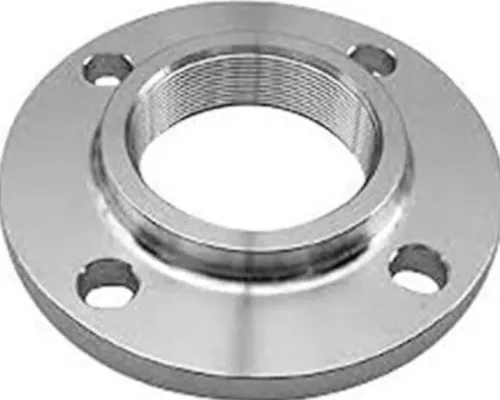
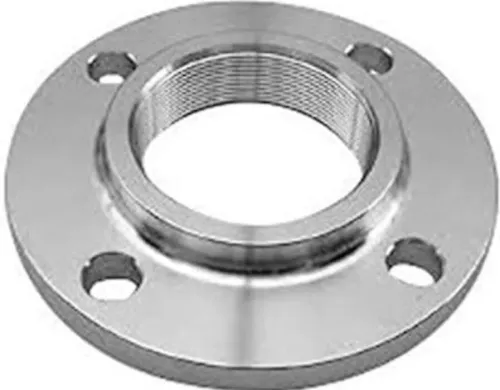
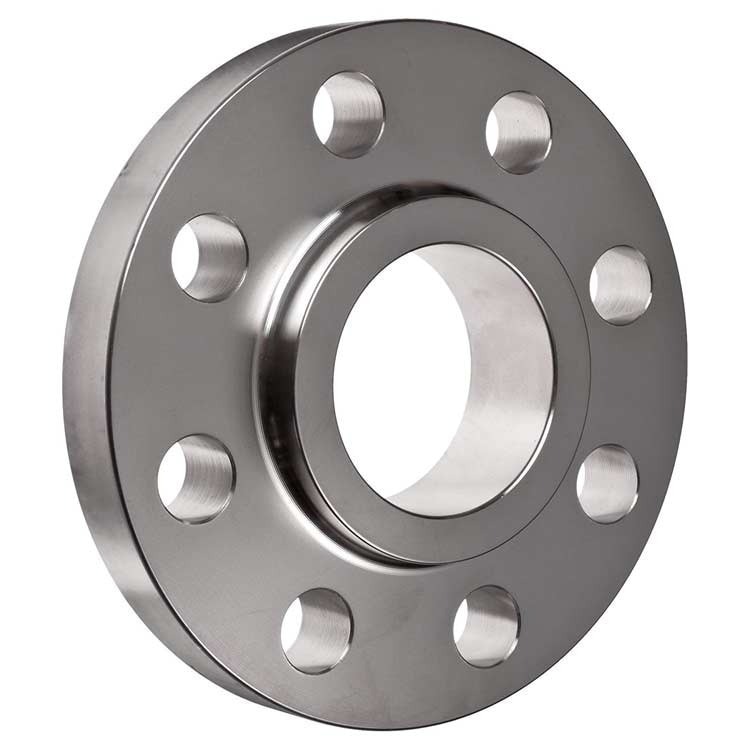
A stainless steel SORF flange is a slip-on, raised-face flange. The pipe enters its bore and projects through the flange, where it is normally fillet-welded around both the outside and inside.
This avoids the full-penetration butt weld and tapered hub required for a weld-neck flange, reducing fitting effort and making alignment more forgiving in ordinary, non-cyclic fabrication. That is why contractors choose stainless steel SORF flanges for fabrication work.
For a usable purchase specification, state:
- Nominal pipe size, or NPS.
- ASME pressure class and raised-face designation, such as Class 150, RF.
- Pipe schedule or the required flange bore.
- Stainless material grade, such as 304L or 316L.
- Applicable standard, normally ASME B16.5.
ASME B16.5 covers NPS 1/2 through NPS 24 and Classes 150, 300, 400, 600, 900, 1500, and 2500. A pressure class is not one pressure limit at every temperature: allowable pressure changes with the material group and design temperature.
The gasket, bolts, pipe wall, or weld can limit the joint before the flange body reaches its tabulated value.
Do not match NPS and class alone. Check the pipe outside diameter, wall schedule, and flange bore together; a mismatch can create excessive clearance, poor weld geometry, or an internal step that obstructs flow. Inspect the raised face for radial scratches, dents, and weld spatter before installation.
A fabrication sequence that prevents misalignment and weld problems
Prevent a distorted or obstructed SORF joint by controlling fit-up before welding. A correct pressure class cannot compensate for a wrong bore, poor rotation, or a damaged raised face.
1. Measure the pipe outside diameter, wall thickness, required cut length, and end squareness. Remove burrs and sharp edges without thinning the pipe or changing its circular profile.
2. Slide the flange onto the pipe with the raised face toward the mating flange. Confirm that the flange bore suits the pipe outside diameter and schedule; excessive clearance can create poor weld geometry or an internal flow obstruction.
3. Rotate the flange until its bolt holes match the fabrication drawing or adjoining equipment. Use evenly spaced tack welds to hold that position.
4. Check squareness with a machinist’s square, flange alignment tool, or face-to-pipe distance measured at several points. Correct rotation, gap, and runout before completing the weld.
5. Apply the specified internal and external fillet-weld procedure. Control heat input and interpass temperature for the stainless grade and wall thickness; excessive heat can distort the face or damage corrosion resistance.
6. Remove spatter, heat tint, burrs, and foreign material using stainless-dedicated tools and clean abrasives. Do not use carbon-steel brushes or contaminated abrasives. Inspect the raised face for radial scratches, dents, handling damage, and spatter.
7. During bolt-up, center the gasket, align the flanges without forcing them together, lubricate threads when specified, and tighten in a staged cross-pattern to the engineered procedure.
When a SORF flange is better than a weld-neck, flat-face, or lap-joint flange
Choose a SORF flange for ordinary static service when fabrication speed matters more than fatigue resistance. SORF flanges for contractors require less pipe-end preparation and easier alignment than weld-neck flanges, making them efficient for routine lines.
Their slip-on hub and fillet welds do not transfer bending and cyclic stresses as gradually as a tapered hub with a butt weld.
| Option | Gasket and load behaviour | Best fit |
|---|---|---|
| SORF, raised face | Concentrates gasket seating pressure on a defined machined surface; uses fillet welds | Static, moderately stressed fabrication where reduced fitting effort matters |
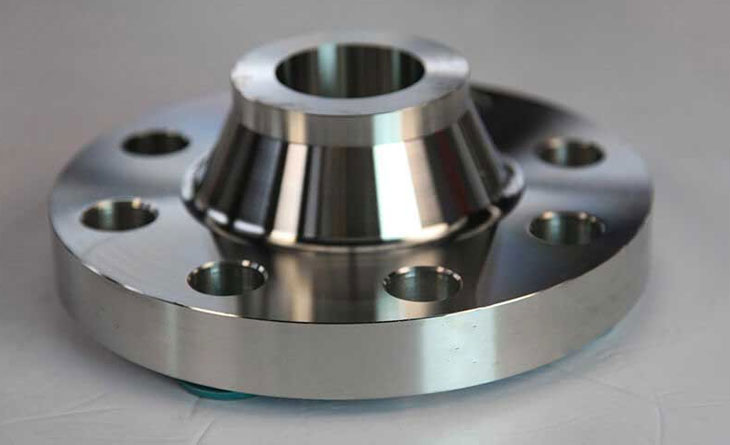
| Weld-neck | Tapered hub and butt weld distribute stress more gradually | Severe cycling, repeated thermal changes, high temperature, vibration, bending, or highly stressed lines |
| Flat-face | Seats across a flat machined face and requires a compatible flat-face arrangement | Designs specifically engineered for flat-face mating and gasket compression |
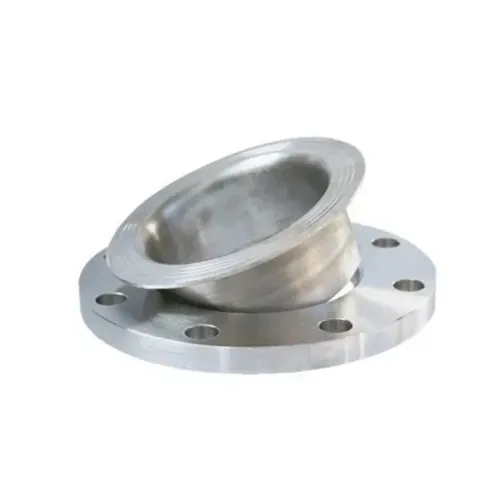
| Lap-joint | Separate stub end carries the sealing surface; backing flange rotates for assembly | Frequent dismantling or alignment flexibility |
Do not bolt a raised-face SORF flange to an incompatible flat face without checking the piping and gasket design; uneven contact can damage the gasket or create leakage. A lap-joint flange is not interchangeable with a SORF flange because the stub end, not the backing flange, provides its sealing surface.
Select SORF when lower fabrication effort controls the decision, but retain weld-neck or lap-joint designs when fatigue, dismantling, or unusual mating requirements control.
Choosing between 304, 304L, 316, 316L, and 904L
304 stainless steel SORF flanges are a practical baseline for atmospheric moisture, general fabrication, water, and many food-processing environments. Do not use 304 automatically where chloride deposits, saltwater, chemical contamination, insulation, pipe supports, or gasket crevices can create pitting or crevice corrosion.
| Grade | Best fit | Main limitation |
|---|---|---|
| 304 | General fabrication, water, food processing, ordinary atmospheric service | Vulnerable to chloride pitting and crevice corrosion |
| 304L | Welded 304 applications where the specification permits low carbon | Low carbon does not prevent chloride attack |
| 316 | Chloride-bearing service with greater resistance than 304 | Molybdenum does not make it immune to concentrated or stagnant chlorides |
| 316L | Welded chloride-service applications requiring the low-carbon variant | Confirm the specified standard, strength, and supply condition |
| 904L | Selected strongly corrosive chemical service, including some sulfuric-acid conditions | High cost and suitability depend on concentration, temperature, contaminants, crevices, and flow |
304L and 316L contain less carbon than their standard counterparts. After welding, that reduces sensitisation and the associated intergranular-corrosion risk in the heat-affected zone when the service and product specification allow the L grade. The L designation does not automatically provide greater strength, so verify the material standard and condition of supply.
316 improves chloride resistance through its molybdenum addition, but stagnant deposits can still cause failure. 904L adds substantially more nickel and molybdenum, plus copper; choose it only after confirming documented chemical-service requirements.
Compare total cost, welding procedure, stock availability, and corrosion data—not the grade name alone.
How to protect the flange, weld, and purchase record
Before the flange enters service, verify the metal, weld, gasket seat, and records—not just the pressure class.
1. Separate stainless work from carbon-steel grinding dust, tools, and shared benches. Embedded free iron can produce surface rust that indicates contamination, not failure of the stainless alloy. Use ASTM A380 for cleaning, descaling, and passivation practices, and ASTM A967 for chemical passivation treatments.
Neither treatment repairs weld defects, removes all heavy heat tint automatically, nor corrects a wrongly selected alloy.
2. Treat the raised face as a leak-critical gasket seat. Reject or repair a flange with radial scratches crossing the seating path, dents, handling damage, or weld spatter. Coordinate gasket material, face finish, bolt size, thread lubrication, tightening sequence, and flange alignment; over-tightening can crush a gasket or distort the flange, while under-tightening can leak.
3. For 904L SORF flanges in Mumbai, require the exact material designation, heat number, chemical test results, mechanical test results, and an EN 10204 Type 3.1 inspection certificate. A grade stamped on the flange is not a substitute for traceability.
4. Confirm that the welding procedure specifies a compatible filler, heat-input limits, interpass-temperature controls, cleaning method, and post-weld surface treatment. Do not choose arbitrary 304 filler for 904L because both alloys are austenitic.
Chirag Steel can be considered when a Mumbai contractor needs stainless piping components with traceable documentation, but the purchase specification and inspection remain the contractor’s control.
Related products
 | Stainless Steel Flanges ASTM A182 F316 Blind flange and Weld Neck Flanges Manufacturer in India Stainless Steel 316 Flanges 316 Stainless Steel Flange Dimensions differ from... View product → |
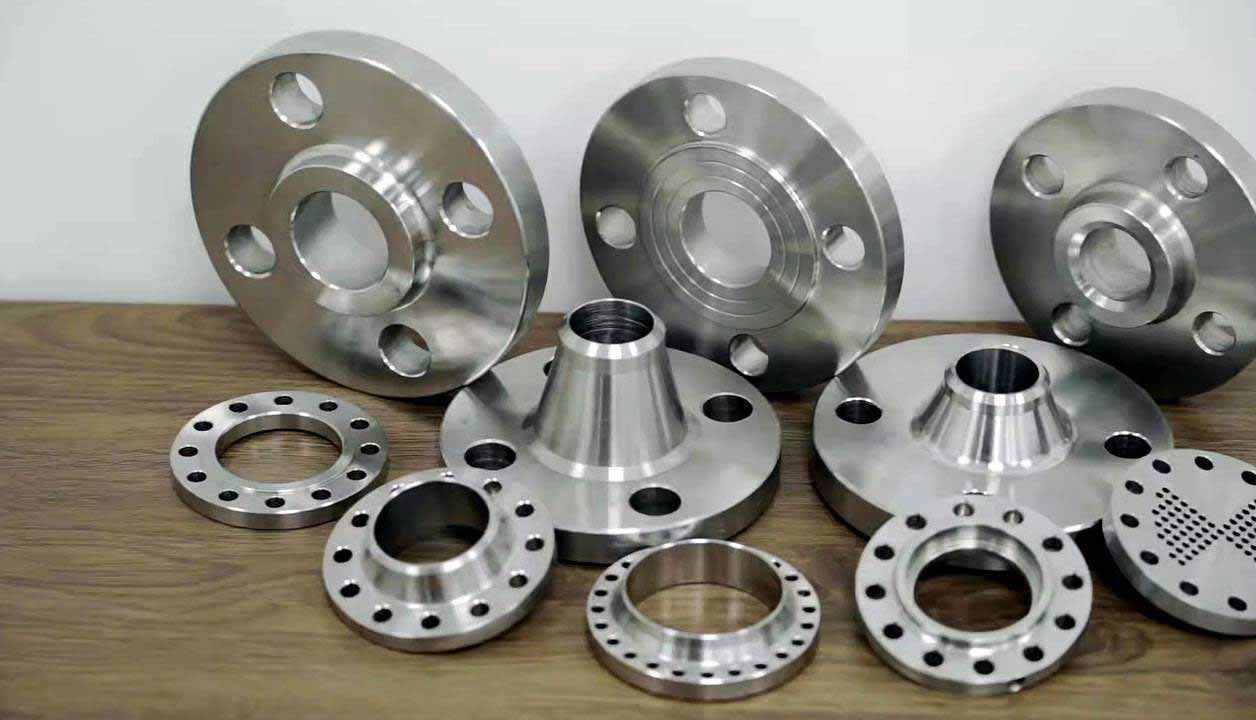 | Stainless Steel Flanges Manufacturer of ASTM A182 F304L Slip on and WNRF Flanges in India Stainless Steel 304L Flanges 304L Stainless Steel Flanges are made up of 304L... View product → |
Frequently asked questions
What is a stainless steel SORF flange?
A SORF flange is a slip-on, raised-face flange. The pipe passes through its bore and is normally fillet-welded around the outside and inside.
How do contractors prevent SORF flange misalignment?
Clean and square-cut the pipe, check insertion depth, align the flange face and bolt holes, then use balanced tack welds before completing the welds.
When is a SORF flange better than a weld-neck flange?
A SORF flange suits routine fabrication where installation speed, easier fit-up, and lower fabrication complexity matter more than the higher fatigue performance of a weld-neck flange.
How do 304, 304L, 316, 316L, and 904L compare?
Use 304 for general service, 304L for welded fabrication, 316 for improved chloride resistance, 316L for welded chloride service, and 904L for highly corrosive applications when the design and budget justify it.
Related products
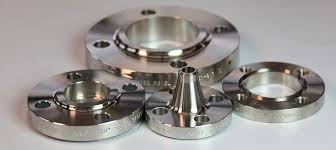 | Stainless Steel Flanges Manufacturer – Chirag Steel Chirag Steel is a trusted and reliable Stainless Steel 316L Flanges Manufacturer, Supplier, and Exporter, offering... View product → |
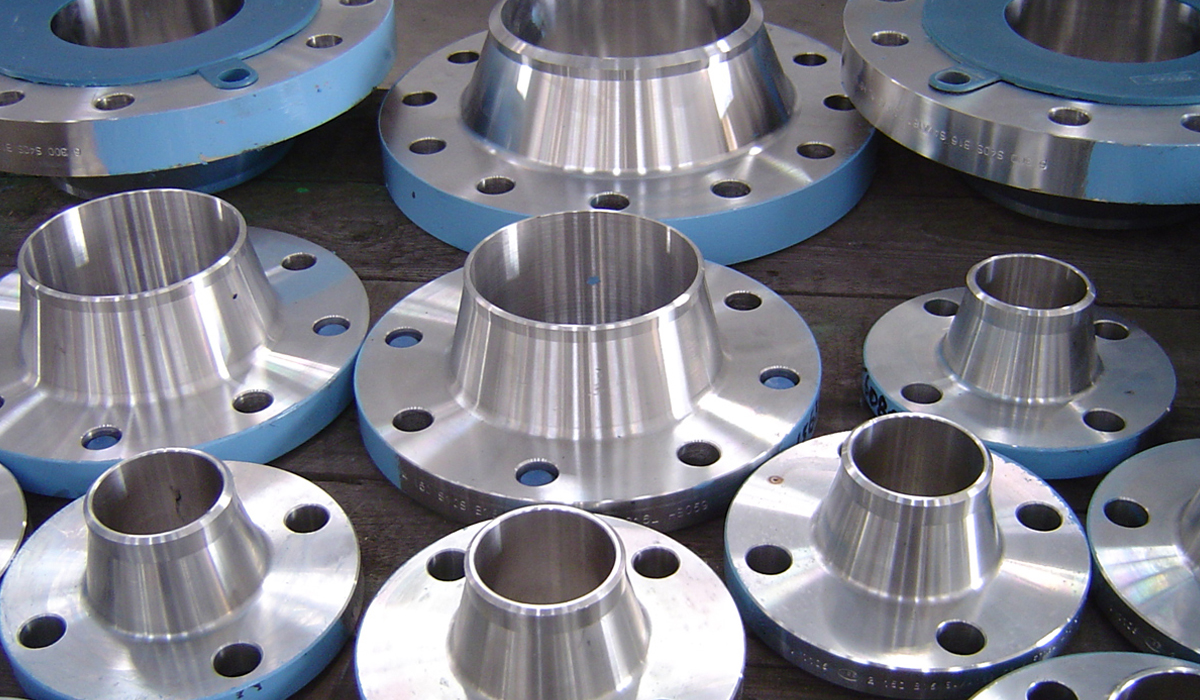 | Stainless Steel Flanges Manufacturer – Chirag Steel Chirag Steel is a leading Stainless Steel 904L Flanges Manufacturer, Supplier, and Exporter, offering premium-quality... View product → |
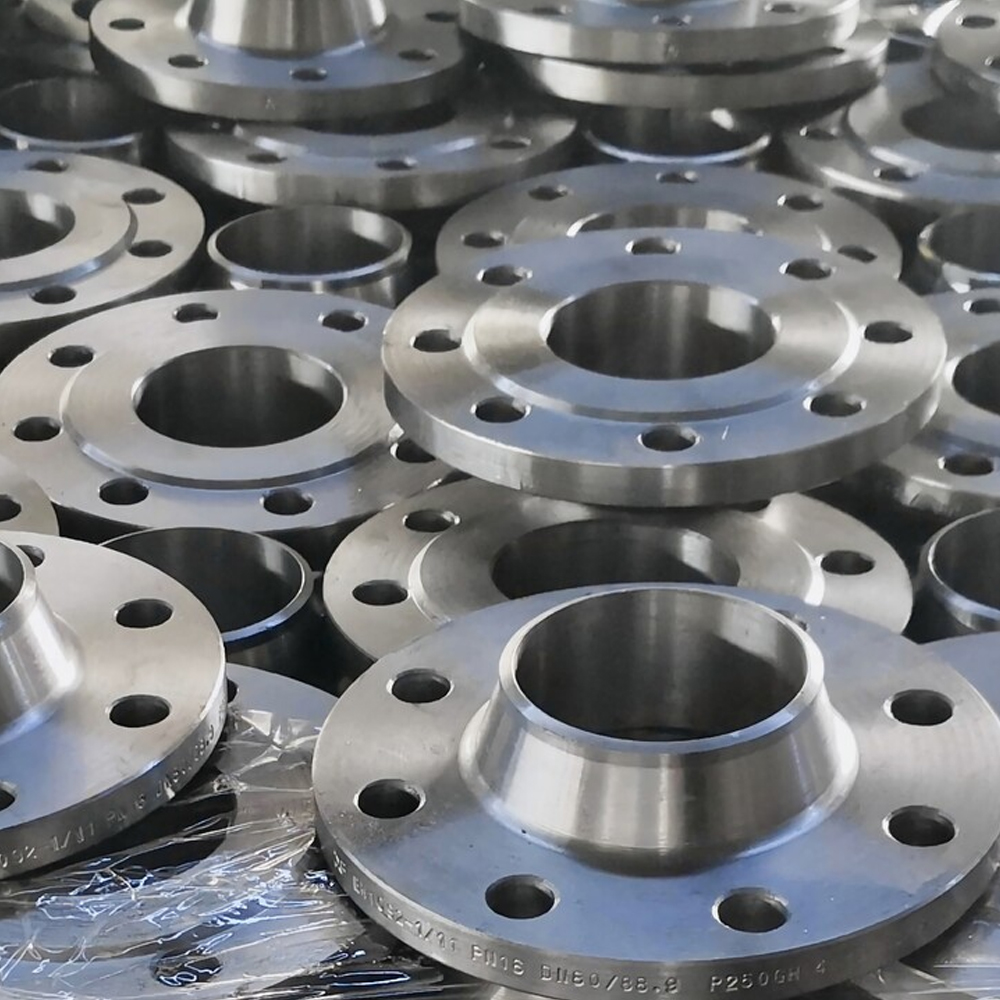 | Stainless Steel Flanges ASTM A182 F304 Blind Flange Dimension and A182 Grade F304 Slip on Flange pressure classs Great Steel & Metals is a supplier of all types of 304... View product → |
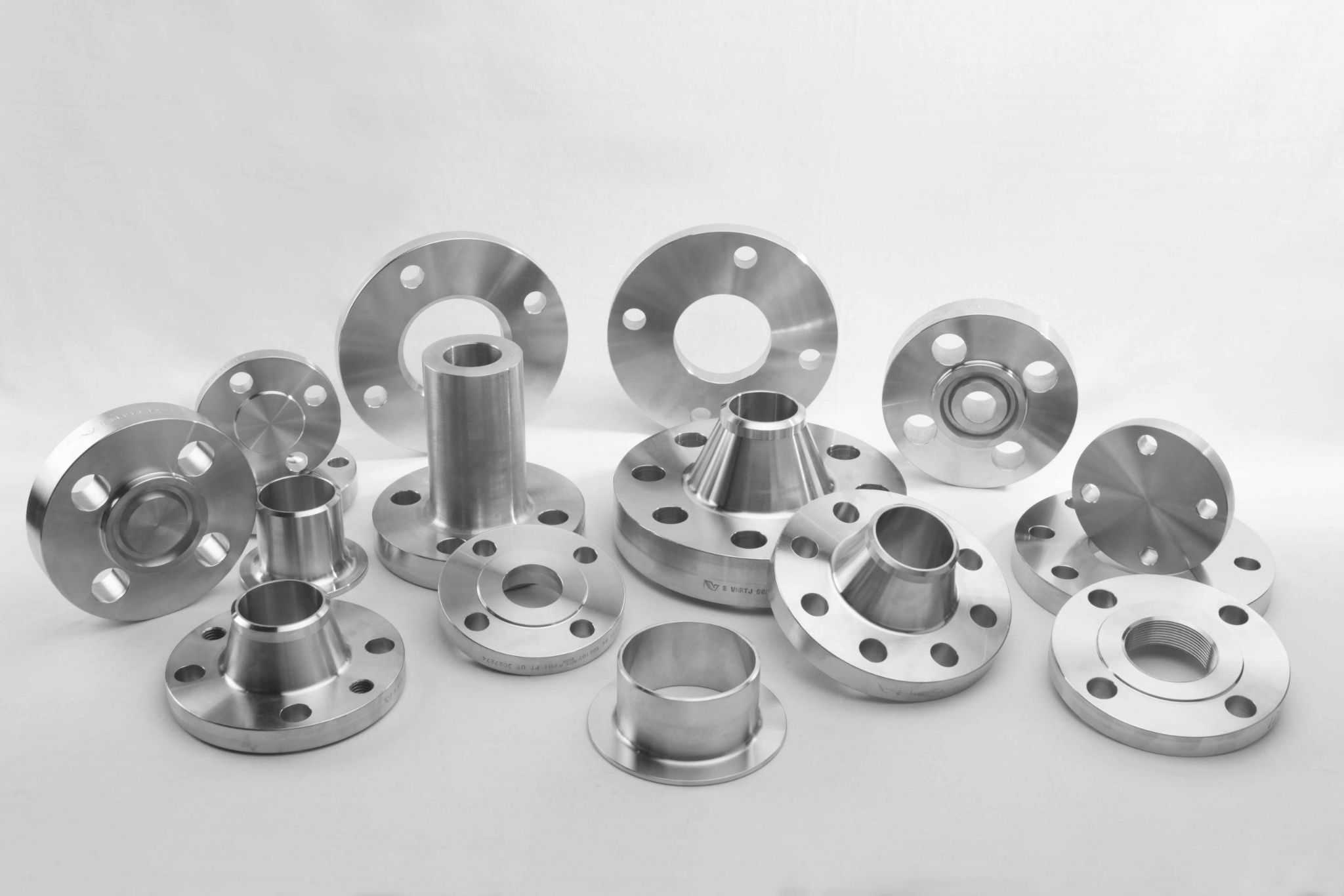 | Stainless Steel Flanges PED Steel Flanges / Weld Neck Flanges / ASTM A 182 Stainless Steel WNRF Flanges,Din Standard Flanges; DIN... View product → |